
A nationwide general strike brought Portugal to a standstill on Thursday. Train services halted completely, and hundreds of flights were cancelled. Schools across the country closed as workers protested proposed labour reforms. This marks the first general strike in Portugal in over a decade.
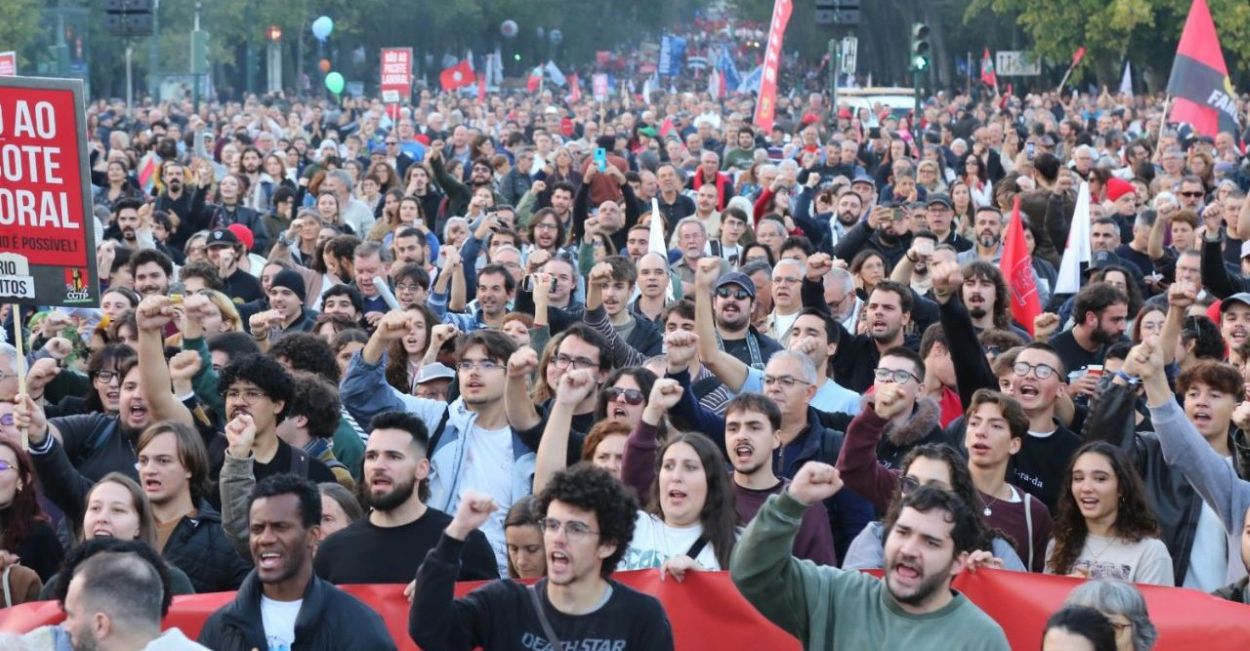
Thousands of workers marched through cities, rallying outside parliament in Lisbon. They carried signs reading “No to the labour package” and “Firing without reason is doing the boss’ bidding”. The minority centre-right government defends the proposed changes. It aims to amend more than 100 labour code articles to boost productivity and economic growth.
Unions strongly oppose the legislation, accusing it of tilting the balance of power toward employers. They argue this erodes workers’ rights despite Portugal’s strong economy and low unemployment. The bill has not yet been submitted to parliament but is expected to pass. It will likely receive backing from the far-right Chega party.
🔴🇵🇹 DIRECT | LISBONNE
Des milliers de personnes à la manifestation lisboète contre la réforme « Travail XXI » du gouvernement portugais, qui s'attaque brutalement au Code du travail. La CGTP, principal syndicat du pays, a annoncé 3 millions de personnes en grève ! pic.twitter.com/sgBoqetB62
— Révolution Permanente (@RevPermanente) December 11, 2025“The reform gives privileges to the privileged and ends up harming those who are already suffering,” said Rafaela Jesus, a 25-year-old administrative assistant. Teacher Helena Monteiro, 50, criticised the “general dehumanisation” of labour laws. “They are forgetting that workers are human beings and not machines,” Monteiro stated.
Limited public transport operated under minimum service requirements. Lisbon’s streets were noticeably quieter than usual. Hospitals remained open but postponed most surgeries and appointments. Nursing staff participated in the walkout.
Portugal is bracing for a widespread impact nationally from its first general strike in 12 years, as unions urge action against the centre-right minority government’s planned workers’ rights reforms. https://t.co/XD9MBaLBoz
— Al Jazeera English (@AJEnglish) December 11, 2025The government downplayed the strike’s overall impact. Cabinet Minister Antonio Leitao Amaro called it “more like a partial public sector strike.” He noted the vast majority of the private sector was still working. Unions countered this claim, citing disruptions at major companies, such as Volkswagen’s Autoeuropa plant.
Tiago Oliveira, secretary-general of the CGTP union, declared that a “major general strike” was underway. He accused the government of minimising its impact to push a political agenda. This is the first general strike since June 2013, during Portugal’s harsh international bailout era.
The contested reforms include easing dismissal rules for small businesses and lifting limits on outsourcing. They also propose capping flexible-work rights for breastfeeding mothers at two years. Prime Minister Luis Montenegro pledged his administration “will not give up on being reformist.”