Photonews Logo Photonews logo
  • Home
  • Pakistan
    • Punjab
    • Sindh
    • Khyber Pakhtunkhwa
    • Azad Jammu Kashmir
    • Balochistan
    • Gilgit – Baltistan
  • World
  • Business
  • Entertainment
  • Videos
    Zayn Malik
    Videos

    Zayn Malik Releases Die For Me Music Video Ahead of New Album

    February 6, 2026 3 Min Read
    Masters of the Universe teaser
    Videos

    Masters of the Universe Teaser Reveals Nicholas Galitzine as He-Man

    January 22, 2026 3 Min Read
    Bridgerton Season 4 trailer
    EntertainmentVideos

    Bridgerton Season 4 Trailer Reveals Benedict’s Love Story

    December 26, 2025 2 Min Read
  • Sports
  • Technology
  • Offbeat
  • Blog
  • Contact
Reading: LUMS Alumnus: Pakistani makes major breakthrough in longstanding mathematics problem
PhotoNews PakistanPhotoNews Pakistan
Font ResizerAa
Search
  • Home
  • Pakistan
    • Punjab
    • Sindh
    • Khyber Pakhtunkhwa
    • Balochistan
    • Azad Jammu Kashmir
    • Gilgit – Baltistan
  • World
  • Business
  • Entertainment
  • Videos
  • Sports
  • Technology
  • Offbeat
  • Blog
  • Contact
Have an existing account? Sign In
Follow US
© 2022 Photonews. All Rights Reserved.
Haris Aziz
PhotoNews Pakistan > Pakistan > LUMS Alumnus: Pakistani makes major breakthrough in longstanding mathematics problem
Pakistan

LUMS Alumnus: Pakistani makes major breakthrough in longstanding mathematics problem

Web Desk
By Web Desk Published May 27, 2016 5 Min Read
Share
SHARE

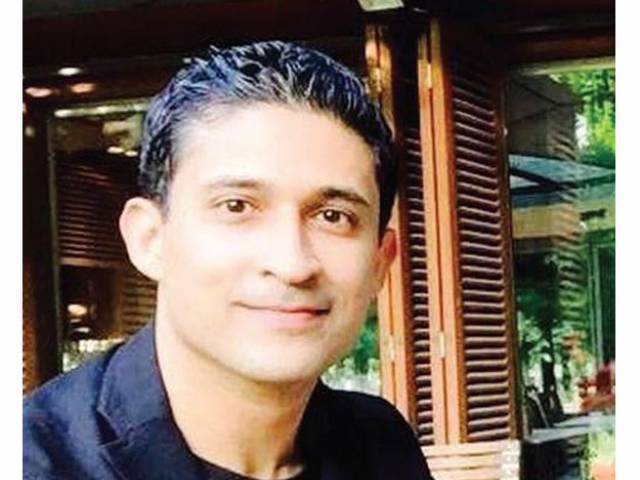
A Lahore University of Management Sciences (LUMS) alumnus Haris Aziz, along with co-author Simon Mackenzie, has finally come up with a solution to a problem that has been plaguing scientists for many years: how to allocate resources fairly to any number of people so that each is left satisfied with his/her share.

“My co-author Simon Mackenzie and I started working on this particular problem around 18 months ago. We are both based at Data61 and UNSW in Sydney. The problem for four or more persons was unresolved for years. We first came up with an algorithm for the case of four persons,” Haris Aziz said.

“The paper has been accepted at STOC (a prominent theoretical computer science conference) and will be presented in Boston this June. Our latest algorithm is more general and was shared with experts a few weeks ago,” he added.

Their paper, titled, A Discrete and Bounded Envy-Free Cake Cutting Protocol for Any Number of Agents, was published on the Cornell University Library archive site in April.

Dividing a thing in two fairly is easy enough, but when there are more people involved, that’s when the task becomes more difficult. In the 20th century, John Selfridge and John Conway independently developed a solution for envy-free cake cutting for three people.

The cake is only a metaphor for any kind of divisible good, be it time, property settlement, or computing resources. “As technology improves, many problems will arise and be solved on electronic platforms. One interesting application area of fair division algorithms is allocating access to cloud computing resources. Fair allocation algorithms also have the potential to identify desirable solutions in complex automated negotiation settings,” Aziz said.

Earlier this year, Aziz, a senior research scientist, was named among ‘AI’s 10 to Watch’ by the IEEE Intelligent Systems magazine. ‘AI’s 10 to Watch’ acknowledges 10 researchers who are upcoming professionals in the field of artificial intelligence (AI), an official statement said.

Aziz shares that cake cutting is just one of the problems within the wider field of multi-agent resource allocation. “Other problems include assigning credit in a joint project and sharing supply chain costs. Another important application of allocation algorithms is efficient exchange of donated organs such as kidneys to save lives.”

Their solution has been described as a “major breakthrough” by Professor Steven Brams at New York University, who has worked on such problems for more than 20 years. Although the paper is yet to be peer reviewed, Professor Brams told the Sydney Morning Herald the “results look solid”.

However, he also said that the Aziz-Mackenzie protocol is too complex for practical application and Aziz agrees with him. “Not only is the algorithm complex but the number of steps it takes to get the job done can be too high in the worst case. So our result should be viewed as a mathematical result rather than a practical engineering result.”

“Having said that, many experts previously thought that there was no algorithm that takes a bounded number of steps or cuts even for four persons. Now that we have a bounded algorithm, it provides hope to refine the ideas to get better bounds. Some of the mathematical ideas and algorithmic techniques may be useful for other problems,” he added.

Another researcher in this field Ariel Procaccia at Carnegie Mellon University in Pittsburgh told the Herald, “I was convinced that a bounded, envy-free cake-cutting algorithm [did] not exist. So the breakthrough result of Aziz and Mackenzie is nothing short of amazing. It is a beautiful piece of mathematics.”

Share This Article
Facebook Twitter Pinterest Whatsapp Whatsapp LinkedIn Email Copy Link Print
Leave a comment

Leave a Reply Cancel reply

Your email address will not be published. Required fields are marked *

Advertisement

Recent Posts

Soldiers of the U.S. Army 3rd Squadron, 2nd Cavalry Regiment pictured in 2018.

US Troops Germany Cut Criticised by Republicans

Several iPhones are arranged in a fan-like layout, showing different color options with a black model placed horizontally in front

iPhone 17 Lineup Becomes Apple’s Most Popular Ever

Illustration of a pen nib, microphone, globe and birds with the words “World Press Freedom Day.”

World Press Freedom Day: Zardari, Shehbaz Back Media

Post Archives

More Popular from Photonews

A woman’s profile is shown beside a glowing digital illustration of the human brain, representing dreams and brain activity.
Tech

Science of Dreaming Links Sleep to Memory Training

3 Min Read
Kim Jong-un attending a memorial opening ceremony for North Korean troops killed in the war against Ukraine.
World

North Korea Museum Honors Troops Killed in Russia War

3 Min Read
Graphic with U.S. Department of Defense seal, Anthropic logo, military figures, and AI warning icons representing defense-related AI risks.
Tech

Pentagon AI Agreements Add Seven Tech Firms

1 Min Read
World

King Charles US visit opens with Trump White House tea

The White House said the state visit would run from April 27 to April 30 and…

April 28, 2026
Offbeat

USCGC Tampa Wreck Found 50 Miles Off Cornwall

Onwall, United Kingdom: Divers have found the USCGC Tampa wreck more than a century after the…

April 30, 2026
Tech

Kwonsiwon App Found Online After K-Drama Buzz

The Kwonsiwon app, featured as “Girigo” in the K-drama “If Wishes Could Kill,” has been found…

May 1, 2026
Business

VAT Rroad Fuel Scale Charges Rise for UK Drivers

His Majesty's Revenue and Customs (HMRC) has introduced new VAT road fuel scale charges for petrol and…

May 1, 2026
PhotoNews Pakistan

Always Stay Up to Date

Subscribe to our newsletter to get our newest articles instantly!

Categories

  • World
  • Pakistan
  • Punjab
  • Sindh
  • Khyber Pakhtunkhwa
  • Balochistan
  • Azad Jammu Kashmir


  • Top News
  • Business
  • Entertainment
  • Sports
  • Videos
  • Tech
  • Offbeat
  • Blog
  • About Us
  • Privacy Policy
  • Code of Ethics & Editorial Standards

© 2026 Phototnews
All Rights Reserved.

Welcome Back!

Sign in to your account

Lost your password?