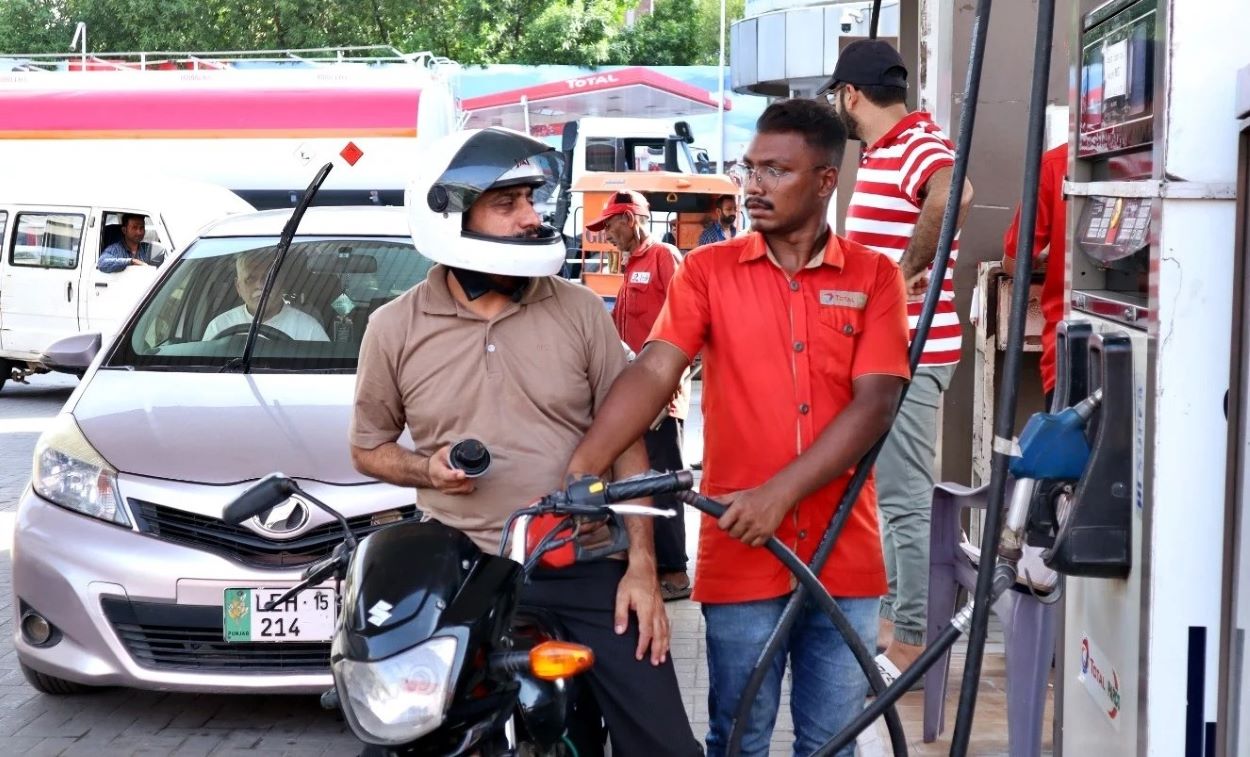

The government has confirmed that Pakistan’s petrol and diesel price-unchanged policy will continue, with the state agreeing to pay oil marketing companies (OMCs) up to Rs176 per litre under price differential claims (PDCs) to absorb the impact of surging global oil prices.
According to a Ministry of Energy (Petroleum Division) letter addressed to the Oil and Gas Regulatory Authority (Ogra) dated March 20, the government will pay PDCs to OMCs from March 21 through March 27. The total payout amounts to approximately Rs. 48 billion, with the Finance Division making the payment via Ogra.
Under the arrangement, the government will pay a price differential of Rs176.41 per litre on high-speed diesel (HSD) and Rs77.98 per litre on petrol (MS) to the OMCs.
Prime Minister Shehbaz Sharif announced the decision to keep fuel prices unchanged during an address to the nation on the eve of Eid-ul-Fitr. The announcement came after the government rejected a proposal to raise rates amid a sharp surge in global oil prices.
Read: all Street Falls on Rate Fears as Oil Shock Fuels Inflation
The prime minister noted that global oil prices have risen sharply due to recent tensions in the Middle East. “Oil, which was priced at $72 per barrel just weeks ago, has now reached $158 per barrel,” he stated.
He pointed to the Strait of Hormuz closure and attacks on energy infrastructure in the region as key factors disrupting supply routes.
Government Absorbs Additional Rs45 Billion Burden
The prime minister revealed that he had been advised to raise petrol prices by Rs 76 per litre and diesel by Rs 177 per litre for the coming week. He rejected the proposal, stating the federal government would instead bear the additional burden.
“So, the federal government will bear the additional burden of Rs45bn once again,” PM Shehbaz said.
He added that over the previous two weeks, the government had already spent Rs69bn from savings and development budgets to prevent petrol prices from rising by Rs127 per litre and diesel by Rs252 per litre.
The prime minister warned that the ongoing crisis could lead to rising inflation but emphasised the government’s commitment to providing relief to citizens during Eid.
The decision to keep fuel prices unchanged comes as Pakistan navigates a complex economic landscape, balancing global market pressures with domestic relief measures during the holiday period.