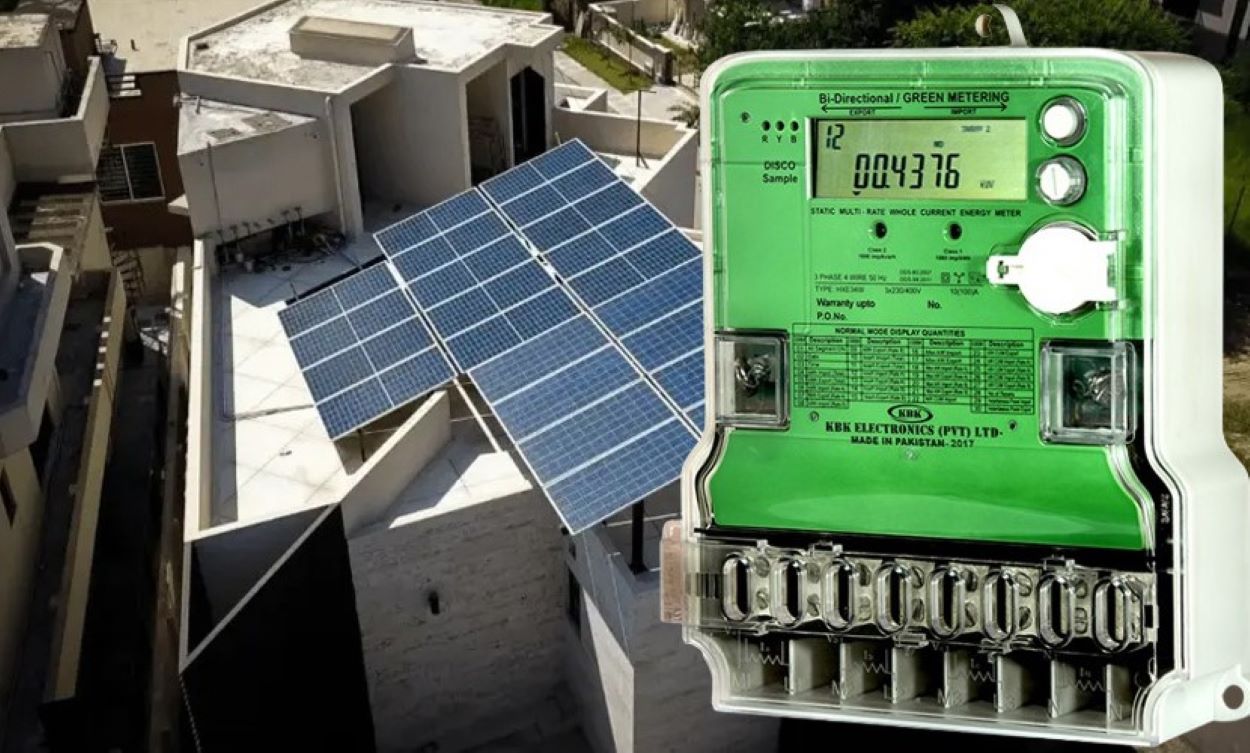

Pakistan has revised its net metering policy for solar power consumers nationwide following extensive stakeholder consultations. The Ministry of Energy has approved the updated framework, officials confirmed.
Under the revised policy, the existing net metering mechanism will be replaced with a net billing system. As a result, solar consumers will no longer be able to offset units on a one-for-one basis. Instead, they will sell excess electricity to the grid at a fixed per-unit rate.
According to sources, the proposed net billing rate is expected to be around Rs 12 per unit. Moreover, the duration of solar power purchase agreements has been capped at five years under the new framework.
Net Metering Regulatory Changes
In addition, consumers with a connected load of less than 25 kilowatts will now be required to obtain a licence from the National Electric Power Regulatory Authority (NEPRA). Previously, domestic, commercial, and industrial consumers within this limit were exempt from licensing requirements.
Officials said the Ministry of Energy completed the revision process in coordination with distribution companies (DISCOs) and NEPRA after months of technical and policy-level discussions.
Read: NEPRA Proposes Major Cut to Solar Net Metering Buyback Rate
Furthermore, the ministry informed the federal government that continuing without revising the policy was no longer viable given mounting financial and operational pressures on the power sector.
Energy ministry officials clarified that the determination of solar tariffs will remain the sole responsibility of NEPRA. The revised policy does not alter the regulator’s authority to assess and notify electricity rates.
The updated framework aims to balance renewable energy growth with grid sustainability while introducing a more predictable compensation structure for solar consumers.