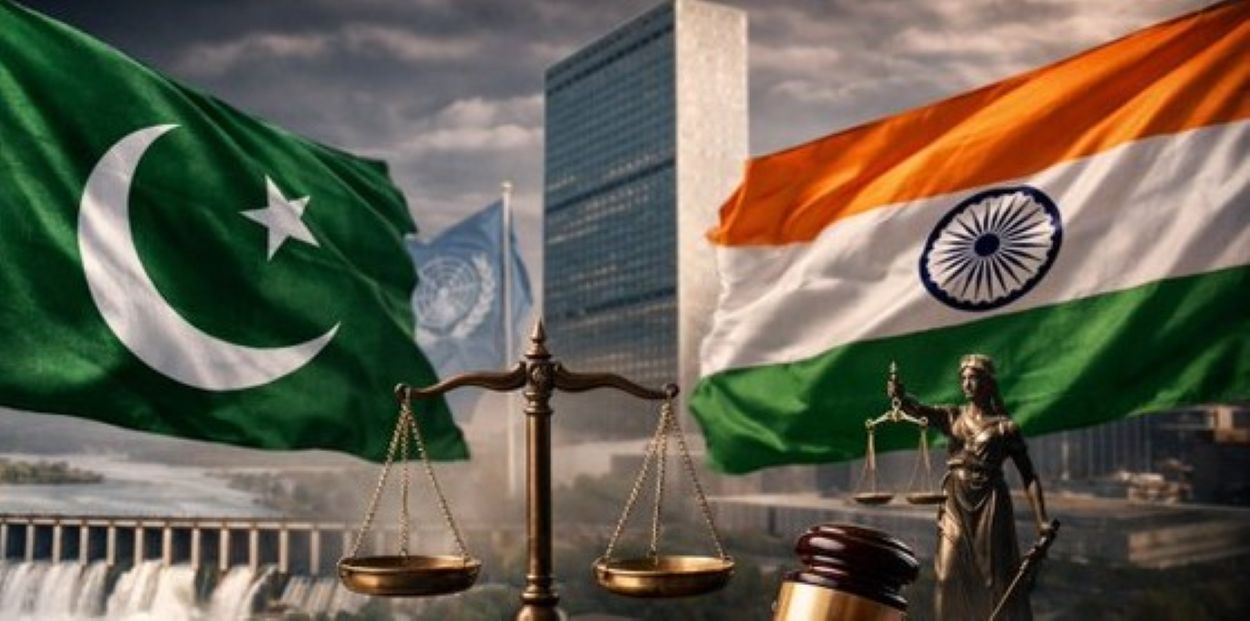

Pakistan sharply pushed back against India at the United Nations, saying the Pakistan-India water dispute UN exchange reflects an attempt to politicise shared water resources and undermine the Indus Waters Treaty. The response came during a high-level UN event held for World Water Day, where Pakistan exercised its right of reply after remarks by the Indian representative.
Islamabad said India’s position on the treaty has no legal basis and warned that using water as political leverage could threaten the livelihoods of millions who depend on the Indus river system.
According to Pakistan’s response, India’s move to keep the Indus Waters Treaty “in abeyance” amounts to a serious break from the agreement’s legal framework. Pakistan’s envoy, Aleena Majeed, said no provision of the 1960 treaty allows either side to unilaterally suspend or modify it.
She argued that the treaty has survived wars, crises, and long periods of political tension, which makes unilateral action even more significant. Pakistan said India’s move last April marked a grave legal and historical departure from that record.
🚨 BOLD!
India makes it CLEAR at the United Nations: Indus Waters Treaty with Pakistan will remain in ABEYANCE until Islamabad ENDS support for terrorism.
Envoy P. Harish calls Pakistan a “GLOBAL EPICENTRE OF TERROR.” pic.twitter.com/gGHFOE0WEI
— Major Sammer Pal Toorr (Infantry Combat Veteran) (@samartoor3086) March 20, 2026Pakistan Warns of “Weaponisation of Water”
Majeed said India’s actions amount to the “weaponisation of water” for narrow political purposes. She warned that such steps risked the livelihoods of millions tied to the shared river system.
Pakistan also rejected India’s terrorism allegations as baseless. In its reply, Islamabad said such accusations were an attempt to deflect attention from India’s own record and from the treaty dispute itself.
Pakistan also pointed to the Court of Arbitration’s 2025 supplemental award. According to the court’s press release and Pakistan’s foreign ministry, the award confirmed that the treaty remains in force and that the court’s competence continues despite India’s decision to place the agreement in abeyance.
That legal point is now central to Pakistan’s position. Islamabad says the ruling makes clear that neither country can unilaterally render the treaty inoperative, and it has urged India to resume full implementation.
The latest exchange shows how the Indus Waters Treaty has become part of a broader diplomatic confrontation between the two neighbours. Pakistan is framing the issue not only as a legal dispute, but also as a humanitarian and regional stability concern.
So far, Pakistan’s message remains firm: it rejects any attempt to use water for political pressure and says it remains committed to international law and the treaty’s full implementation.