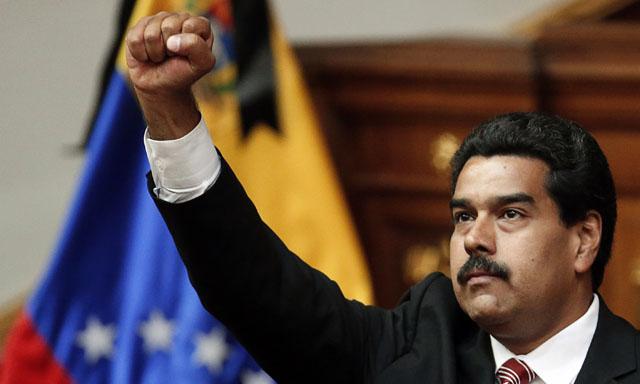

Nicolás Maduro, Venezuela’s long-serving leader, governed the country for more than a decade while projecting himself as a humble man of the people. In practice, his rule combined populist imagery with an increasingly hardline grip on power.
In recent months, Maduro stood under intense pressure from Donald Trump, who publicly accused him of drug trafficking. Maduro responded with defiance, appearing at near-daily rallies that state media broadcast live. He danced to techno music, waved to supporters, and repeated the slogan “No war, yes peace,” often in English.
For many Venezuelans, however, that image rang hollow. During Maduro’s presidency, around seven million people left the country as the economy collapsed. Venezuela endured four straight years of hyperinflation and saw its gross domestic product shrink by roughly 80 per cent over a decade.
Power, Protests, and Crackdowns
Maduro leaned heavily on the military, security agencies, and allied paramilitary groups to maintain control. He also relied on support from international partners, including China, Cuba, and Russia.
After disputed elections in July 2024, security forces cracked down on protests across the country. Authorities arrested more than 2,400 people, while at least 28 died and hundreds suffered injuries. Similar violence marked earlier protest waves in 2014, 2017, and 2019, when Maduro oversaw forceful actions against the opposition.
President Trump holds a news conference after US strike on Venezuela and capture of leader Nicolás Maduro. Watch CNN and follow live updates.https://t.co/sUcoeDOPPW
— CNN International (@cnni) January 3, 2026Rise After Chávez
Tall, moustachioed, and often stern on camera, Maduro entered the presidency in 2013 after serving as a lawmaker, foreign minister, and vice president. Hugo Chávez personally chose him as successor shortly before his death.
That choice surprised many inside the ruling United Socialist Party of Venezuela, as Maduro lacked Chávez’s charisma and rhetorical flair. He won the 2013 election by a narrow margin, and then won re-election in 2018 and 2024. International observers widely denounced both votes as fraudulent.
In January 2025, Maduro began a third term that would have extended his rule beyond Chávez’s 14 years in office. By then, much of the international community recognised opposition figures as Venezuela’s legitimate leaders, though those efforts failed to dislodge him.
Family and Inner Circle
Throughout his presidency, Maduro relied on his wife, Cilia Flores, a former prosecutor and former president of the National Assembly. He often referred to her as the “First Combatant,” and she wielded significant influence behind the scenes.
Today, the Venezuelan economy is 28% of what it was in 2013, according to the IMF. https://t.co/ZjTm3uwfUi
— Kaitlan Collins (@kaitlancollins) January 3, 2026US officials later said both Maduro and Flores were taken into custody during a special operation in Caracas and transferred to the United States to face federal charges. Venezuelan authorities did not immediately confirm the account.
Image, Ideology, and Control
Maduro worked relentlessly to shape his public image. Billboards across Caracas featured his portrait. State television showed him dancing salsa, praising baseball, and speaking directly to viewers. He described himself as both a Marxist and a Christian and often portrayed the United States as the source of Venezuela’s problems.
He also shut down space for dissent. His government jailed political opponents, restricted media outlets, and pursued critics with little regard for due process. The International Criminal Court continues to examine allegations of human rights abuses linked to his administration.
Read: Trump Claims US Strike Captured Venezuela’s President Nicolás Maduro
At the same time, Maduro displayed political pragmatism. He secured temporary sanctions relief by promising competitive elections in 2024, then reversed course. The United States and its allies quickly reinstated penalties.
For years, Maduro remained a constant presence in Venezuelans’ lives. He appeared frequently on television, denounced “imperialism,” and even starred as a cartoon superhero called Super-Bigote. That carefully managed image contrasted sharply with the hardship, repression, and division that defined his rule.