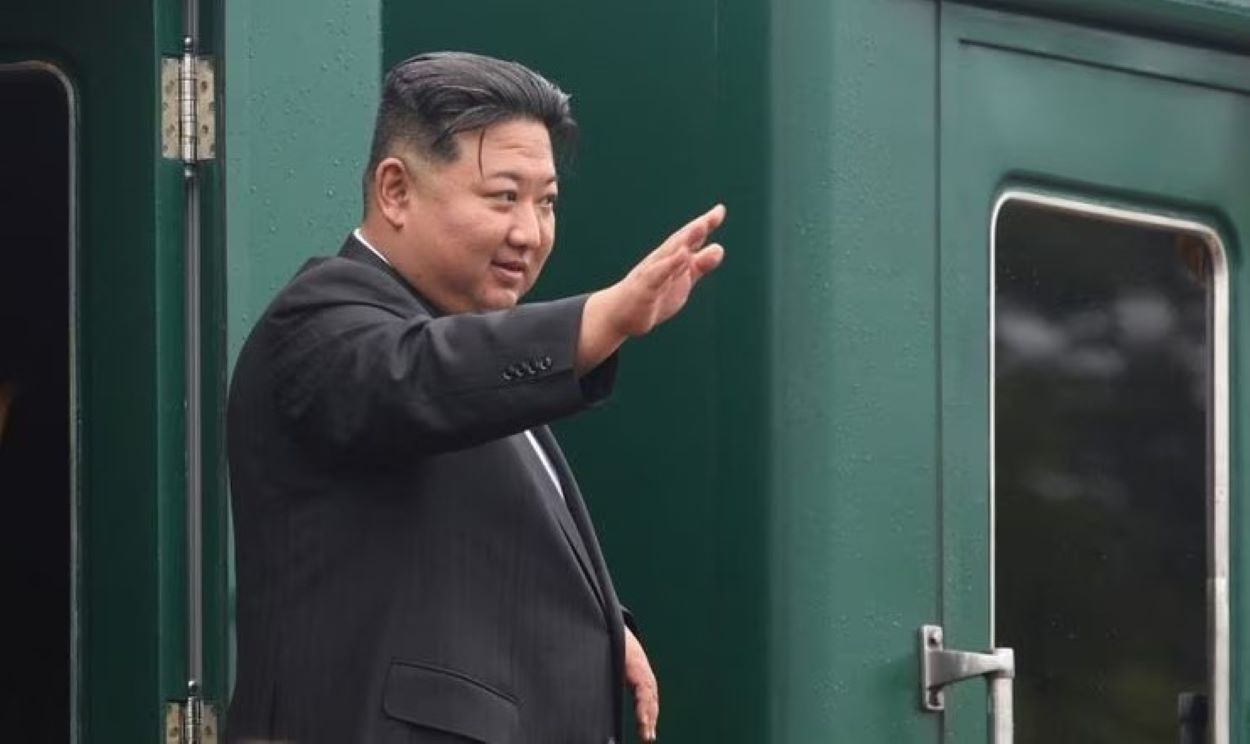

Kim Jong Un’s nuclear weapons vow underscores North Korea’s commitment to maintaining its nuclear status as permanent and non-negotiable.
In a policy address to the Supreme People’s Assembly, the North Korean leader stated that the country would “firmly consolidate” its position as a nuclear-armed state. He described this direction as irreversible and central to national security.
Kim emphasised plans to further strengthen the country’s nuclear deterrent. He said Pyongyang would continue advancing its capabilities to counter what it sees as hostile forces.
North Korea already possesses multiple nuclear warheads and has developed advanced delivery systems, including solid-fuel intercontinental ballistic missiles. These systems can launch with minimal warning, raising global security concerns.
Strong Warning Issued to South Korea
Kim also announced plans to designate South Korea as the “most hostile state.” He warned that any perceived threat would be met with a “merciless” response.
The statement comes despite repeated attempts by South Korean President Lee Jae Myung to reopen dialogue. So far, Pyongyang has not responded to these diplomatic efforts. The North Korean leader criticised the United States, accusing it of “state terrorism” in reference to military actions involving Iran.
Analysts suggest that recent global developments have reinforced Pyongyang’s belief in nuclear weapons as a key security guarantee. Experts argue that North Korea sees such events as justification for expanding its nuclear programme.
Kim also outlined domestic priorities, including increasing industrial output by 1.5 times. He announced that 15.8% of the 2026 budget will be allocated to defence, slightly higher than the previous year. Additionally, he proposed establishing a formal police system to strengthen internal security and legal structures.
Read: Kim Jong Un reappointed state affairs president
Observers say North Korea views its nuclear programme as essential for regime survival. Officials argue that abandoning nuclear weapons would weaken national security, especially amid ongoing tensions with global powers.
The latest statements suggest that Pyongyang is unlikely to shift its nuclear stance in the near future.