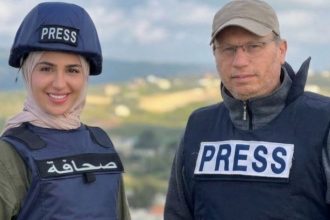
An Israeli strike kills Lebanese journalists in southern Lebanon, triggering strong reactions from officials and media organisations. Three journalists died after their vehicle was hit in the town of Jezzine on Saturday.
The Israel Defence Forces (IDF) confirmed it carried out the strike. It claimed that Ali Shoeib was linked to Hezbollah’s Radwan Force and had operated under the cover of journalism.
According to the IDF, Shoeib allegedly gathered intelligence on Israeli troop positions and shared propaganda materials. However, the military did not provide evidence to support these claims.
The IDF also did not comment on the deaths of the other two journalists. Lebanese leaders strongly condemned the strike. Hezbollah described it as a deliberate targeting of journalists and rejected Israel’s allegations.
President Joseph Aoun called the incident a “brazen crime,” stating it violated basic international laws protecting civilians. Prime Minister Nawaf Salam also denounced the attack, calling it a clear breach of humanitarian law.
The Committee to Protect Journalists warned that Lebanon has become increasingly dangerous for media workers. The organisation highlighted a pattern of accusations against journalists without clear evidence. Its regional director stressed that journalists must not be treated as combatants, regardless of their affiliations.
The incident marks the second reported case of journalists being killed in Lebanon since the latest conflict escalation began. Earlier in March, another media worker and his spouse were reportedly killed in a separate strike.
According to Lebanon’s Ministry of Health, more than 1,100 civilians have died during the conflict. Over one million people have also been displaced, deepening the humanitarian crisis.
Read: Iran’s Strike at Prince Sultan Air Base Wounds 12 U.S. Soldiers
Many observers fear that tactics seen in other conflict zones are being repeated. Israel, however, denies deliberately targeting civilians. The killing of journalists underscores the intensifying conflict between Israel and Hezbollah. Despite a ceasefire agreement reached in November 2024, tensions have persisted.
Recent developments, including retaliatory attacks and increased military activity, have further escalated the situation. Israel maintains that its actions aim to protect communities in northern regions from militant threats.
The incident highlights growing risks for civilians and journalists operating in conflict zones.