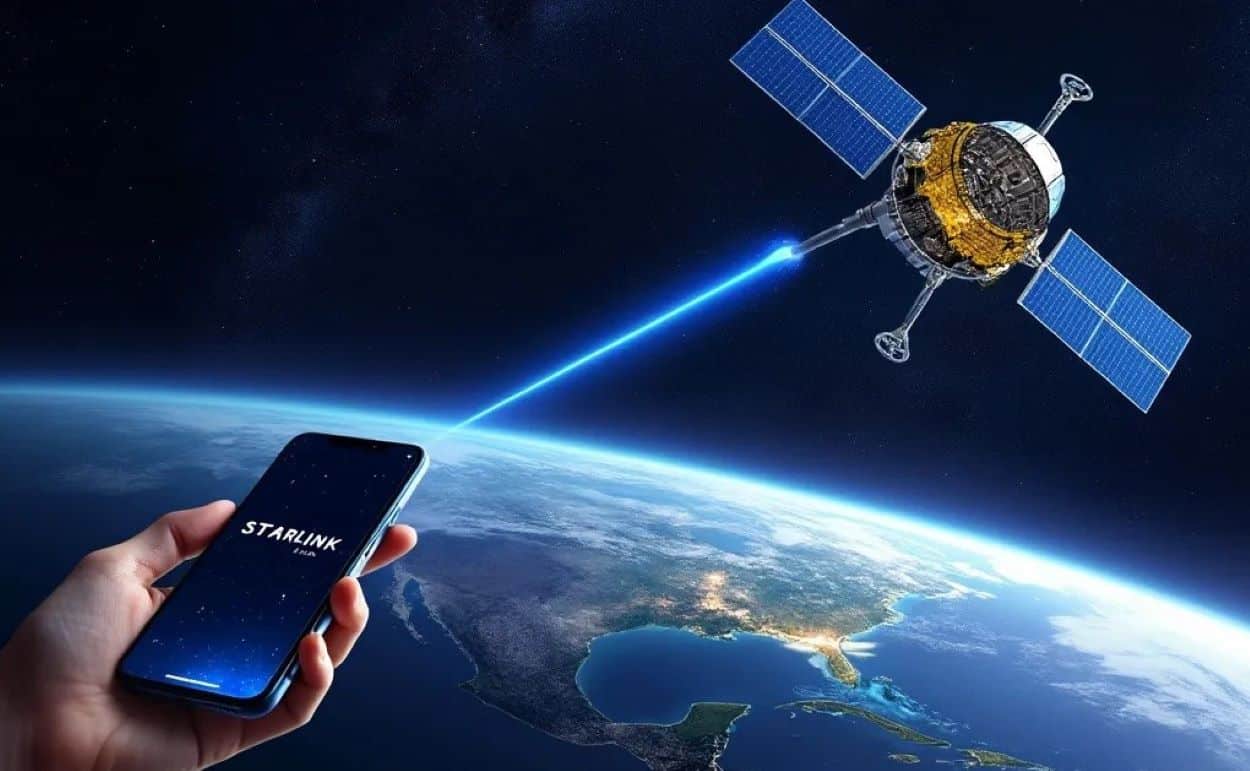

Tech billionaire Elon Musk has sparked widespread discussion after suggesting that a Starlink-powered smartphone could become a reality. Musk said such a device would differ fundamentally from conventional smartphones like the iPhone or Android models.
The idea gained attention after Musk responded to a user on X, formerly Twitter, saying a Starlink phone was “not out of the question.” While he shared no official roadmap, the comment confirmed that the concept remains under consideration.
Musk emphasised that a potential Starlink phone would not follow the traditional smartphone blueprint. Instead of focusing on cameras, entertainment apps, or design aesthetics, the device would prioritise performance, efficiency, and artificial intelligence.
Starlink, operated by SpaceX, already delivers satellite internet to millions worldwide, especially in regions with limited or no terrestrial connectivity. A smartphone built around that network could reshape how users access mobile services.
BREAKING: Elon Musk says a SpaceX Starlink mobile phone is not out of the question. He says it would be very different from current phones and optimized purely for max performance per watt and running neural networks. pic.twitter.com/nDbbfkFQH3
— DogeDesigner (@cb_doge) January 30, 2026One of the most distinctive elements of the proposed phone lies in its architecture. Musk indicated that the device would rely heavily on a Neural Processing Unit (NPU), designed to deliver high performance per watt.
This approach would allow advanced AI tasks to run directly on the device. Potential benefits include a faster AI assistant, smarter automation, and improved real-time processing while consuming less power.
Direct Satellite Connectivity
Unlike traditional smartphones that depend on cellular towers, a Starlink phone would connect directly to satellites. This design would reduce reliance on conventional mobile networks and extend coverage to remote and underserved areas.
🚨NEWS: Elon Musk says a Starlink phone is not out of the question
“It would be a very different device than current phones. Optimized purely for running max performance neural nets.” pic.twitter.com/7dM5aF2DAN
— Muskonomy (@muskonomy) January 30, 2026Such a device could prove valuable in regions where telecom infrastructure remains underdeveloped. Users in rural locations, disaster zones, or isolated communities could gain reliable connectivity without relying on local networks.
What It Means for Mobile Technology
Although Musk has not confirmed development timelines or specifications, the discussion highlights a broader shift in mobile technology. A Starlink smartphone would blend satellite internet, on-device AI, and energy-efficient computing into a single platform.
Read: SpaceX Plans Second-Generation Cellular Starlink Launch by 2027
As conversations continue online, the concept reflects Musk’s broader vision of integrating connectivity and artificial intelligence into everyday devices. Whether the Starlink phone moves from idea to product remains to be seen, but it has already reshaped expectations around what a smartphone could become.