

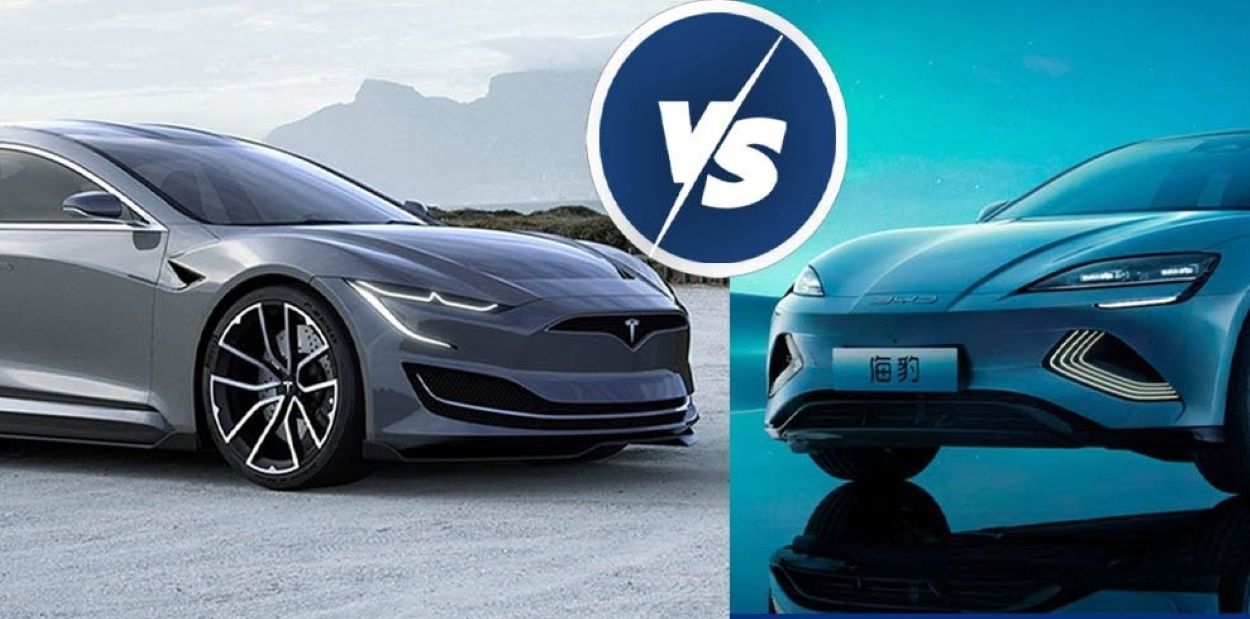

Chinese electric vehicle giant BYD is on course to surpass Tesla as the world’s largest seller of electric vehicles in 2025, marking a major shift in the global EV market.
While BYD has yet to publish its final full-year figures, available data strongly suggest the Chinese automaker will claim the top spot. By November 2025, BYD had sold around 2.07 million electric vehicles worldwide. Tesla, by comparison, reported sales of about 1.22 million units by the end of September.
Tesla sales expected to fall short
Market forecasts indicate Tesla will struggle to close the gap. FactSet consensus estimates suggest Tesla may deliver around 449,000 vehicles in the fourth quarter, bringing its total annual sales to roughly 1.65 million. That would represent a year-on-year decline of nearly 8%.
Read: Tesla Patent Hints at Starlink Internet Integration for Future Vehicles
Analysts at Deutsche Bank remain more cautious. They project fourth-quarter sales closer to 405,000 vehicles, citing sharper slowdowns in North America and Europe, along with softer demand in China.
Our 9 millionth vehicle globally has just rolled off the production line at Giga Shanghai 🎉
Thanks to our owners and supporters around the world ❤️ pic.twitter.com/D0nmZTqG62
— Tesla Asia (@Tesla_Asia) December 30, 2025A key factor behind Tesla’s weaker momentum has been the expiry of the $7,500 US federal EV tax credit at the end of September 2025. The incentive boosted short-term demand, but higher effective prices have since weighed on buyer interest.
Tesla also faces intensifying competition from European automakers, further pressuring its market share. In some regions, analysts note that consumer sentiment has shifted following Elon Musk’s public political positions, including support for Donald Trump and other right-wing figures.
BYD expands despite trade barriers
BYD’s rise has not come without challenges. Fierce price competition in China forced the company to pivot toward overseas markets. It responded by accelerating exports and expanding production capacity abroad.
In November 2025, we achieved a total monthly sales of 480,186 New Energy Vehicles.
Together, we drive forward to a cleaner, brighter future! #BYD #BuildYourDreams pic.twitter.com/GFcFhX00lr
— BYD Global (@BYDGlobal) December 1, 2025Trade barriers also posed hurdles. The United States imposed 100% tariffs on Chinese EV imports, while Europe introduced additional duties. BYD countered these measures by investing in local manufacturing, including new production facilities in Hungary, helping it sustain growth.
Read: BYD’s Sales Decline for Third Straight Month
What lies ahead for Tesla
Despite losing its sales crown, Tesla may still regain momentum. Industry experts point to autonomous driving as a potential growth engine from 2026 onward.
Tesla plans to introduce more advanced full self-driving features and begin production of its autonomous Cybercab robotaxi in April 2026. The company also aims to launch lower-cost versions of the Model 3 and Model Y to revive demand.
For now, however, BYD holds the advantage. Its rapid expansion, pricing strategy, and global manufacturing push have firmly positioned it as the new leader in the electric vehicle market.



