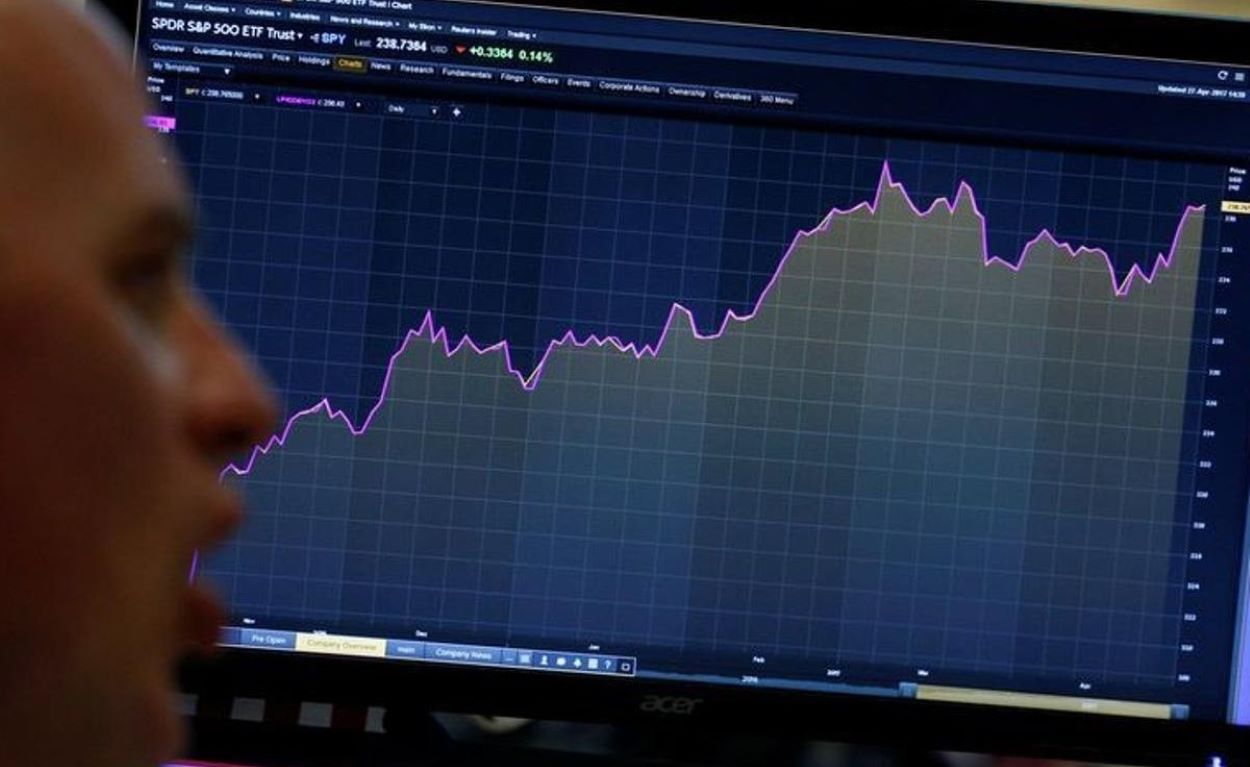

Major Wall Street indexes ended lower on Friday as investors reassessed the outlook for US interest rates, even as chipmakers rebounded after a volatile week. Gold eased from recent highs, while the dollar steadied near a six-week peak amid expectations that the Federal Reserve will delay rate cuts.
Markets have experienced sharp swings early in 2026, driven by geopolitical tensions and policy uncertainty under Donald Trump. Despite the noise, investors returned selectively to artificial intelligence-related stocks following solid signals from the semiconductor sector, while some rotated into smaller-cap names in search of value.
A proposal to cap credit card interest rates weighed on financial stocks during the week, even as major US banks delivered strong quarterly results. Analysts said the earnings suggested consumer spending remains resilient, though risks persist.
“Banks showed that the consumer is still spending,” said Jason Barsema, president of Halo Investing. “The key question is whether that momentum holds.”
On Friday, the S&P 500 slipped 0.12% to 6,936.04, while the Nasdaq Composite fell 0.22% to 23,477.94. The Dow Jones Industrial Average eased 0.16% to 49,363.46, after hitting a record close earlier in the week. All three indexes were on track for modest weekly losses.
Sentiment toward chip stocks improved after positive developments in the sector, including trade progress between the US and Taiwan that could ease tariffs and support technology investment. Analysts said optimism around TSMC provided a lift to AI-linked shares that had struggled in recent months.
US markets will remain closed on Monday for the Martin Luther King Jr. Day holiday. The earnings season continues next week, with results expected from Netflix, Johnson & Johnson, and Intel.
The US dollar traded near a six-week high and was set for a third straight weekly gain. Stronger-than-expected US labour data reduced expectations for near-term rate cuts, with markets now pricing in only a 20% chance of a Fed cut in March.
Against a basket of major currencies, the dollar edged up 0.05%. The euro slipped to $1.1595, while the Japanese yen strengthened after comments from Japan’s finance minister signalled readiness to counter excessive weakness.
Oil prices rose modestly as supply concerns lingered, though gains remained below the multi-month highs seen earlier in the week. US crude climbed to $59.75 a barrel, while Brent rose to $64.37.
Gold eased 1.05% to $4,566.36 an ounce after a strong safe-haven rally. Analysts noted that firmer dollar levels made the metal less attractive to overseas buyers, even as geopolitical and economic uncertainty continued to support long-term demand.