
Venezuela’s oil industry has returned to the global spotlight. This follows the reported capture of President Nicolas Maduro by U.S. forces, as claimed by U.S. President Donald Trump. The country holds vast hydrocarbon resources, yet years of mismanagement, underinvestment, and international sanctions have kept production far below potential.
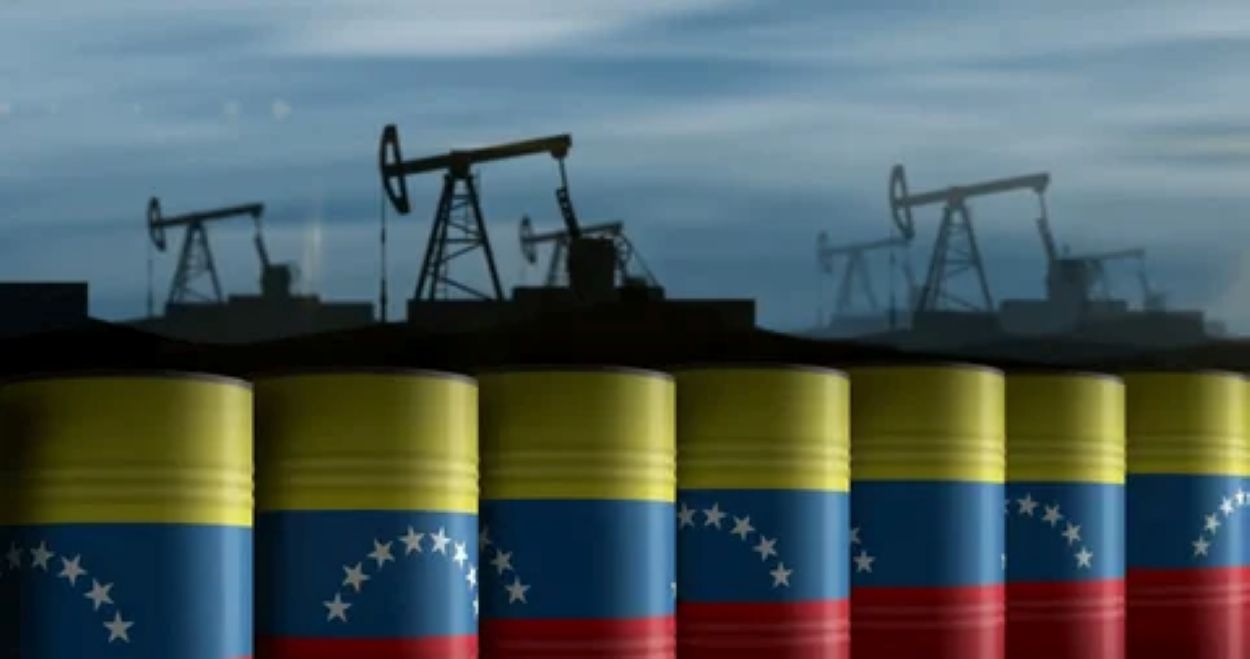
Venezuela possesses the world’s largest proven oil reserves, estimated at about 303 billion barrels. This represents roughly 17 percent of global reserves. It places Venezuela ahead of Saudi Arabia, the leading producer within the Organisation of the Petroleum Exporting Countries. This is according to data from the Energy Institute in London. Most of these reserves consist of heavy crude located in the Orinoco Belt. In this region, extraction remains technically straightforward but costly due to the oil’s density.
Despite its resource base, Venezuela’s production has collapsed over time. The country helped found OPEC alongside Iran, Iraq, Kuwait, and Saudi Arabia. In the 1970s, it pumped as much as 3.5 million barrels per day, accounting for more than seven percent of global output at the time. Output fell sharply during the 2010s. It averaged about 1.1 million barrels per day last year, representing only around one percent of global production.
FOX & FRIENDS: What do you see as the future of Venezuela’s oil industry?
TRUMP: Well I see that we’re gonna be very strongly involved in it. That’s all. What can I say. We have the greatest oil companies in the world. pic.twitter.com/7mxZvQnNWr
— Aaron Rupar (@atrupar) January 3, 2026Energy analysts say any meaningful recovery would take time, even under a new political framework. Arne Lohmann Rasmussen of Global Risk Management has noted that a genuine regime change could eventually add more oil to global markets. However, rebuilding capacity would not happen quickly. Saul Kavonic of MST Marquee argues that exports could rise if sanctions ease and foreign investment returns. At the same time, Jorge Leon of Rystad Energy cautions that past examples, such as Libya and Iraq, show that forced political change rarely stabilises oil supply in the short term.
The structure of Venezuela’s oil sector also shapes its outlook. The country nationalised the industry in the 1970s, creating Petroleos de Venezuela S.A. (PDVSA). During the 1990s, Caracas partially reopened the sector to foreign capital. However, after Hugo Chávez took office in 1999, the government required PDVSA to hold majority stakes in all oil projects. Joint ventures were pursued with international partners, including Chevron, ENI, Total, China National Petroleum Corporation, and Russia’s Rosneft. These were largely to sustain output.
President Donald Trump says the US will be strongly involved in Venezuela’s oil industry after US forces captured Venezuelan President Nicolas Maduro and his wife in an early morning raid Saturday.
Julian Lee explains what the US strike on Venezuela means for oil. Follow our… pic.twitter.com/aJ466XtzZX
— Bloomberg TV (@BloombergTV) January 3, 2026Sanctions have reshaped Venezuela’s export routes. The United States was once the principal buyer of Venezuelan crude. However, China has become the primary destination over the past decade. Venezuela owes China approximately $10 billion, much of which has been repaid through crude shipments. These exports typically travel on very large crude carriers, which were previously co-owned by Chinese and Venezuelan entities. When the United States announced a blockade on tanker traffic, several of these vessels remained in limbo. As a result, exports slowed sharply.
Read: Trump Claims US Strike Captured Venezuela’s President Nicolás Maduro
Russia has also provided Venezuela with billions of dollars in loans, although the precise figures remain unclear. Beyond production, PDVSA controls significant refining assets abroad, including CITGO in the United States. Creditors continue to pursue control of these assets through long-running legal proceedings in U.S. courts. This underscores the financial strain facing the Venezuelan oil sector.
Together, these factors explain why Venezuela’s oil industry, despite its unmatched reserves, remains constrained. Its future depends on political stability, access to capital, and the resolution of sanctions that continue to limit production and exports.