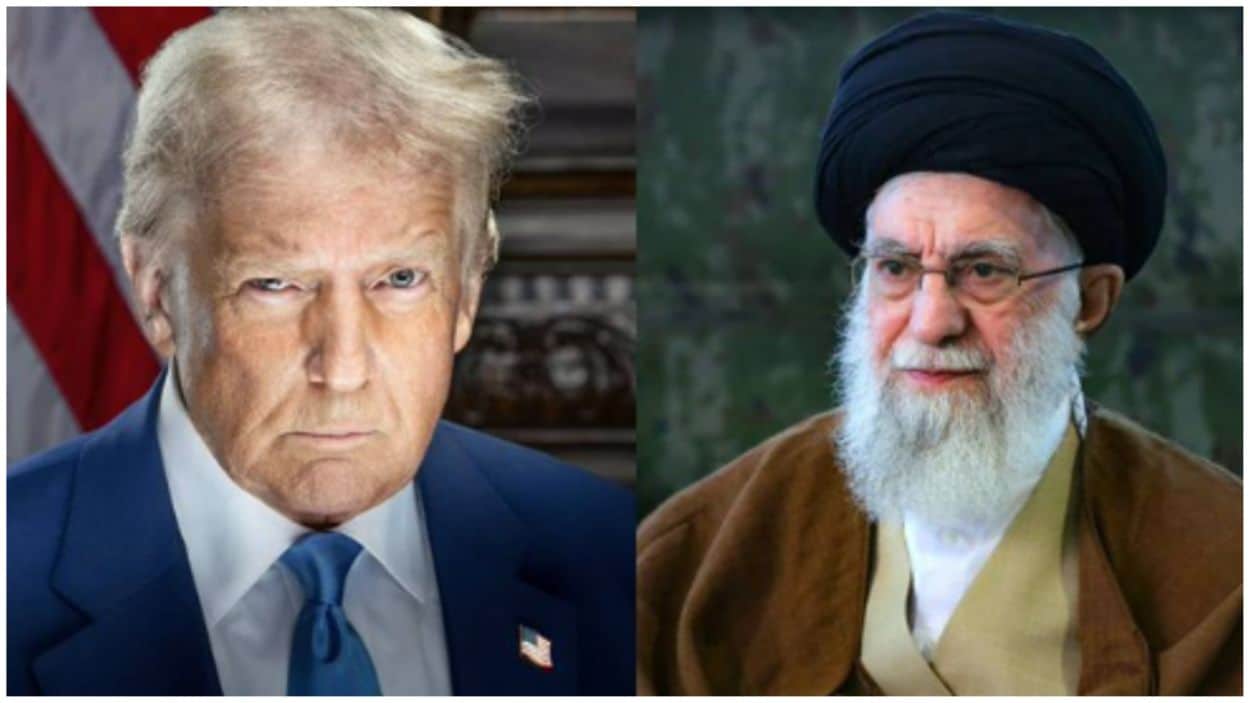

The US-Iran nuclear talks and military tensions have intensified as President Donald Trump signalled he is considering military action while negotiations continue over Tehran’s nuclear programme.
Trump warned that “bad things” would happen if Iran failed to reach a deal within 10 days, later extending that deadline to 15. When asked whether he was contemplating a limited strike, he replied, “The most I can say is that I am considering it.”
Donald Trump has threatened a "limited" military strike on Iran to pressure its leaders to agree to a deal on uranium enrichment. What could the consequences be for the U.S. and its allies in the Middle East?
Sky's international correspondent @DiMagnaySky has this analysis pic.twitter.com/8MECNQndjP
— Sky News (@SkyNews) February 21, 2026The United States has ordered a major military buildup in the Middle East. Two aircraft carriers have been dispatched to the region as Washington increases pressure on Tehran.
Satellite images on February 18 showed the USS Abraham Lincoln positioned roughly 700 kilometres from Iran’s coast. Its deployment places F-35 and F-18 fighter jets within operational range. A second carrier, USS Gerald R Ford, has also been sent to the Middle East.
U.S.-Iran Nuclear Talks, Military Tensions Continue in Geneva
Despite rising military pressure, diplomatic efforts remain underway. Iran and the US resumed negotiations earlier this month to resolve their longstanding dispute and avoid confrontation.
Indirect talks took place in Geneva on February 17. Oman mediated the discussions, which involved US envoys Steve Witkoff and Jared Kushner alongside Iranian Foreign Minister Abbas Araqchi.
Following the meeting, Tehran announced that both sides agreed to prepare draft proposals for a potential agreement. Araqchi told US media that submitting draft texts would be the next step.
He added that the draft could be ready within days, pending final approval from Iranian leadership, before being handed to Witkoff.
The United States continues to demand that Iran abandon its nuclear programme. Tehran maintains that it is not seeking to develop an atomic weapon and has rejected calls to halt its nuclear activities entirely.
Read: Trump, Iran War Midterm Elections: Escalation Risks Before November Vote
As diplomatic and military tracks unfold simultaneously, uncertainty remains over whether negotiations can ease tensions or whether escalation will follow.