
US President Donald Trump said he ordered American forces to participate in the attack on Iran because he believed Tehran was preparing to strike first.
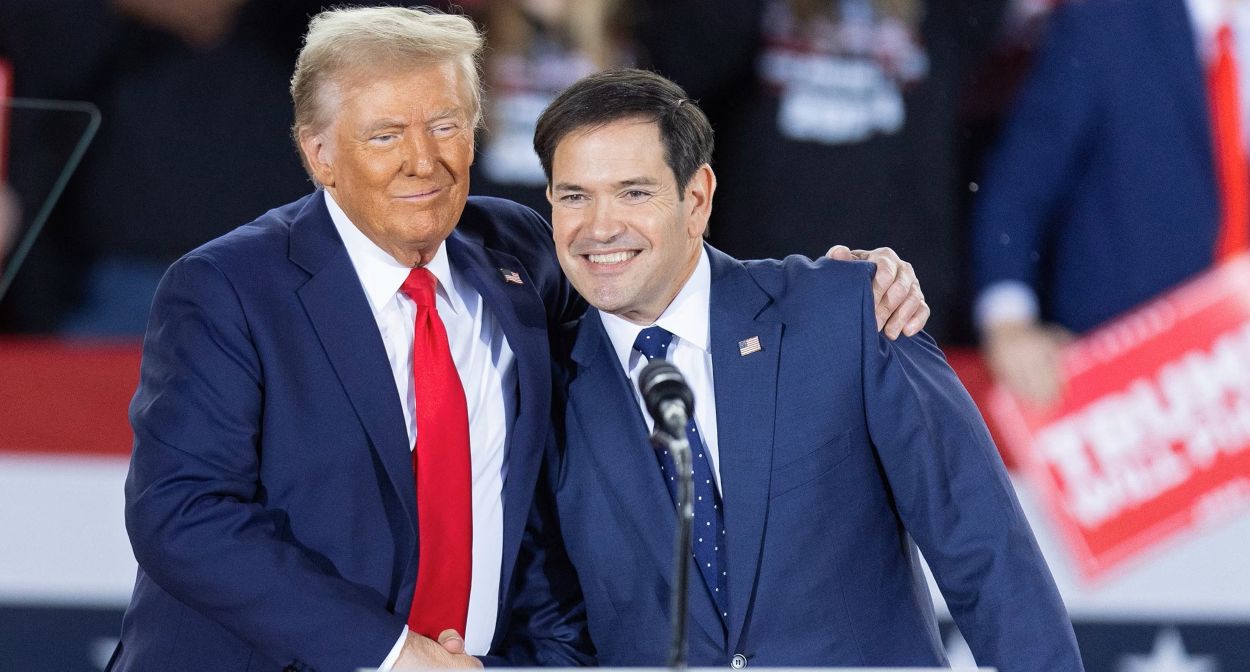
As Trump explains the US strike on Iran, his account contradicts an earlier explanation offered by Secretary of State Marco Rubio regarding how the conflict began.
The differing explanations have sparked debate within US political circles and among commentators about the decision to launch the military operation.
Speaking to reporters at the White House while meeting German Chancellor Friedrich Merz, Trump said he believed Iran was about to launch an attack.
“We were having negotiations with these lunatics, and it was my opinion that they were going to attack first,” Trump said. He added that if the United States had not acted, Iran would have struck first.
Trump also dismissed suggestions that Israel pushed the United States into the conflict, stating that the decision was his own.
His remarks contrasted with comments made a day earlier by Secretary of State Marco Rubio. Rubio had told reporters the United States launched strikes because officials expected Iran to retaliate against American forces after a planned Israeli action against Tehran.
Rubio said the administration believed acting first would reduce potential casualties. The differing explanations have drawn criticism from some political commentators and members of both parties.
US President Trump sought to justify a broad, open-ended war on Iran. He told reporters without citing evidence, ‘if we didn't do what we're doing right now, you would have had a nuclear war, and they would have taken out many countries’ https://t.co/Q9RSVnc9oY pic.twitter.com/mVdjijln2A
— Reuters (@Reuters) March 3, 2026Some conservative voices argued that Rubio’s comments suggested Israel influenced the US decision to enter the conflict. Conservative podcaster Matt Walsh wrote on social media that Rubio’s remarks raised questions about whether Washington was acting in Israel’s interest.
Media personality Megyn Kelly also questioned the decision during a broadcast, saying the US government should prioritise American interests.
The criticism comes as Republicans prepare for the upcoming midterm elections and seek to maintain control of the US Congress.
.@SecRubio: "The president made the very wise decision—we knew that there was going to be an Israeli action, we knew that that would precipitate an attack against American forces, and we knew that if we didn’t preemptively go after them before they launched those attacks, we… pic.twitter.com/Jp5rqpRH4T
— Rapid Response 47 (@RapidResponse47) March 2, 2026The debate over the origins of the conflict has forced the White House into what officials described as damage control.
Trump answered questions from reporters publicly for the first time since the US-Israeli air campaign began three days earlier. Previously, he had discussed the attacks through video messages, interviews and brief remarks.
The president said he believed Iran was close to launching attacks following negotiations held in Geneva last week between US envoys and Iranian officials. However, Trump did not present evidence to support the claim during his remarks.
Read: Netanyahu Political Career at Stake from Iran War Ahead of Israel Elections
Rubio later defended the administration’s decision while speaking to reporters on Capitol Hill. “The president determined we were not going to get hit first,” Rubio said.
Two senior administration officials also briefed reporters about the events leading up to the military action.
They said US envoys Steve Witkoff and Jared Kushner met Iranian representatives in Geneva for talks mediated by Oman. During those discussions, the US pressed Iran to abandon uranium enrichment.
According to officials, Iran proposed a plan to allow enrichment at higher levels at the Tehran Research Reactor.
US negotiators reportedly believed Iran was delaying negotiations and maintaining the technical capacity needed to build a nuclear weapon. Iran, however, denies seeking nuclear weapons. Officials said the envoys informed Trump that reaching a nuclear agreement similar to the 2015 deal negotiated during Barack Obama’s presidency could take months.