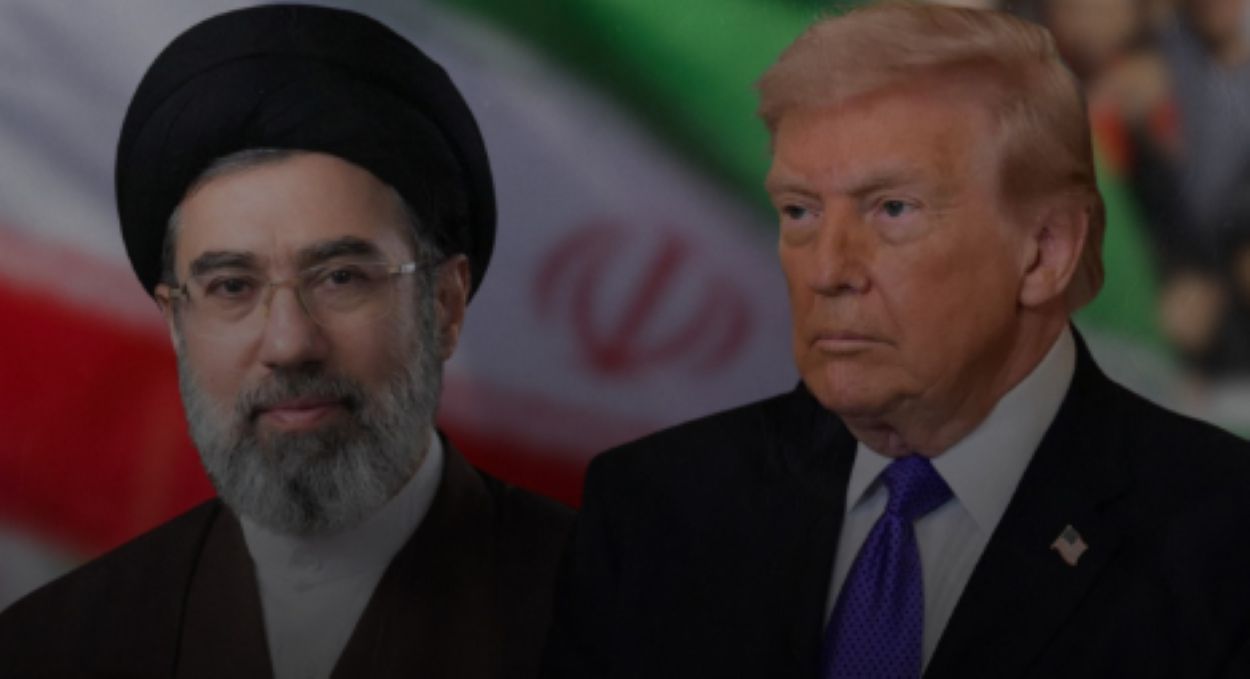

US President Donald Trump stirred fresh debate with his remarks to Mojtaba Khamenei, saying he did not know whether Iran’s new supreme leader was alive and that he had heard speculation suggesting otherwise. The comments added another layer of uncertainty to a conflict already defined by leadership turmoil, oil disruption and escalating military threats.
Mojtaba Khamenei was named Iran’s new supreme leader after the death of his father, Ayatollah Ali Khamenei, according to current AP reporting. Another AP report said Mojtaba later issued his first public statement through a news anchor and did not appear in person, reportedly because he was wounded and in hiding.
Trump, Mojtaba Khamenei Remarks Deepen Uncertainty
According to the AP, Trump said there were speculations about Mojtaba Khamenei’s death, while also suggesting he was likely alive “in some form.” That left his message open-ended and helped fuel more attention around the Iranian leader’s condition.
The analyst frames those remarks as part of Trump’s broader messaging on the war. It also says he claimed Iran wants a deal to end the conflict, but that he was not ready to accept one because the terms were “not good enough.”
Trump Also Focused On The Strait Of Hormuz
Trump argued that countries relying on oil shipments through the Strait of Hormuz should take more responsibility for keeping the passage open, with help from the United States. AP reporting also says Trump urged allies to send warships to secure the waterway as Iran continued missile and drone attacks in the Gulf.
He said he hoped China, France, Japan, South Korea and Britain would send ships to the area. That message linked the military standoff directly to global energy security, as the strait remains one of the world’s most important oil transit routes.
Read: US Offers $10m Reward For Iran Supreme Leader Mojtaba Khamenei
Trump claimed the United States had “totally demolished” Kharg Island, Iran’s key oil export hub, and suggested it could be hit again. AP’s recent conflict coverage similarly ties the war to growing fears over oil supply and infrastructure damage across the region.