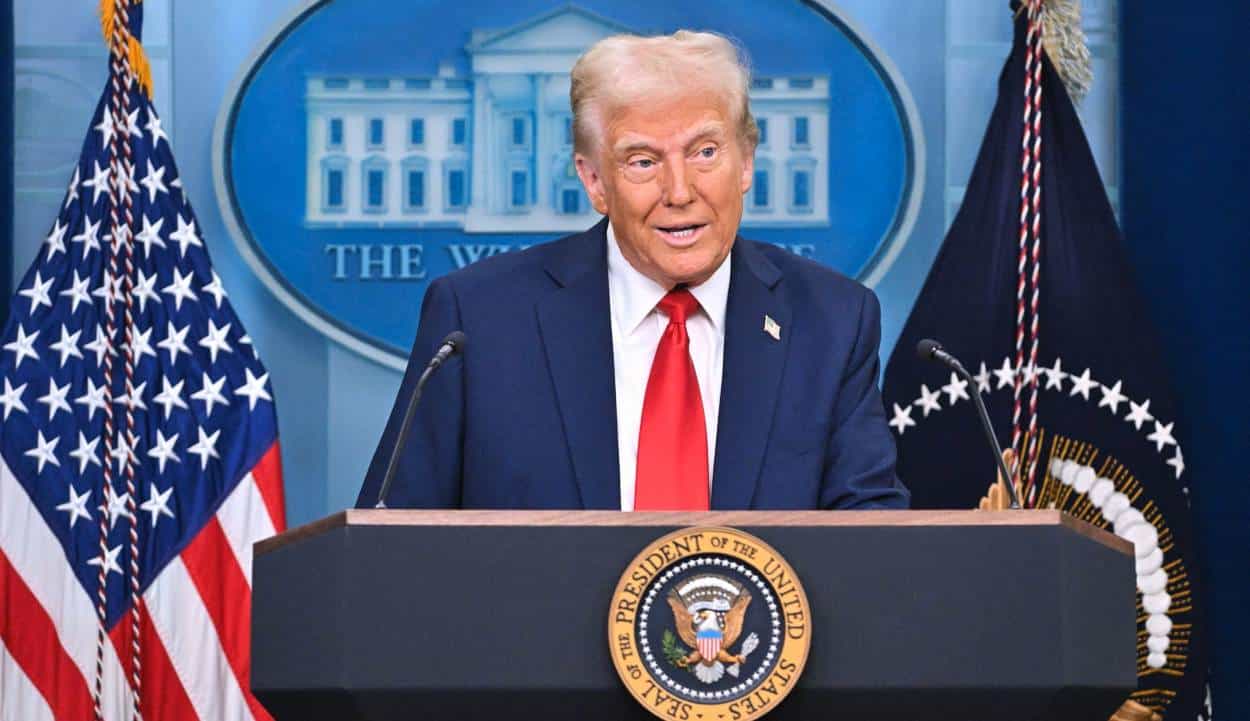

US President Donald Trump on Thursday threatened to invoke the Insurrection Act of 1807 to deploy military forces in Minnesota, as protests intensified following an expanded immigration enforcement presence in Minneapolis.
Tensions have surged after an officer from Immigration and Customs Enforcement fatally shot a US citizen, Renee Good, eight days ago. Protests have since spread beyond Minneapolis, with confrontations between residents and federal agents growing increasingly volatile.
Trump issued his warning hours after another shooting involving federal officers. Authorities said an immigration agent shot Julio Cesar Sosa-Celis, a Venezuelan man, during a confrontation after agents attempted to stop his vehicle. He sustained a gunshot wound to the leg.
“If the corrupt politicians of Minnesota don’t obey the law and stop the professional agitators and insurrectionists from attacking the Patriots of ICE, who are only trying to do their job, I will institute the INSURRECTION ACT,” Trump wrote on social media.
The president has repeatedly criticised Minnesota’s Democratic leadership and has used harsh language to describe parts of the state’s immigrant population. His administration has already deployed nearly 3,000 federal officers to the Minneapolis area, many carrying firearms and wearing military-style camouflage and face coverings.
Residents have responded with sustained demonstrations. Protesters have gathered day and night, blowing whistles and banging instruments. On Wednesday night, crowds assembled near the site where Sosa-Celis was shot. Federal officers used flash-bang grenades and tear gas to disperse the crowd.
Later that night, a smaller group vandalised a vehicle believed to belong to federal officers. One individual painted graffiti referencing Kristi Noem, who oversees ICE.
.@PabloReports: Trump has now threatened to invoke the Insurrection Act in Minnesota. What’s your reaction to that?
Escobar: We knew this was part of his plan all along, and my fear—and I think the fear of many members of Congress and communities across the country—is that he… pic.twitter.com/zogCBp5k6C
— Acyn (@Acyn) January 15, 2026Since the enforcement surge began, agents have arrested immigrants and protesters alike. Witnesses reported officers smashing car windows, pulling people from vehicles, and stopping Black and Latino US citizens to demand identification.
The Department of Homeland Security said Sosa-Celis entered the US in 2022 under a humanitarian parole programme introduced during Joe Biden’s administration. The Trump administration later revoked parole for Venezuelans and others admitted under that programme.
DHS described Sosa-Celis as a convicted criminal under Minnesota law. However, court records reviewed by Reuters show he was convicted only of petty misdemeanours, which state law does not classify as crimes and carry a maximum fine of $300.
According to DHS, officers attempted to stop Sosa-Celis’ vehicle before he fled, crashed into a parked car, and ran on foot. The department said officers shot him during a ground struggle after two men allegedly attacked an agent with household tools. Reuters could not independently verify this account.
Minnesota leaders and the Trump administration have blamed each other for escalating violence. Minneapolis Mayor Jacob Frey described the ICE deployment as an invasion and said some agents’ conduct was “disgusting and intolerable.” He called for calm and urged cooperation between state and federal authorities.
Trump threatened to invoke the Insurrection Act in Minnesota over protests against immigration agents. Here's what could happen.
Read more: https://t.co/GOXID1TRHT pic.twitter.com/yJ7vgUbpzK
— Forbes (@Forbes) January 15, 2026The Insurrection Act allows a president to deploy the military or federalise a state’s National Guard to suppress unrest. According to the Brennan Centre for Justice, presidents have used the law 30 times. The US Supreme Court has ruled that the president alone determines when the conditions apply.
Trump has previously federalised National Guard units for immigration enforcement in Democratic-led cities, including Los Angeles, a move a judge later ruled unconstitutional.
Public opinion remains divided. A Reuters/Ipsos survey released Thursday found that 59% of Republicans support aggressive immigration arrests even if people are harmed, while 39% prefer fewer arrests if it reduces the risk of injury.
Legal challenges are already underway. Minnesota’s attorney general has sued the Trump administration, accusing ICE of unlawful and violent conduct, including racial profiling and warrantless home entries. The American Civil Liberties Union filed a similar lawsuit on Thursday.
At a hearing on Wednesday, the state asked Kate Menendez to issue a temporary restraining order against the ICE operation. Menendez ordered the administration to respond by Monday and said she would rule afterwards, calling the issues raised “enormously important.”