The work of the remarkable women known as Aware Girls to counter the extremism of the Taliban would be dangerous even if they weren’t based in Peshawar, a city that feels as if it’s under siege
In a hotel room in Peshawar, in secret, Gulalai Ismail is giving a lecture to a group of men and women on the Universal Declaration of Human Rights (UDHR).
The 29-year-old wears a black leather jacket, rather than the customary burqa, and uses a flipchart as she explains the Declaration’s clauses on freedom of expression and the right to a fair trial.
The 30 delegates in the room have travelled here from as far afield as Chitral, South Waziristan and Afghanistan.
When Ismail has finished, they take turns to talk about the human rights abuses that they’ve witnessed: acts of mob justice and lynchings, or summary executions by Islamist extremists.
Four people act out the killing of a journalist by the Taliban.
They also share ideas for promoting peace. One man explains how he persuaded shopkeepers to stop selling toy guns to children in a bazaar.
A young woman describes her successful campaign at the University of Malakand for female students to be allowed to wear colourful headscarves, instead of just black.
These brave young people belong to a network of about 300 activists from across northern Pakistan who peacefully oppose the Taliban.
Peshawar is their headquarters, the safest place for them to meet and attend workshops on human rights.
Gulalai leads many of the sessions. A determined and fearless Pashtun woman, she heads the organisation that makes all this happen: Aware Girls.

‘Aware Girls’ was founded in 2002 and operates in the face of severe violence, not just in Peshawar but also in Pakistan’s tribal areas and other troubled parts of the country.
It trains young women on their rights – and, through its Youth Peace Network, makes efforts to encourage more women into politics – who then try to stop their peers being radicalised, leaving Peshawar for villages and towns where they try to dissuade others from joining extremist groups.
In Peshawar, this is highly dangerous work – not least because Aware Girls is run mainly by women.
One of its attendees in 2011 was Malala Yousafzai, whose own efforts on behalf of women’s education earned her a bullet in the head from the Taliban at the age of 15.
She survived and went on to win the Nobel peace prize. Gulalai says her friend is now a symbol of honour for the organisation.
“Violent attacks are happening to many women in Pakistan, so I was happy Malala was able to highlight the issue.”
Peshawar is a dangerous place at the best of times.
A sprawling, dusty metropolis of around 3.3 million people, it is the capital of the north-western province of Khyber Pakhtunkhwa, bordering Afghanistan near the Khyber Pass.
Everyone here has been affected by terrorism. The city feels as if it’s under siege.
Armed soldiers nervously man checkpoints on main roads, while government buildings resemble fortresses, protected by guns and razor wire.
The city is regularly rocked by suicide bomb attacks and the security situation remains desperate.
Last December, one atrocity particularly appalled the world, when the terror group Tehreek-e-Taliban Pakistan massacred 132 children and 18 adults in a school.
It was the worst terrorist act in Pakistan’s history, but there have been several other mass killings.
Aware Girls estimates that around 4,000 people in the province have been murdered or maimed by terrorists since 2010.
The group believes the best way to combat terrorism is with education.
Gulalai and her sister, Saba, founded it in 2002 when they were still teenagers, their initial goal to advance women’s rights in a city where many females suffer appalling discrimination.
The sisters began campaigning against domestic violence, acid attacks, honour killings and exploitative labour.

Since 2010, Aware Girls has also focused on its growing peace network, which stretches out from its Peshawar base to rural Taliban strongholds.
Last year, 223 activists reached almost 4,000 “at risk” young people.
At the last national elections, in 2013, Aware Girls led all-female teams of polling station monitors, to ensure women were allowed to vote freely and without intimidation.
One of Saba’s projects has been to investigate the psychological impact of terrorism on the city of Peshawar.
According to her study, 84 per cent of survivors of bombings said they were too frightened to leave their homes, while 66pc of families reported suffering psychological problems.
Children were too scared to attend school due to constant suicide attacks. Domestic violence was rising because men who’d lost their homes or jobs were assaulting their wives and daughters.
Peshawar’s economy has suffered greatly over the years, and many women – who often suffer disproportionately due to their second-class status in Pakistani society – said they were living hand to mouth.
“Terrorism has destroyed houses, properties, businesses and livelihoods. Children are frightened and weep. Women have lost hope,” says Saba.
But while terrorism casts a dark shadow over Peshawar, there remains hope that education and dialogue can, over time, change entrenched attitudes.
Jawad Ullahkhan, 21, has been involved with Aware Girls for two years. He is from Mingora, the largest city in Swat district, and the place where he saw his first decapitated corpse.
“The Taliban would bring their victims to a place we called “Khooni Chawk” (Blood Square) and behead them. They would leave them there for days. The first time I saw a body strung up, I could not believe it. I remember I was walking towards Blood square listening to music. I had my hood up so nobody would see my earphones, as the Taliban had banned music. I was in shock for days as I had never seen such things. It was so cruel. I can still smell the blood.”
As he relates the story, Ullahkhan’s eyes widen as if he’s back in the moment.
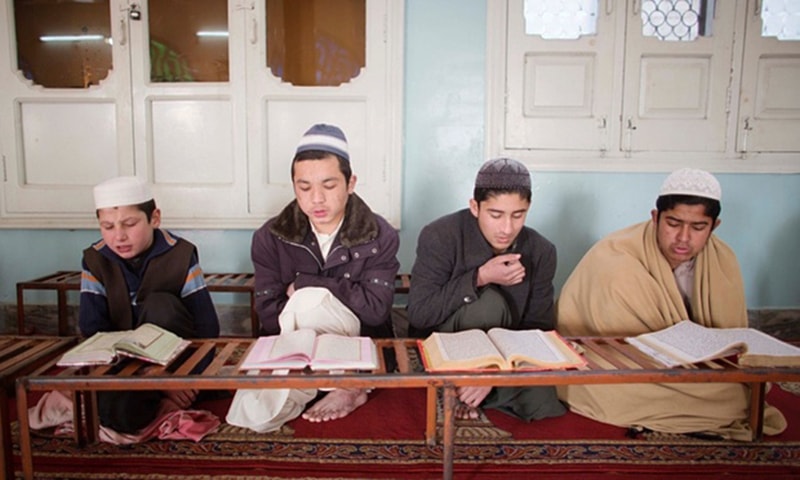
But since attending meetings in Peshawar, he has recruited 15 people to promote peace in Mingora: they try to prevent radicalisation through theatre, and engage with students from extremist madrasas in order to challenge stereotypes and bigotry.
It’s difficult to get anything done in a city as risky as Peshawar.
Aware Girls work in schools and mosques, and offer one-to-one counselling that can last for weeks in the hope that a young person changes their views – but they are forced to hold their community meetings by invitation only, in hotel rooms protected by armed guards, where they know the owners and staff.
Delegates suspect they are being monitored by ISI, Pakistan’s secret police. Last spring, Gulalai had a lucky escape when lost luggage after a flight meant she wasn’t at home in Peshawar when four armed men turned up at her door.
“They claimed to be security officers who had come to search our home,” Gulalai says. “They tried to enter forcefully but my father refused to open the door. They were shouting and making threats. They started shooting guns into the air. I thought that sooner or later I’d be attacked, but I never thought it would happen to my family.”

She doesn’t know who the gunmen were: Taliban, Pakistan’s security services, or even a criminal gang trying to kidnap her for ransom. “We cannot trust anyone,” she says.
Nevertheless, as a city that offers at least a modicum of anonymity, Peshawar remains their best bet to fight the Taliban by sowing the seeds of education – work that has won Gulalai the 2014 International Humanist of the Year award and the Commonwealth Youth Award for Asia, and Saba the 2013 Democracy award of the National Endowment for Democracy (NED); both women were named that year in Foreign Policy’s list of “leading global thinkers.”
“There were so many human rights violations, such as rape and murder, happening to women in our community, but no platforms for women to raise their voices,” Saba says.
“We want women to have equal rights to justice, legal support, financial resources and access to education and other social services.”