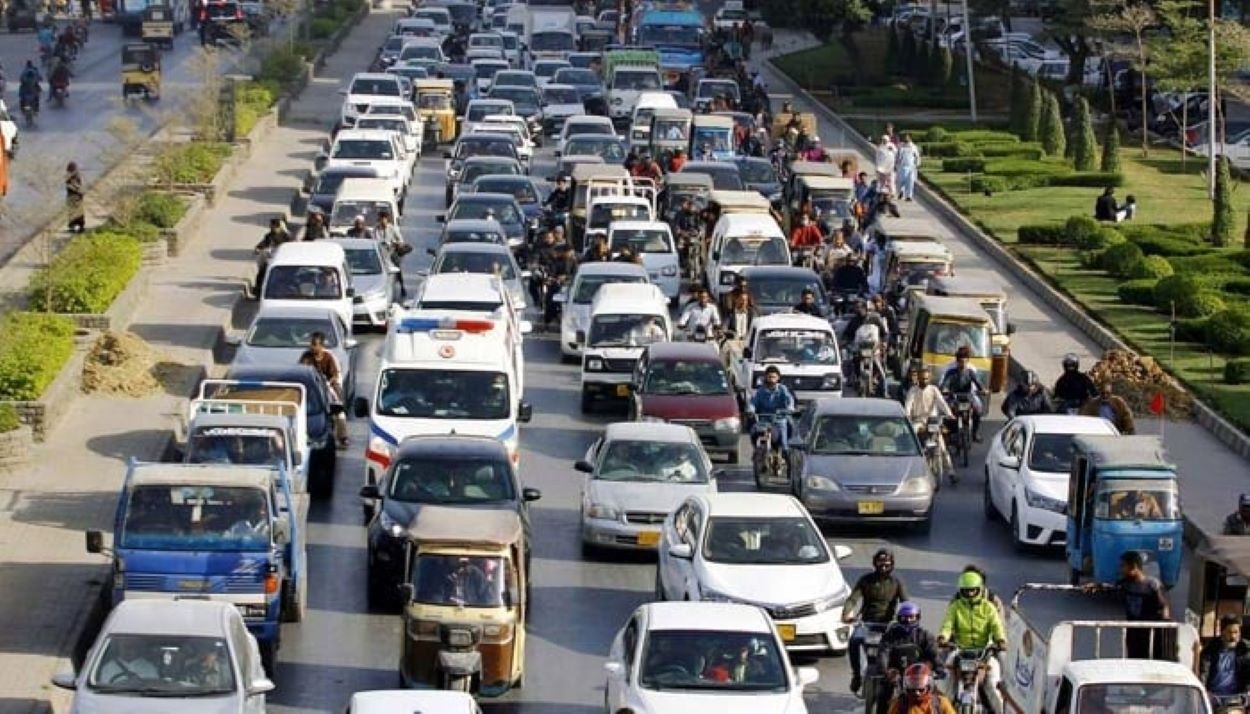

The surge in traffic in Karachi during Ramadan has made daily commuting increasingly difficult across the city. Revised office hours and ongoing roadwork have sharply increased congestion on major arteries.
Under the updated schedule, working hours run from 10 am to 4 pm during the holy month. As a result, government offices, private companies and commercial institutions now close at the same time.
According to reports, the Sindh government’s revised office schedule has intensified peak-hour pressure. Vehicles exit offices simultaneously at 4 pm, flooding key roads in the late afternoon..
In Karachi, a surge of professional beggars has been reported during Ramadan.
Organized groups have spread across neighborhoods, major roads, markets, and traffic signals, some even using women and children as shields.#SamaaTV pic.twitter.com/qoDeSOeUqk
— SAMAA TV (@SAMAATV) February 25, 2026Previously, Ramadan office hours were staggered. Government offices operated from 8 am to 2 pm, while many private offices closed between 3 pm and 4 pm. This difference helped distribute traffic flow more evenly.
However, the synchronised 4 pm closing time has created bottlenecks across Karachi’s business districts and commercial hubs. Commuters now face longer travel times as multiple sectors release traffic at once.
The change highlights how coordinated work schedules can significantly affect urban traffic patterns. During Ramadan, when routines already shift, even small timing adjustments can have a noticeable impact.
Read: SBP Ramadan Banking Hours 2026 Announced for Public and Banks
As the holy month continues, traffic management remains a key concern for residents navigating the city’s busiest routes.