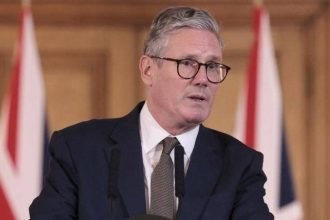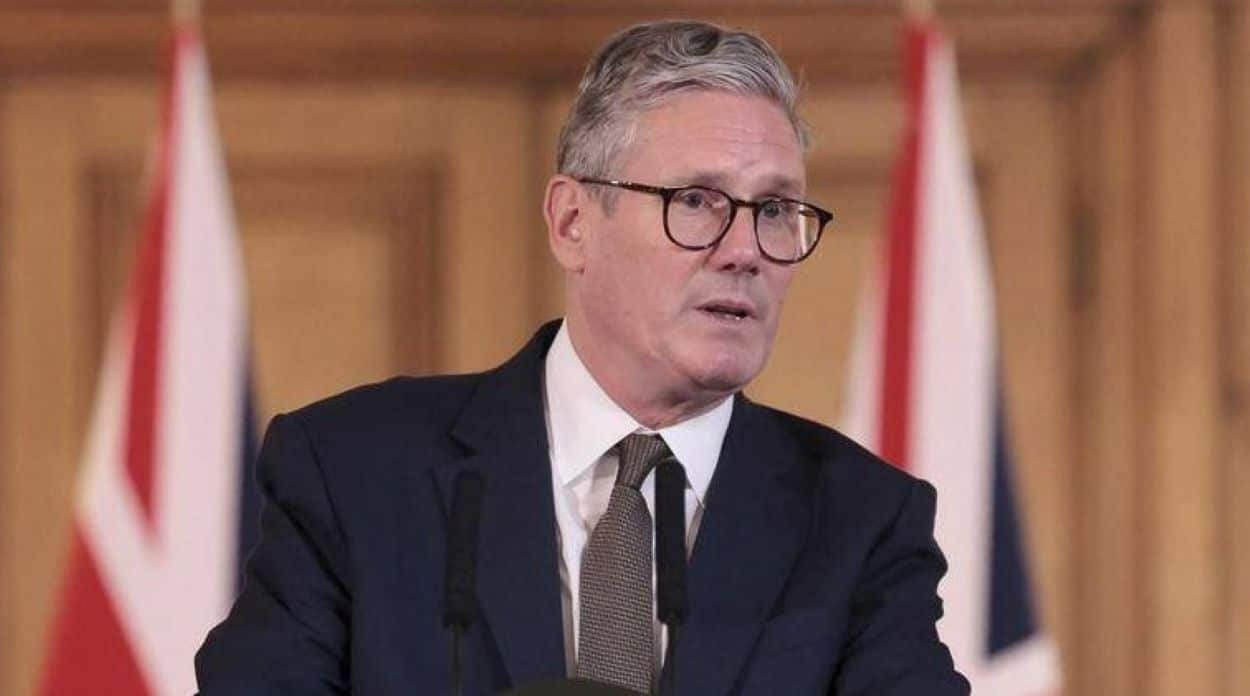

UK Prime Minister Keir Starmer said the debate over the Iran conflict must now become central to the country’s future direction. He argued that the Iran war should serve as a turning point for Britain after years of repeated crises and said the country must strengthen its economy, military and energy security for a more dangerous world.
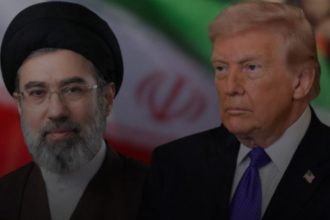
Starmer made the remarks after US President Donald Trump announced a ceasefire in the six-week conflict with Iran. However, there was still no sign that Tehran would lift its near-total blockade of the Strait of Hormuz, a disruption that has severely affected global energy supplies.
Writing in the Guardian, Starmer said Britain had been hit by major crises for nearly two decades. He pointed to the 2008 global financial crash, the austerity period that followed, Brexit, the Covid pandemic and Russia’s invasion of Ukraine.
He said the war in Iran must become “a line in the sand” because the way Britain emerges from the crisis will shape the country for a generation. In his view, Britain should stop trying to return to the world of 2008 and instead build a new path focused on defence, energy and economic security.
The Iran crisis has already driven up fuel prices in Britain and will likely add further inflation and economic disruption. As a result, pressure on Starmer’s government has intensified to demonstrate that it can respond to instability abroad without worsening challenges at home.
The crisis led to the near-total blockade of the Strait of Hormuz, a major route for global energy shipments. This has made energy resilience a more urgent issue in Britain’s policy debate. Stammer became prime minister in 2024 after a landslide Labour victory, but he has struggled to deliver promised change amid strained public finances, party tensions and wider global instability. It also says Labour is trailing Reform UK, led by Nigel Farage, in opinion polls ahead of the next election due in 2029.
Read: Khamenei Says Iran Does Not Want War but Warns Aggressors
The British public has broadly supported Starmer’s decision not to join Trump’s offensive action against Iran. Starmer said his response to the crisis would focus on reviving British national interests and building resilience.
He said Britain would not look backwards or try to recreate past conditions. Instead, he argued, the country must become stronger, more secure and more resilient in the face of long-term global volatility.