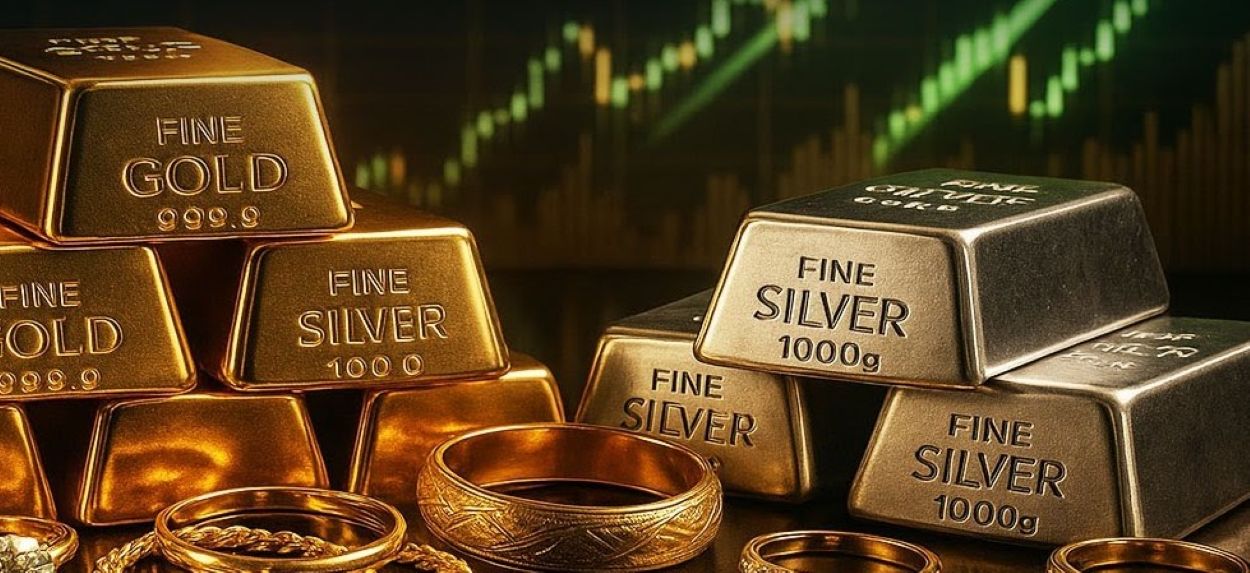

Silver prices plunge in the global market after a sudden and dramatic reversal, triggering concern among investors and traders worldwide. The sharp decline followed days of aggressive buying that pushed prices to unusually high levels.
Many investors who purchased silver in bulk during the recent rally are now facing significant financial losses. The speed of the downturn has added to market anxiety.
At the start of the week, silver prices surged sharply. Market sources said silver climbed to nearly $90 per ounce, prompting heavy buying from investors who viewed the metal as a safe option.
However, the rally proved short-lived. Within days, prices reversed direction and fell to around 65.67 dollars per ounce. The drop exceeded 10 per cent and erased gains made during the earlier surge.
Read: Gold, Silver Hit Record Highs After Trump Revives Trade War Fears
What caused silver prices to fall
Experts point to several factors behind the decline. Weaker global demand reduced buying pressure, while a stronger US dollar made silver more expensive for international buyers.
Profit-taking also played a key role. Investors who bought earlier during the rally rushed to lock in gains, accelerating the downward momentum. Those who entered the market late faced the steepest losses.
The effects of the silver price plunge are now visible in local currency markets as well. Traders report that buyers have become cautious and are avoiding fresh positions.
Many investors are choosing to wait on the sidelines. They expect prices to fall further before stabilising, especially amid continued uncertainty in global markets.
Economic experts note that volatility is common in precious metals markets. However, they say the speed and scale of this decline stand out.
The sudden shift caught many investors off guard, particularly those who bought silver at elevated prices. According to analysts, such sharp moves increase short-term risk and reduce confidence.
Looking ahead, experts say silver’s direction will depend on several factors. These include global economic conditions, industrial demand, and currency market trends.
Some analysts believe the current decline may be temporary. They suggest prices could stabilise over time if demand improves and market conditions ease. For now, uncertainty remains high.