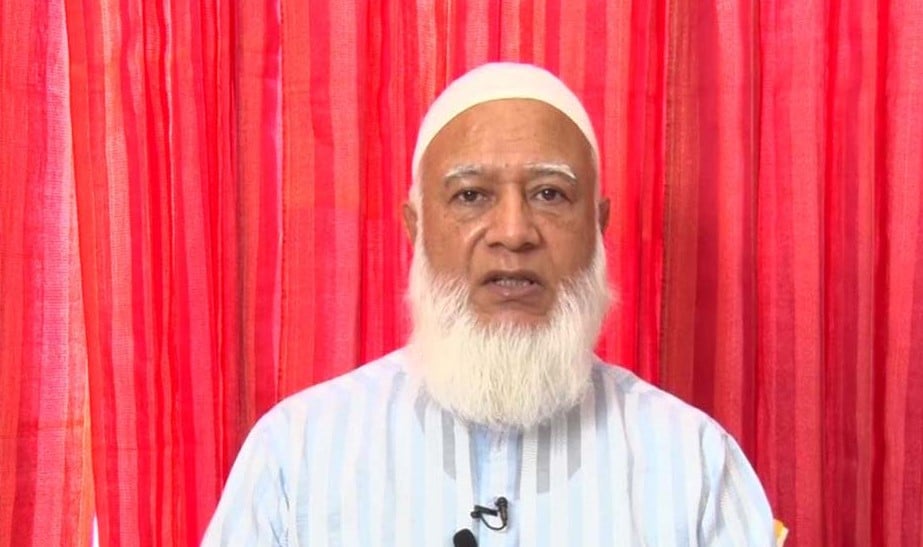

Shafiqur Rahman’s momentum in the Bangladesh election marks a dramatic shift in the country’s political landscape. Once a marginal figure, the Jamaat-e-Islami chief is now a visible presence across Dhaka, with campaign posters urging voters to support what could become the country’s first Jamaat-e-Islami–led government.
At 67, Shafiqur Rahman has risen from years of political obscurity to emerge as a serious contender for prime minister. His ascent reflects broader changes in Bangladesh since the mass uprising that reshaped the nation’s power structure.
Bangladesh heads to the polls on February 12 in its first national election since the 2024 Gen Z–led uprising forced former prime minister Sheikh Hasina from office. The election is expected to be closely contested, with a Jamaat-e-Islami–led coalition challenging the Bangladesh Nationalist Party.
Shafiqur Rahman’s Rise
For years, Jamaat-e-Islami faced heavy restrictions. Under the previous government, authorities jailed senior party leaders, handed down severe sentences, and eventually banned the party altogether. Rahman himself was arrested in 2022 and spent 15 months in jail.
That trajectory changed after the 2024 uprising. Following Hasina’s departure, an interim government led by Nobel laureate Muhammad Yunus eased restrictions on political activity. In 2025, a court lifted the ban on Jamaat-e-Islami, allowing the party to re-emerge openly after years underground.
Long pushed to the political margins, Bangladesh's Jamaat-e-Islami party has moved to fill a political vacuum, emerging as a frontrunner ahead of the upcoming elections.
Al Jazeera’s @vpietromarchi conducted an exclusive interview with party leader Shafiqur Rahman. pic.twitter.com/7dCX4upDND
— Al Jazeera English (@AJEnglish) February 9, 2026Rahman later described the shift as an opportunity to re-enter public life after prolonged suppression. Since then, he has travelled widely, drawing media attention and positioning himself as a national figure amid political uncertainty.
Born in 1958 in the northeastern district of Moulvibazar, Rahman’s political journey began far from Islamist politics. He first joined a leftist student organisation before moving to Islami Chhatra Shibir, the student wing of Jamaat-e-Islami.
He formally joined the party in 1984 and unsuccessfully contested national elections in 1996, 2001, and 2018. Despite repeated setbacks, he remained active within party ranks and was appointed Jamaat-e-Islami chief in 2020.
Outside politics, Rahman comes from a family deeply rooted in medicine. He is a doctor by training, as are his wife and children. He also chairs a family-owned hospital in the Sylhet region, a background that supporters cite to highlight his professional credentials and administrative experience.
Analysts argue that Rahman benefited from a leadership vacuum after the uprising. With established political figures absent or in exile, he moved quickly to fill the space.
On the campaign trail, Rahman has worked to soften Jamaat-e-Islami’s image. His speeches emphasise governance, anti-corruption measures, and social justice, and promise equal treatment for followers of all religions.
In December, Jamaat-e-Islami formed an alliance with the Gen Z National Citizen Party. The move expanded its appeal among younger voters and those less aligned with traditional religious politics. Reuters political interviews
Rahman has presented himself as a more moderate face of Jamaat-e-Islami, describing the party as flexible and reasonable while remaining grounded in Islamic principles. He argues that Quranic values support justice and fairness for all, not only Muslims.
This messaging has resonated with some voters seeking an alternative to long-established political forces. Opinion polls now suggest Jamaat-e-Islami could achieve its strongest electoral showing to date.
Whether that momentum translates into power remains uncertain. Still, the rise of Shafiqur Rahman highlights how Bangladesh’s political landscape has shifted in the wake of the uprising, setting the stage for one of the country’s most consequential elections in decades.