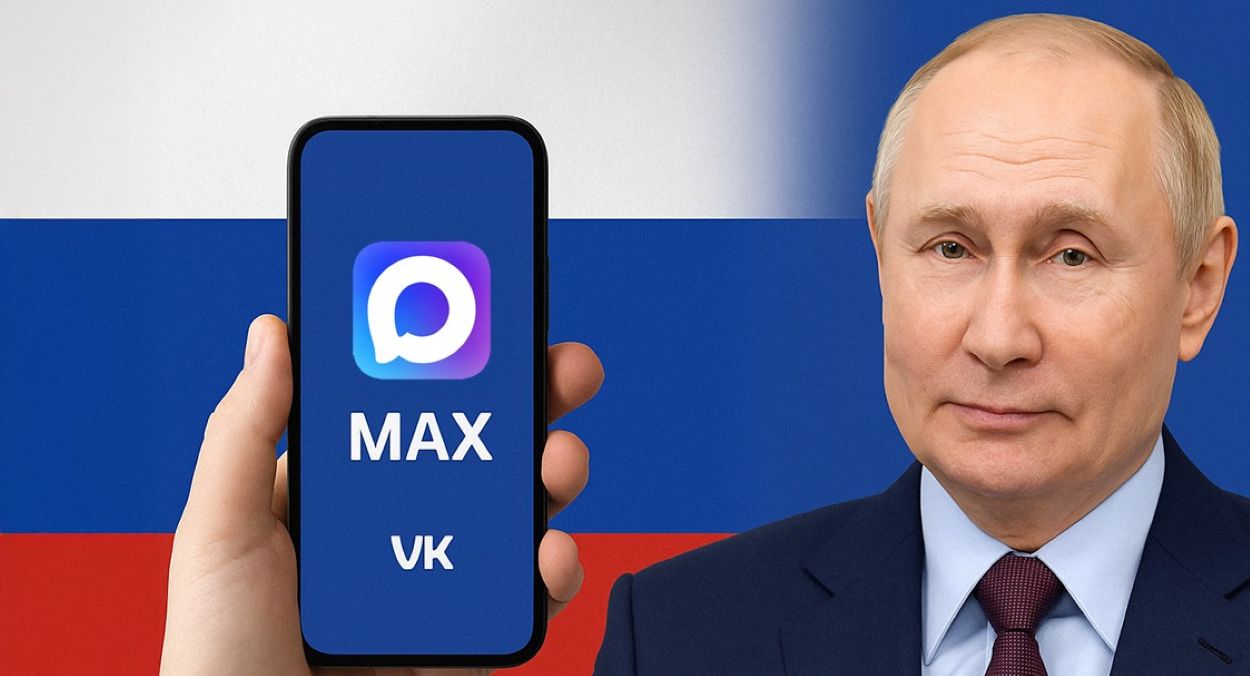

Concerns about the Russia Max app surveillance are rising as authorities promote the unencrypted messaging platform nationwide. The rollout comes alongside restrictions on widely used apps like WhatsApp and Telegram.
Critics have warned that this move could lead to increased state control over digital communication. Launched in 2025 by the Russian tech company VK, the app Max combines messaging, social media, and government services. Additionally, it offers features such as digital identification, banking, and payment services.
Experts often compare it to China’s WeChat due to its extensive feature set. Cybersecurity experts have raised concerns about the app’s lack of end-to-end encryption. They warn that user data could be accessible to authorities.
The app’s terms state that all data is stored within Russia. This has intensified fears about surveillance and monitoring.
Russian officials have framed Max as part of a broader push for “technological sovereignty.” President Vladimir Putin has promoted the platform as a secure national alternative. Analysts say the strategy aims to reduce reliance on foreign platforms and strengthen state oversight of online content.
Widespread Adoption and Pressure to Use Max
Although not officially mandatory, Max has been heavily promoted. Devices sold in Russia now come with the app pre-installed.
Reports suggest that schools and businesses are encouraging or requiring their use for communication and services. The app has already reached over 100 million users, reflecting strong uptake driven by both incentives and restrictions.
Public opinion remains divided. Some users see Max as a convenient platform for messaging and services. Others express concerns about privacy and the pressure to adopt it. Several users have reported feeling compelled to download the app for daily activities, including access to government portals.
The rollout of Max aligns with Russia’s long-term effort to build a controlled digital ecosystem. Authorities have expanded their ability to monitor and restrict online content through regulatory bodies such as Roskomnadzor.
Observers say this shift could further limit access to global platforms and reshape how citizens communicate online.