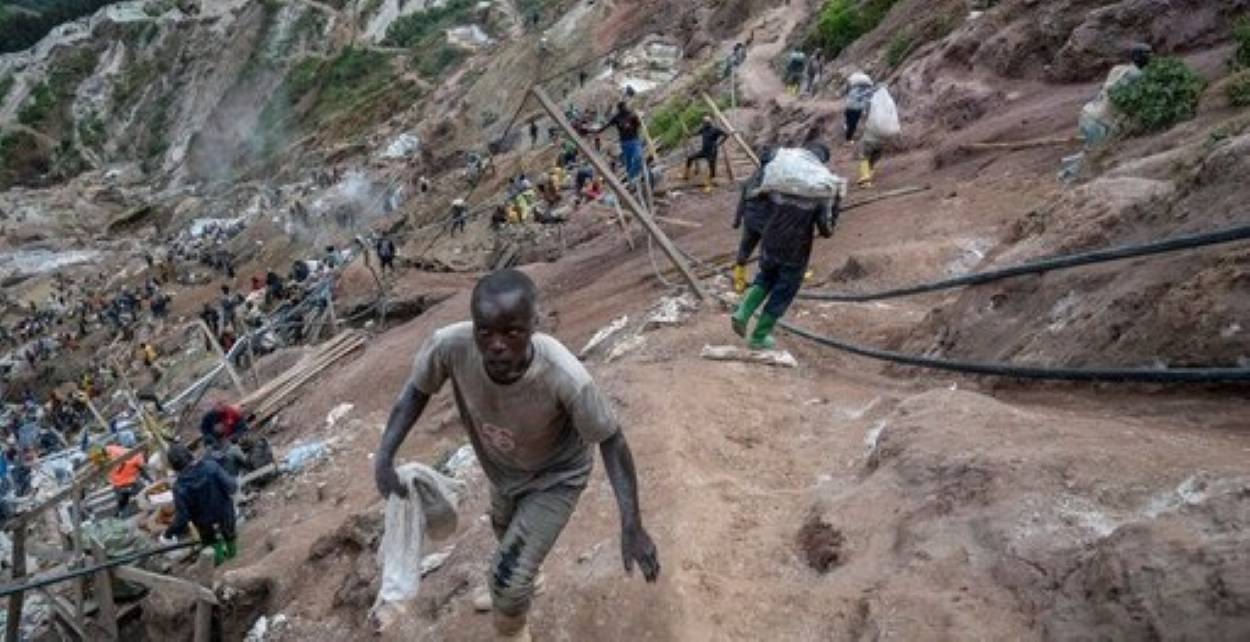

More than 200 people were killed this week after a deadly collapse at the Rubaya coltan mine in eastern Democratic Republic of the Congo, according to local authorities.
Lubumba Kambere Muyisa, spokesperson for the rebel-appointed governor of the province where the mine is located, told Reuters on Friday that the victims included miners, children, and market vendors. He said several people were rescued with serious injuries, while around 20 wounded individuals were receiving treatment at health facilities.
The collapse occurred on Wednesday, but the exact death toll remained unclear by Friday evening. Officials said ongoing rain and unstable ground conditions made rescue and recovery efforts difficult.
“We are in the rainy season. The ground is fragile,” Muyisa said. “The earth gave way while people were inside the mining pits.”
Over 200 people were killed this week in a collapse at the #Rubaya coltan #mine in eastern Democratic Republic of #Congo https://t.co/KkxwzHqvnx
— Arab News (@arabnews) January 30, 2026An adviser to the provincial governor, speaking on condition of anonymity, said the confirmed death toll had reached at least 227.
Strategic Importance of the Rubaya Mine
Rubaya produces an estimated 15 per cent of the world’s coltan, a mineral refined into tantalum. The metal is widely used in mobile phones, computers, aerospace equipment, and gas turbines.
Local residents often dig manually at the site for only a few dollars per day. The mine has been under the control of the AFC/M23 rebel group since 2024.
Conflict and Control in Eastern Congo
The United Nations has previously accused the AFC/M23 of exploiting Rubaya’s mineral wealth to finance its insurgency. The UN says the group is backed by neighbouring Rwanda, an allegation the Rwandan government has repeatedly denied.
The heavily armed rebels aim to overthrow the government in Kinshasa and claim to protect the Congolese Tutsi minority. During a rapid offensive last year, the group captured additional mineral-rich areas across eastern Congo, deepening the region’s instability.