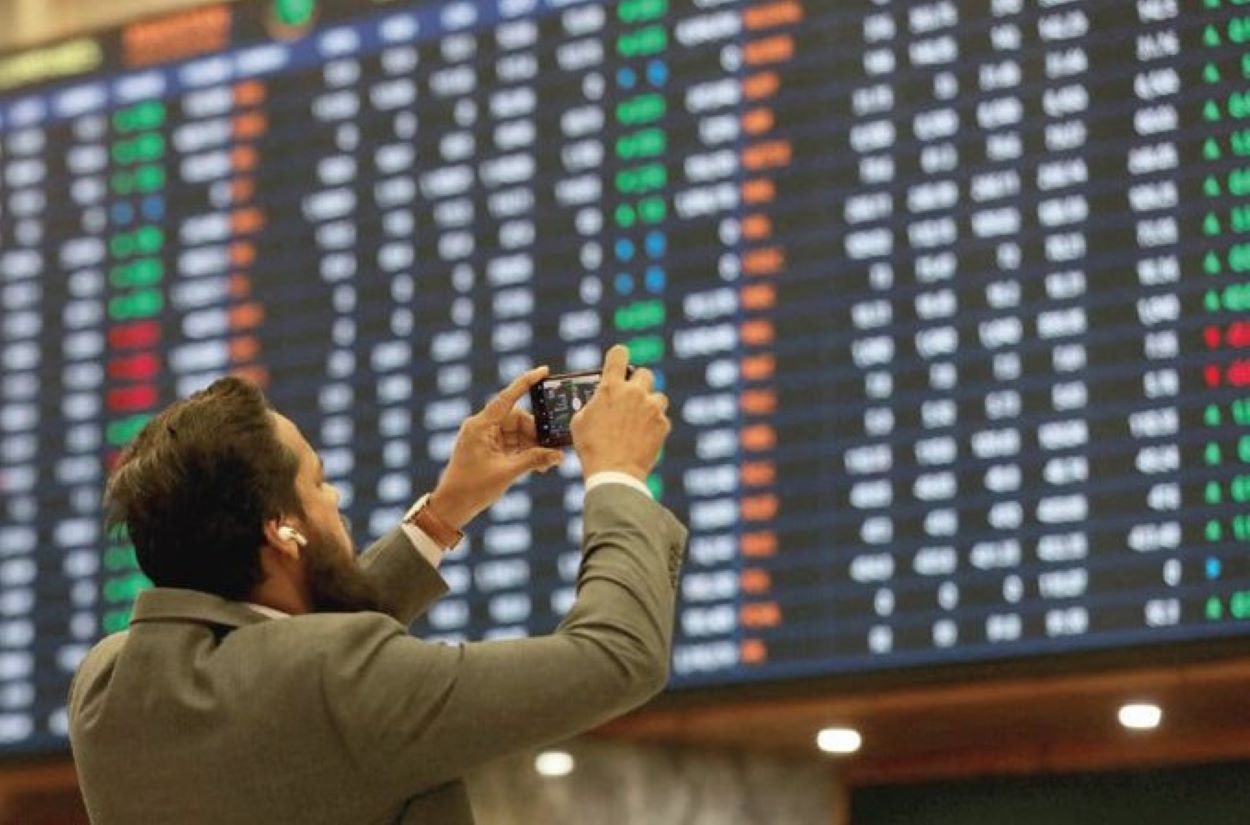

The PSX KSE-100 Index falls sharply on Thursday as persistent foreign selling and weak corporate results weighed on investor sentiment.
The benchmark index at the Pakistan Stock Exchange (PSX) settled at 172,170.29 points, down 6,682.80 points, or 3.74%, from the previous close of 178,853.09.
During the session, the index moved between an intraday high of 179,279.74 and a low of 171,647.33, reflecting heightened volatility.
Market participants cited thinner trading activity on the first day of Ramadan as another factor behind slower participation. Analysts noted that Wednesday’s sharp rebound triggered profit-taking.
Mohammed Sohail, CEO of Topline Securities, attributed the bearish trend to continuous foreign selling and weak corporate earnings. Meanwhile, independent analyst AAH Soomro pointed to lacklustre volumes and cautious sentiment.
Read: PSX KSE-100 Index Decline Today Extends Correction Above 3,400 Points
Foreign direct investment (FDI) in the first seven months of FY26 declined 41% year-on-year to $981.4 million, according to central bank figures. Net FDI in January stood at $173 million, reversing the previous month’s outflow.
China remained the largest investor, though net Chinese investment fell compared to the same period last year. Sector-wise, power inflows declined, telecoms recorded outflows, while financial businesses saw increased inflows.
In the Treasury bills auction, the government raised Rs651 billion in realised value, with mixed yields across maturities. The State Bank of Pakistan (SBP) reported participation exceeding the target, reflecting strong demand despite market volatility.
Inflation edged up to 5.8% in January, while the SBP maintained its benchmark policy rate at 10.5% in its latest decision.
The recent correction follows a strong surge in the previous session, when the KSE-100 had gained more than 5,700 points. Analysts suggest that market direction will depend on corporate results, foreign flows, and broader macroeconomic developments. Investors are likely to monitor global trends and domestic economic data closely as Ramadan trading continues.