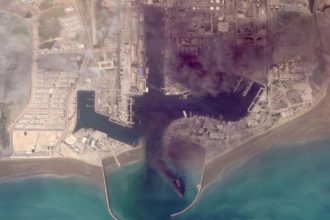
Planet Labs has imposed a restriction on its imagery of Iran, saying it will indefinitely withhold visuals of Iran and the wider conflict zone in the Middle East at the request of the U.S. government. The California-based satellite imaging company told customers it expects the policy to remain in place until the conflict ends.
The company said the restriction covers imagery dating back to March 9. It also said the U.S. government had asked all satellite imagery providers to withhold images of the region indefinitely.
The latest move expands a 14-day delay that Planet Labs introduced last month. At the time, the company said it wanted to stop adversaries from using its imagery to attack the United States and its allies.
Planet Labs operates a large fleet of Earth-imaging satellites and sells frequently updated visuals to governments, businesses, and media organisations. The company did not respond to a request for further comment, while the Pentagon said it does not comment on intelligence-related matters.
Why commercial satellite imagery matters in war
Commercial satellite imagery can serve several military purposes, including target identification, weapons guidance, missile tracking, and communications. Some space specialists believe Iran may be accessing commercial images, including pictures obtained through U.S. adversaries.
At the same time, satellite images also help journalists and researchers study places that are difficult to access. That means the restriction could affect not only military concerns, but also public-interest reporting and academic analysis.
Planet Labs said it will now move to a “managed distribution of images” that it believes do not create safety risks. Under that system, the company will release imagery on a case-by-case basis for urgent, mission-critical needs or when it sees a clear public-interest reason.
The company described the situation as extraordinary and said it is trying to balance the needs of all stakeholders.
One commercial provider, Vantor (formerly Maxar Technologies), told Reuters that the U.S. government did not contact it. However, the company said it has long reserved the right to apply stronger access controls during geopolitical conflict and is currently doing so in parts of the Middle East.
Those controls can limit who can request new images or buy existing ones in regions where U.S. forces, allies, or adversaries are actively operating. Another provider, BlackSky Technology, did not immediately return a request for comment.