

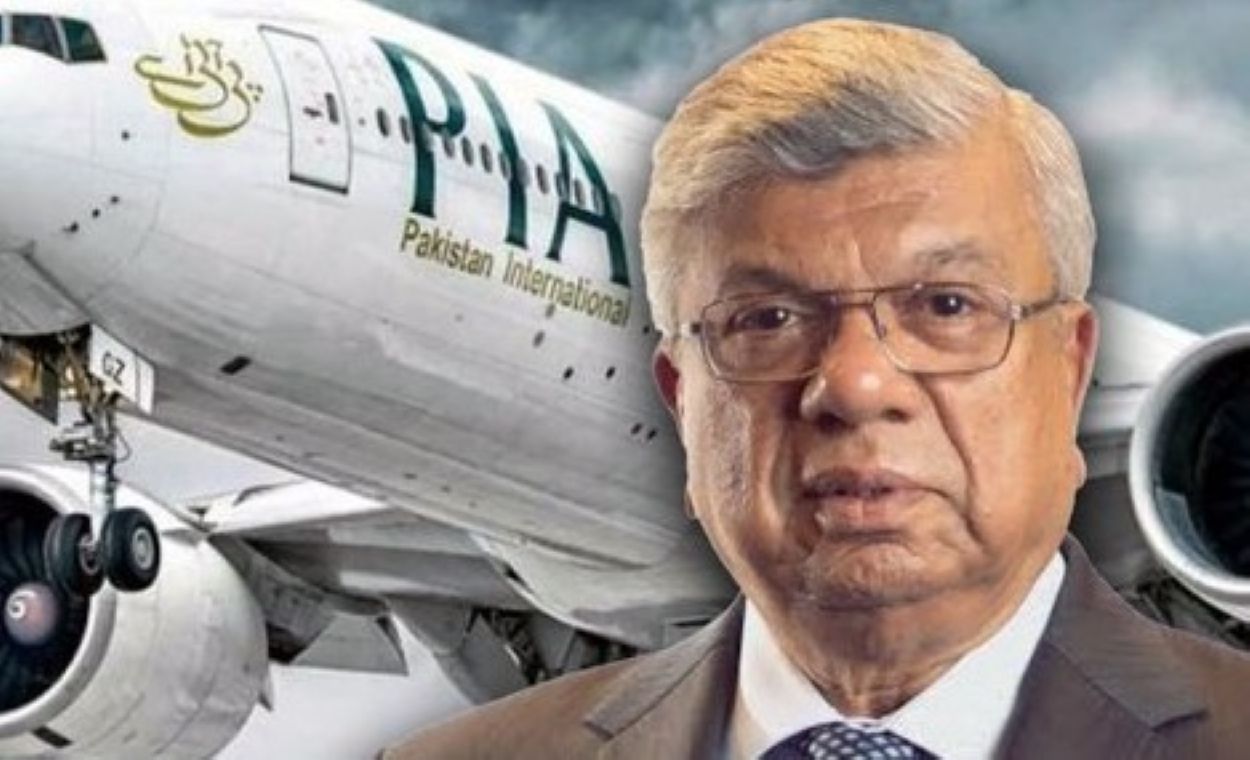

The PIA fleet expansion plan is moving to the centre of the airline’s revival strategy, with Pakistan International Airlines aiming to restore grounded planes and eventually expand to a 60-aircraft fleet. The goal, according to Arif Habib, is to strengthen operations through a phased recovery rather than a one-step overhaul.
Speaking to industrialists at the Korangi Association of Trade and Industry, Habib said PIA currently owns 30 aircraft. Of those, 18 are in operation, while five to six are under repair and maintenance. Habib said efforts are underway to return more aircraft to service. If the planes under repair are restored successfully, the active fleet would rise from 18 to 26 aircraft.
That step is being presented as the immediate target before the airline moves toward its longer-term ambition of building a 60-aircraft fleet. The approach suggests the recovery plan will depend first on improving the condition and availability of existing assets. While discussing PIA, Habib also linked the airline’s revival to the wider economic picture. He said Pakistan’s economy had stabilised during the current fiscal year, pointing to better revenue trends, expenditure control and debt servicing.
However, he stressed that lowering production costs remains essential for durable growth. That broader message placed the PIA recovery effort within the larger debate over business confidence and economic competitiveness.
Habib also argued that electricity tariffs remain too high due to capacity charges and low consumption. He said prices could drop by Rs10 to Rs12 per unit if consumers fully used the available transmission system of more than 22,000MW, though that outcome would still depend on stronger electricity demand. He urged the business community to move past political differences and speak with one voice so it can press policymakers more effectively on issues affecting industry.
Read: PIA Boeing 777 Test Flight Boosts Long-Haul Fleet
Abad Chairperson Hasan Bakhshi also addressed the event and said the business community should consider forming a consortium to take over loss-making public sector institutions. He identified bodies such as the Water Board, Karachi Metropolitan Corporation and Sindh Building Control Authority. Bakhshi argued that business stakeholders could manage these institutions more efficiently. The broader discussion reinforced the view that greater private-sector involvement could form part of a wider response to Pakistan’s structural economic problems.



