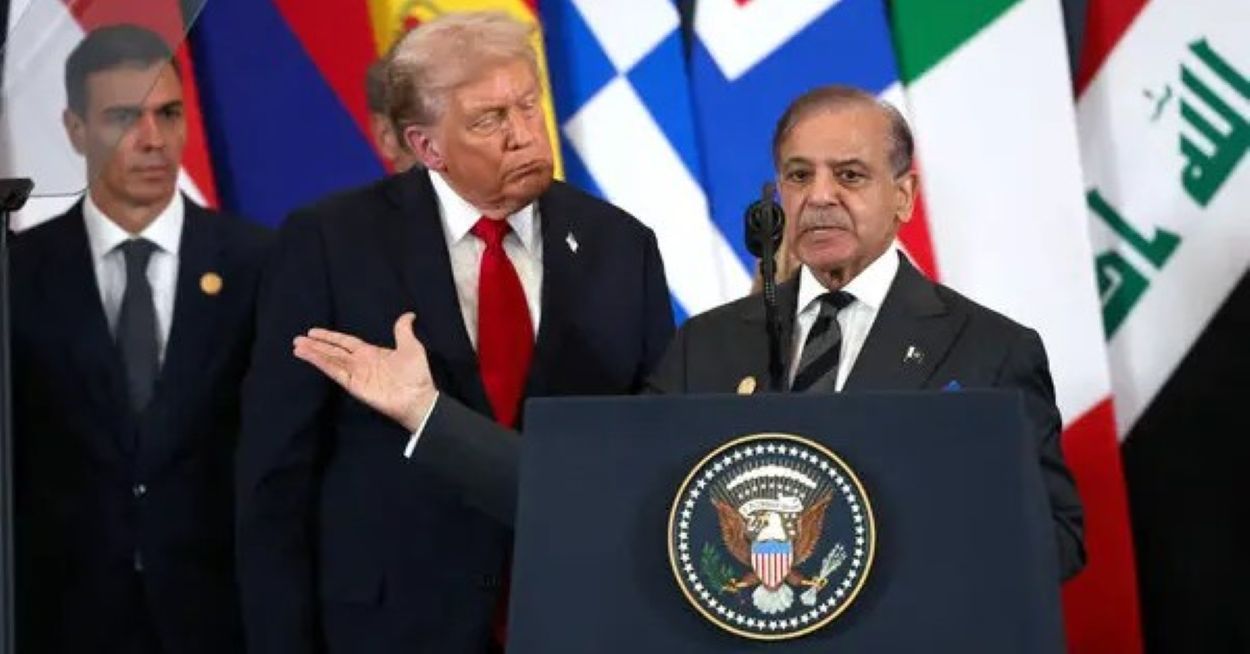

Pakistan’s geopolitical importance today is once again under focus as Islamabad emerges as a key diplomatic channel between Washington and Tehran. The conflict has also affected several Gulf states that host US bases, yet Pakistan has emerged as the only trusted interlocutor with the credibility to help bring both sides to the negotiating table.
Islamabad’s role has gained prominence because both Iran and the United States continue to trust Pakistan. It also says this renewed relevance has unsettled regional rivals, particularly India, as Pakistan gains greater visibility on the global stage.
Pakistan’s importance extends well beyond the current crisis. It points to the country’s enduring geopolitical weight and cites its population, military capability, nuclear status, and strategic location as key reasons regional and global powers cannot ignore it.
The text highlights Pakistan’s position at the intersection of South Asia, Central Asia and the Middle East. Because of that geography, Pakistan has long played an active role in major global developments, from the Cold War to the war on terror. Pakistan is a pivotal state whose trajectory can shape the wider region. It argues that the country’s location between Afghanistan and India, along with its coastline on the Arabian Sea, gives it lasting strategic value for both the United States and China.
That same geography now strengthens Pakistan’s diplomatic leverage. While some analysts expected its importance to decline after the US withdrawal from Afghanistan in August 2021, the current crisis has shown the opposite. Pakistan, it argues, has re-emerged as a state that major powers still need.
The piece also reflects on how Pakistan was often portrayed during the war on terror years. It recalls that many media reports and books framed the country as unstable, dangerous or on the brink of collapse. Pakistan’s resilience has repeatedly allowed it to endure internal and external pressures.
It acknowledges that Pakistan still faces political, economic, governance and security challenges. Even so those weaknesses have not erased the country’s importance in the international order.
Pakistan has maintained working ties with competing global and regional powers. It highlights Islamabad’s long-standing partnership with Beijing, including defence, intelligence and economic cooperation under CPEC. It also notes Pakistan’s ability to engage Washington despite shifts in US policy. This balance has helped Islamabad maintain communication with both Tehran and key Gulf capitals. As a result, Pakistan is portrayed not only as strategically located but also as diplomatically credible in a volatile region.
Pakistan can guarantee peace between Iran and the United States. Instead, it says any breakthrough will depend on decisions made in Washington and Tehran. Still, it argues that the very existence of this communication channel reflects Pakistan’s extraordinary diplomatic effort and stature.