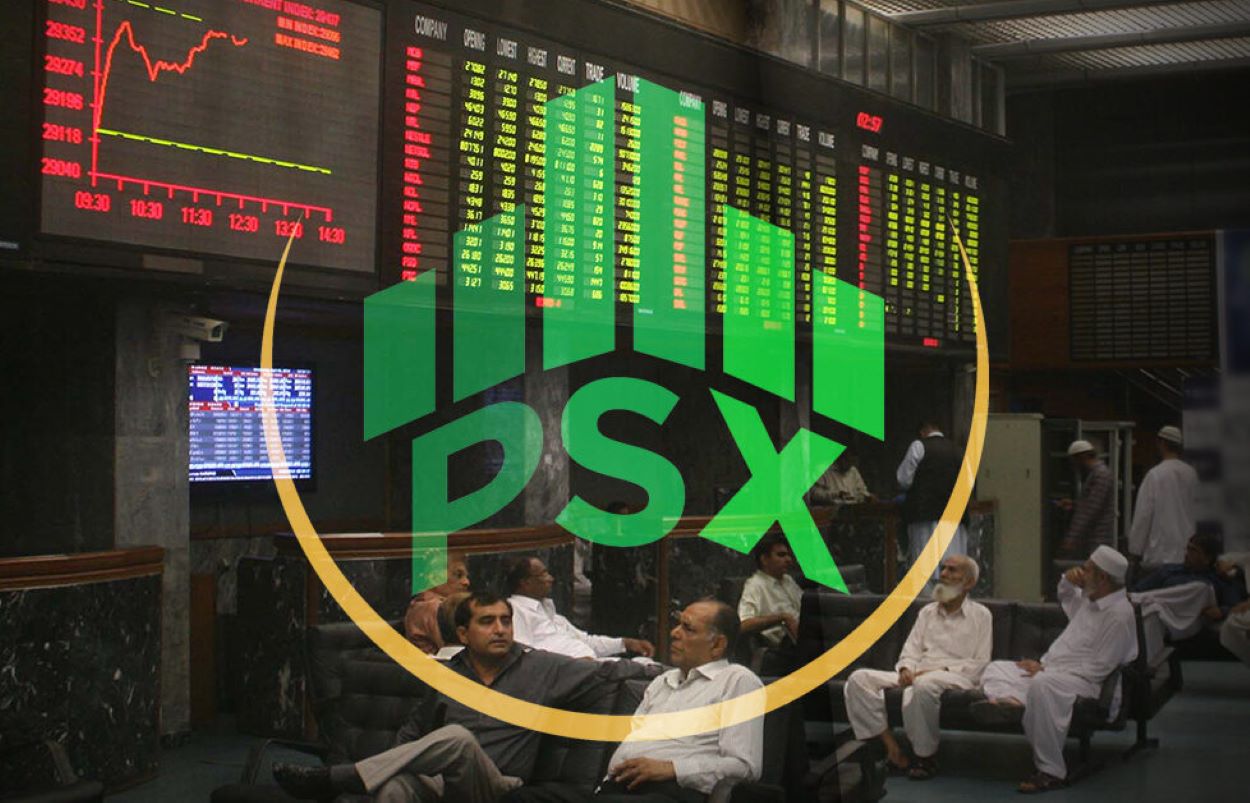

The Pakistan Stock Exchange selloff gathered pace on Monday as persistent foreign outflows and weaker-than-expected corporate earnings weighed on investor sentiment. Political uncertainty and questions around IMF-linked policy direction added further pressure.
The benchmark KSE-100 Index swung sharply during the session. It traded between a high of 179,969.22 and a low of 173,882.68, compared to the previous close of 179,603.73.
Market participants cited elevated valuations and continued foreign selling as key drivers behind the decline.
Pakistan Stock Exchange Selloff Pressures KSE-100
Analysts noted that ongoing domestic political developments have kept investors cautious. In addition, uncertainty surrounding IMF talks has clouded the outlook for fiscal and monetary policy.
Concerns about the super tax on high earners and projections of higher inflation also contributed to bearish sentiment. Some investors are evaluating how developments in global trade, including a potential US-India trade deal, could affect Pakistan’s exports.
The market is expected to see measured activity in the coming week as Ramazan begins. Shorter trading sessions and subdued participation may limit volatility and overall momentum.
Read: Pakistan IMF Review Talks to Begin as Mission Arrives February 25
Despite the downturn, some economic indicators offered mixed signals. Remittances rose 15% year-on-year to $3.5 billion in January 2026, although they declined 4% month-on-month. Meanwhile, automobile sales rebounded to around 23,000 units in January, according to industry data.
Changes in MSCI’s February review also led to adjustments in Pakistani equities, prompting portfolio rebalancing by institutional investors.
On Friday, the KSE-100 had already fallen 908.92 points to close at 179,603.73. Investors are now watching upcoming trade and current account data for signs of stabilisation that could help limit further downside. For now, caution remains the dominant theme in Pakistan’s equity market.