

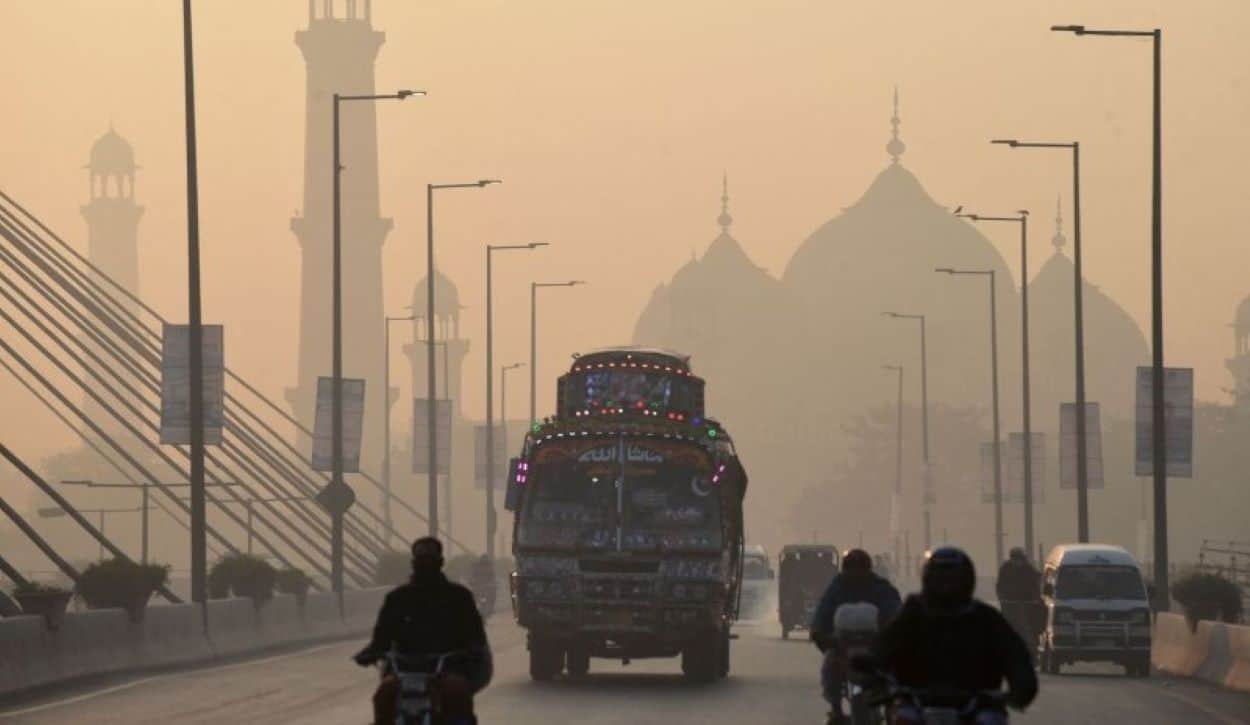

Pakistan’s ranking as the most polluted country in 2025 has raised serious environmental concerns, as new data shows dangerously high levels of air pollution nationwide.
According to the latest report by IQAir, Pakistan recorded PM2.5 concentrations up to 13 times higher than the World Health Organisation (WHO) recommended limits. The report highlights a broader global issue. Out of 143 monitored countries and territories, 130 failed to meet the WHO guideline of less than 5 micrograms per cubic metre.
However, 13 countries managed to stay within safe limits, showing a slight improvement from just seven in 2024. These findings underline the growing challenge of controlling air pollution worldwide.
Bangladesh and Tajikistan Follow in Rankings
After Pakistan, Bangladesh and Tajikistan ranked as the second- and third-most polluted countries in 2025.
Chad, which topped the list in 2024, dropped to fourth place. However, experts caution that this shift may not reflect real improvement. A key reason is the lack of reliable data, especially after monitoring gaps emerged.
The report notes that data limitations have influenced rankings. In March last year, the United States ended a global monitoring programme that collected air quality data from embassies and consulates.
Experts say this decision removed a critical data source for many countries with high pollution levels. As a result, some nations, including Burundi, Turkmenistan, and Togo, were excluded from the 2025 report due to insufficient information.
Read: Punjab Air Pollution: Lahore Among World’s Most Polluted Cities
At the city level, India’s Loni ranked as the most polluted city in 2025, with PM2.5 levels reaching 112.5 micrograms. Hotan, located in China’s Xinjiang region, followed closely with 109.6 micrograms.
Notably, all of the world’s top 25 most polluted cities were located in India, Pakistan, and China, highlighting severe regional air quality challenges.
The report reinforces concerns about worsening air quality in South Asia. High PM2.5 levels continue to affect millions of people and strain environmental management efforts. Experts stress the need for improved monitoring and consistent data collection to better understand and address the issue.



