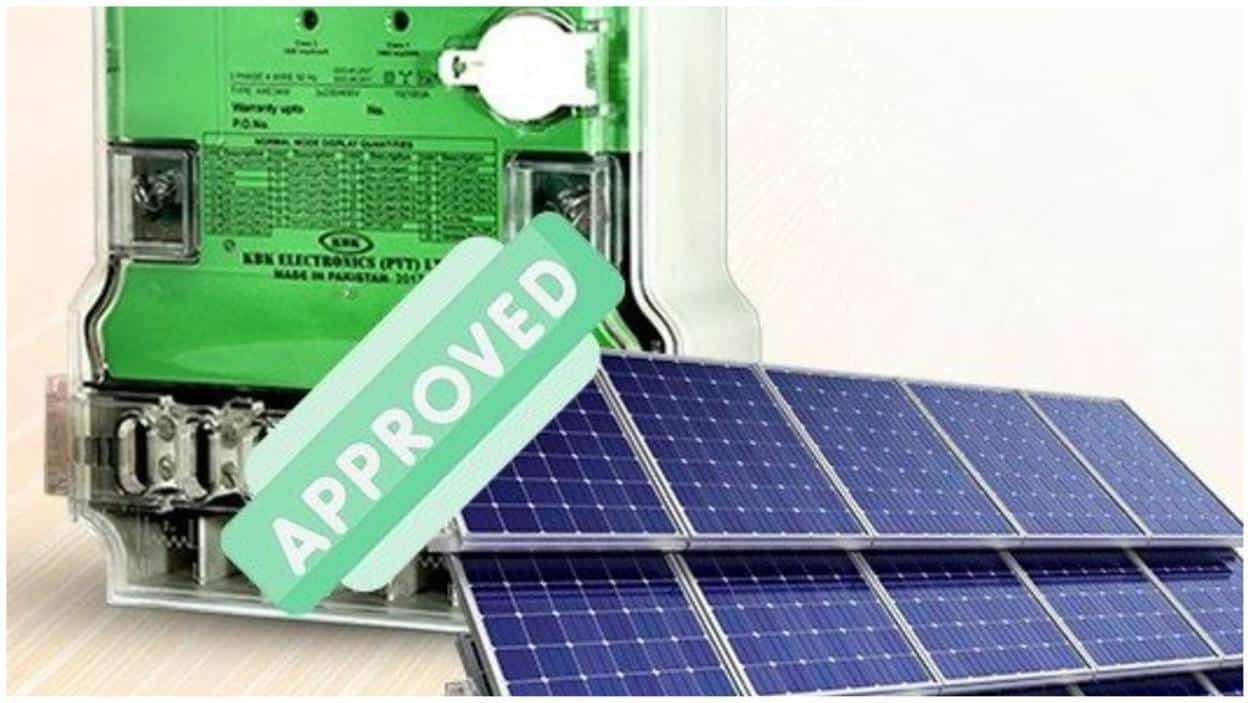

The Pakistan net metering policy change has officially taken effect after the country’s power regulator introduced sweeping new rules that replace net metering with a net billing system. The shift fundamentally alters how rooftop solar and other small-scale power producers are compensated for electricity supplied to the grid.
Under the newly notified Nepra (Prosumer) Regulations, 2026, power utilities will now buy surplus electricity from prosumers at the National Average Energy Purchase Price. At the same time, consumers will continue to purchase electricity from utilities at the applicable consumer tariff.
This change ends the one-to-one offset model that previously allowed rooftop solar users to neutralise their electricity bills.
Pakistan’s net metering policy change and new pricing model
The new framework applies to households, businesses, and industries generating up to one megawatt of electricity. Instead of offsetting units exported to the grid against imported units, prosumers will now receive a lower buyback rate while paying the full retail tariff for consumption.
Nepra has also shortened the standard contract duration to five years, down from seven years. These contracts will be renewable only with mutual consent, changing the long-term investment outlook for new solar installations.
Existing prosumers will remain under their current contracts until expiry. However, all new connections and future renewals will fall under the five-year net billing regime.
If the value of electricity supplied by a prosumer exceeds the electricity drawn from the grid, the surplus will either be carried forward to the next billing cycle or paid out every three months.
The new regulations repeal the Nepra Alternative & Renewable Energy distributed generation and Net Metering Regulations, 2015. They apply not only to solar but also to wind and biogas systems.
Nepra has capped the maximum size of distributed generation facilities at one megawatt. Capacity is also limited to the sanctioned load approved for each consumer.
Technical restrictions and compliance requirements
The regulations introduce stricter technical controls. New connections will not be allowed if distributed generation on a transformer reaches 80 percent of its rated capacity.
Systems with a capacity of 250 kilowatts or more must undergo a mandatory load flow study. Utilities must follow defined timelines for processing applications and installing interconnection facilities.
Prosumers are now responsible for all interconnection costs, including meters and grid upgrades. Nepra has also imposed a non-refundable concurrence fee of Rs 1,000 per kilowatt.
Utility powers and operational controls
Utilities retain the authority to disconnect systems in cases of faults, non-compliance, or maintenance requirements. Prosumers are barred from selling electricity to third parties using the utility’s network.
Nepra has also reserved the right to revise purchase rates, demand operational data, issue binding directions, and impose penalties where necessary.
Read: Net Metering Share Rises in Pakistan as Solar Adoption Accelerates
Officials say these measures are designed to restore balance to a power system strained by rapid rooftop solar expansion.
Why was the policy shift introduced?
The decision follows a sharp rise in rooftop solar installations across Pakistan. Soaring electricity prices, unreliable grid supply, and falling solar equipment costs accelerated adoption, especially in urban areas.
Total rooftop solar capacity is now estimated at around 6,000 megawatts nationwide. While this reduced daytime grid demand, it also caused significant revenue losses for power distribution companies.
In FY2024 alone, grid electricity sales declined by billions of units, resulting in significant financial losses for utilities. These losses were absorbed into the tariff structure, pushing costs onto non-solar consumers.
Regulators argue that the old net metering regime created a regressive outcome. Higher-income households and businesses benefited most, while fixed system costs remained unchanged.
As solar users reduced their billed consumption, fixed costs shifted to a shrinking pool of non-solar consumers. Many of these users lack the financial means to invest in rooftop systems.
Officials warn that if net metering had continued unchanged, lost grid sales could have driven tariffs significantly higher in the coming years.
Energy planners have also raised concerns about grid stability. During low-demand periods, especially in winter, excess solar injection increases the risk of over-generation and frequency instability.
Authorities have cited regional blackouts linked to unmanaged rooftop solar expansion as cautionary examples. Regulators also identified misuse of the system, including exports exceeding sanctioned loads.
To address this, distribution companies are deploying smart meters to monitor exports and enforce capacity limits.