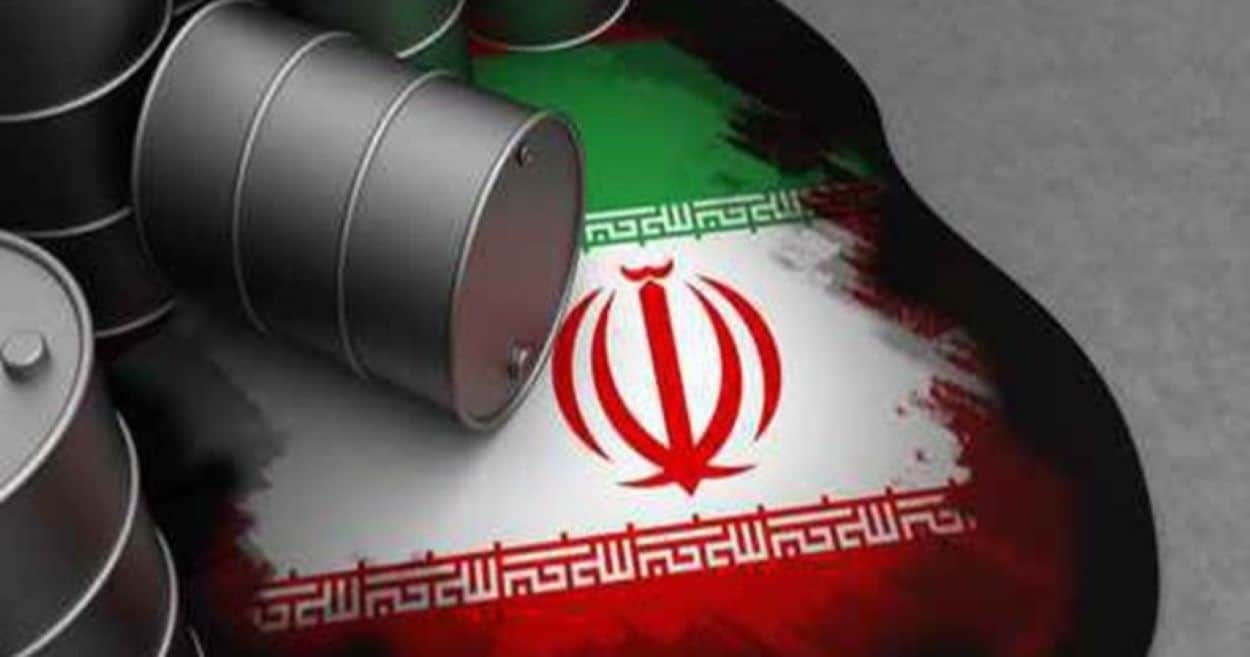

Global oil prices fell sharply on Monday after Donald Trump signalled possible de-escalation between the United States and Iran, easing fears of conflict involving a key OPEC producer.
Brent crude futures dropped $2.81, or 4.1%, to $66.51 per barrel, while U.S. West Texas Intermediate (WTI) crude fell $2.70, or 4.1%, to $62.51 per barrel in early Asian trading.
The decline followed a strong rally last week, when Brent touched a six-month high, and WTI hovered near its highest level since late September. Prices had climbed amid escalating geopolitical tensions between Washington and Tehran, raising concerns about potential supply disruptions.
Over the weekend, President Trump said Iran was “seriously talking” with the United States, indicating progress toward negotiations. His remarks came hours after Iran’s senior security official Ali Larijani confirmed that arrangements for talks were underway.
Market analysts said the comments helped deflate the geopolitical risk premium built into oil prices.
Priyanka Sachdeva of Phillip Nova noted that persistent U.S. threats toward Iran throughout January had supported oil prices. She added that the latest pullback was also reinforced by a stronger U.S. dollar, which tends to pressure dollar-denominated commodities by making them more expensive for non-U.S. buyers.
Oil falls by nearly 3% on Iran talks, OPEC+ production pause https://t.co/Of8R20iTbV https://t.co/Of8R20iTbV
— Reuters (@Reuters) February 2, 2026IG market analyst Tony Sycamore said reports that Iran’s Revolutionary Guards have no plans for live-fire naval exercises in the Strait of Hormuz further signalled de-escalation.
“The oil market is reading this as a step back from confrontation,” Sycamore said, adding that traders responded by taking profits after last week’s rally.
OPEC+ Maintains Output Policy
Meanwhile, OPEC+ agreed on Sunday to keep oil output unchanged for March. The group had already frozen planned production increases through March 2026, citing seasonally weaker demand.
Economists continue to warn that underlying fundamentals remain soft. In a recent note, Capital Economics said geopolitical risks are masking a broadly bearish oil market.
Read: US Completes First $500M Venezuelan Oil Sale Under New Energy Agreement
“The experience of last year’s brief conflict between Israel and Iran, combined with ample global supply, suggests downward pressure on Brent prices by the end of 2026,” the firm said.
While geopolitical developments remain a key swing factor, analysts say oil prices are likely to remain volatile as markets balance diplomatic signals, currency movements, and global supply and demand dynamics.