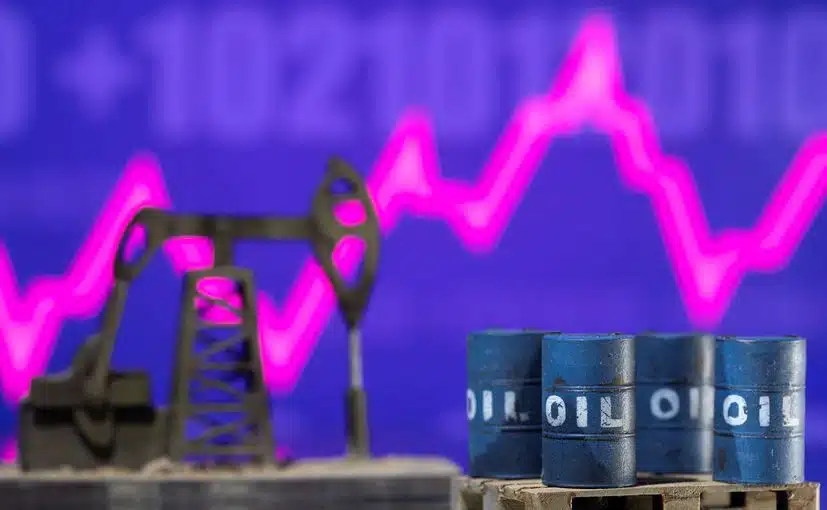

Oil prices fell on Wednesday, closing out the year with losses of nearly 20 percent as growing fears of oversupply overshadowed geopolitical risks and earlier market disruptions.
Global benchmarks recorded their steepest annual decline since 2020. Brent crude futures dropped about 19 percent in 2025, marking a third consecutive year of losses, the longest such streak on record. West Texas Intermediate crude also ended the year down nearly 20 percent.
On the final trading day, Brent settled at $60.85 a barrel, down 48 cents, or 0.8 percent. U.S. WTI closed at $57.42 a barrel after falling 53 cents, or 0.9 percent.
Market sentiment weakened as traders increasingly priced in the risk of excess supply in 2026. According to BNP Paribas commodities analyst Jason Ying, Brent prices could slip to $55 a barrel in the first quarter before stabilising near $60 later in the year as supply growth normalises and demand remains flat.
He noted that U.S. shale producers have hedged production at relatively high price levels, making supply more resilient to price swings. As a result, shale output is expected to remain steady even if prices soften further.
*OIL POSTS DEEPEST ANNUAL LOSS SINCE 2020 ON SURPLUS CONCERNS
*U.S. CRUDE -20%
*BRENT CRUDE -19% pic.twitter.com/bwTUdriWzg
— Investing.com (@Investingcom) January 1, 2026Recent inventory data added to the mixed outlook. The U.S. Energy Information Administration reported that U.S. crude stockpiles fell by 1.9 million barrels to 422.9 million barrels in the week ended December 26, exceeding analyst expectations. However, gasoline and distillate inventories rose sharply, signalling weaker seasonal demand.
Gasoline stocks increased by 5.8 million barrels, while distillate inventories, including diesel and heating oil, rose by 5 million barrels. Analysts said the build in refined fuel stocks could weigh on prices in the early months of the new year.
John Kilduff, partner at Again Capital Markets, described the data as modestly supportive for crude but warned of a challenging start to the year as post-holiday demand eases.
Concerns about a looming oil glut have intensified after U.S. crude production hit a record high in October, according to the EIA. Most analysts expect global supply to exceed demand in 2026, with surplus estimates ranging from 2 million barrels per day by Goldman Sachs to nearly 3.84 million barrels per day projected by the International Energy Agency.
ثلاثية خام برنت.. 3 أعوام من التراجع أشدهم عنفاً 2025 بنحو 19%، فهل يحنو هذا العام عليه ويستعيد ارتفاعات 2021؟
🔴 تابعوا اقتصاد الشرق للمزيد pic.twitter.com/wkrLA5S4Nc
— اقتصاد الشرق – السعودية (@AsharqbKSA) January 1, 2026Oil markets experienced sharp swings throughout 2025, driven by wars, sanctions, and political tensions. Early in the year, former U.S. President Joe Biden imposed tougher sanctions on Russia, disrupting supplies to key buyers such as China and India. The war in Ukraine further strained energy markets after drone attacks damaged Russian infrastructure and interrupted Kazakhstan’s oil exports.
Tensions in the Middle East also added volatility. A brief conflict between Iran and Israel in June disrupted shipping through the Strait of Hormuz, a critical route for global oil trade. More recently, OPEC’s largest producers, Saudi Arabia and the United Arab Emirates, have been caught up in renewed regional instability linked to Yemen. At the same time, U.S. President Donald Trump ordered a blockade on Venezuelan oil exports and threatened further action against Iran.
Despite these risks, prices eased as OPEC+ accelerated output increases during the year. The group released nearly 2.9 million barrels per day into the market since April before agreeing to pause further hikes in the first quarter of 2026. The next OPEC+ meeting is scheduled for January 4.
Analysts say prices may need to fall further to prompt fresh production cuts. Martijn Rats, global oil strategist at Morgan Stanley, said prices in the low $50s could trigger a policy response. At the same time, current levels may encourage OPEC+ to continue unwinding earlier cuts after the pause.
John Driscoll, managing director at JTD Energy, said geopolitical risks could still provide some support, even as fundamentals point to oversupply. He added that political uncertainty, particularly around U.S. policy, is likely to remain a key factor shaping oil markets in 2026.