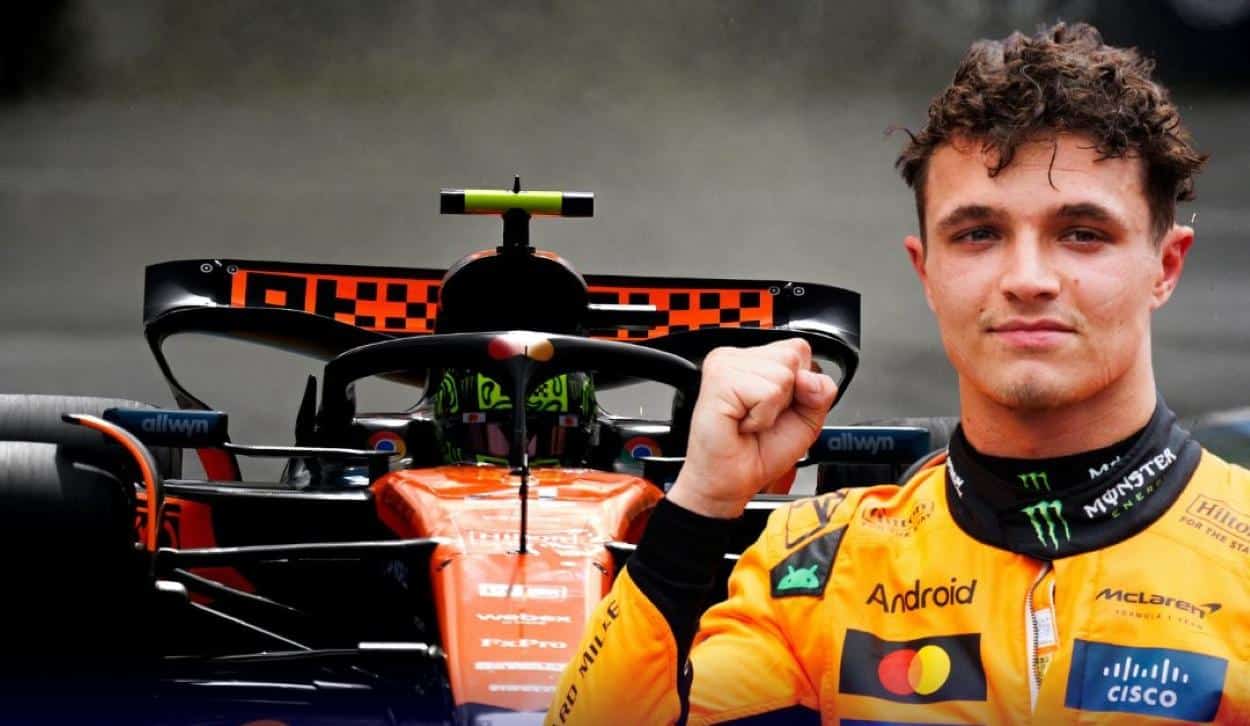

McLaren’s championship leader, Lando Norris, set the fastest time during a disrupted second practice session for the Las Vegas Grand Prix. Track action was twice interrupted due to concerns about a loose drain cover on the street circuit.
The session was initially red-flagged with 20 minutes remaining after marshals reported a potential issue near Turn 17. Following a 15-minute delay while officials inspected the track, drivers returned. However, the session was halted again with just over two minutes left. The FIA confirmed that track personnel had observed the same manhole cover shifting as cars passed over it, prompting precautionary checks.
This incident echoes problems from the inaugural Las Vegas Grand Prix in 2023. A loose drain cover destroyed Carlos Sainz’s Ferrari during practice. Norris, who leads the championship by 24 points from teammate Oscar Piastri, posted a best time of 1:33.602 on soft tires after Ferrari’s Charles Leclerc had topped the first practice session.
“We didn’t manage to get too much from FP2, given the disruption, but we did get a slightly better feeling than in FP1,” Norris commented. “We made some good progress, and we’ve got a reasonable feeling altogether.”
Norris on top in twice red-flagged Las Vegas GP practice https://t.co/n30VvVHEKB https://t.co/n30VvVHEKB
— Reuters (@Reuters) November 21, 2025The session saw mixed fortunes for other contenders. Mercedes’ Kimi Antonelli finished second, just 0.029 seconds behind Norris, while Leclerc’s session ended early with a suspected gearbox issue. Red Bull’s Max Verstappen finished ninth in the later session, having set his time on medium tires.
The practice disruptions occurred against the backdrop of an intense championship battle. McLaren drivers Norris and Piastri occupy the top two positions in the standings. Despite their strong positions, McLaren executives had cautioned that the Las Vegas circuit might prove challenging for their car.
Read: Lando Norris and Margarida Corceiro Reunite at Monaco Grand Prix 2025
In separate developments, Formula One’s governing body addressed ongoing concerns about engine allocation and cost cap regulations. The FIA’s single-seater director, Nikolas Tombazis, acknowledged the governing body’s current reluctance to challenge teams over whether engine changes are for reliability or strategic performance reasons, citing a lack of specific expertise in this technical area.