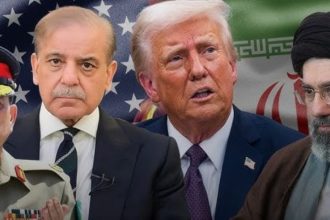
The Pakistan-Israel remarks, the Lebanon dispute escalated after Prime Minister Benjamin Netanyahu’s office condemned Pakistan’s defence minister for sharply criticising Israel during the ongoing bombardment in Lebanon.
The exchange followed comments by Pakistan’s Defence Minister Khawaja Muhammad Asif, who accused Israel of killing civilians while negotiations were underway in Islamabad. His remarks triggered an immediate response from Netanyahu’s office, which described them as unacceptable.
Khawaja Asif wrote on X that Israel was “evil” and “a curse for humanity” as Israeli attacks continued in Lebanon. He also accused Israel of committing genocide and said civilians were being killed as violence expanded beyond Gaza and Iran to Lebanon.
Netanyahu’s office responded by saying Asif’s remarks amounted to a call for Israel’s destruction. In a statement, it described the comments as outrageous and said no government could tolerate them, especially one that presents itself as a neutral peace mediator. The verbal clash came at a sensitive moment. Pakistan has been involved in diplomatic efforts regarding a two-week ceasefire announced by the United States and Iran, even as the parties continue to dispute its scope.
Pakistani mediators and Tehran said the ceasefire also included Lebanon. Washington and Tel Aviv, however, rejected that interpretation. That dispute has further complicated diplomacy, particularly as military action on the ground has continued.
Israeli attacks on Lebanon intensified despite ceasefire efforts. It reports that the escalation since Wednesday has killed at least 303 people and injured 1,150 others. It also says the broader Israeli offensive in Lebanon since March 2 has killed 1,888 people and wounded 6,092 others, citing the Lebanese Health Ministry.
Asif’s remarks underscore how sharply regional actors remain divided over the conflict. His statement reflected anger over the rising civilian toll in Lebanon, but it also triggered a forceful diplomatic backlash from Israel. As a result, the controversy now extends beyond developments on the battlefield. It has also become part of a wider dispute over mediation, neutrality and the limits of diplomacy while violence continues.