

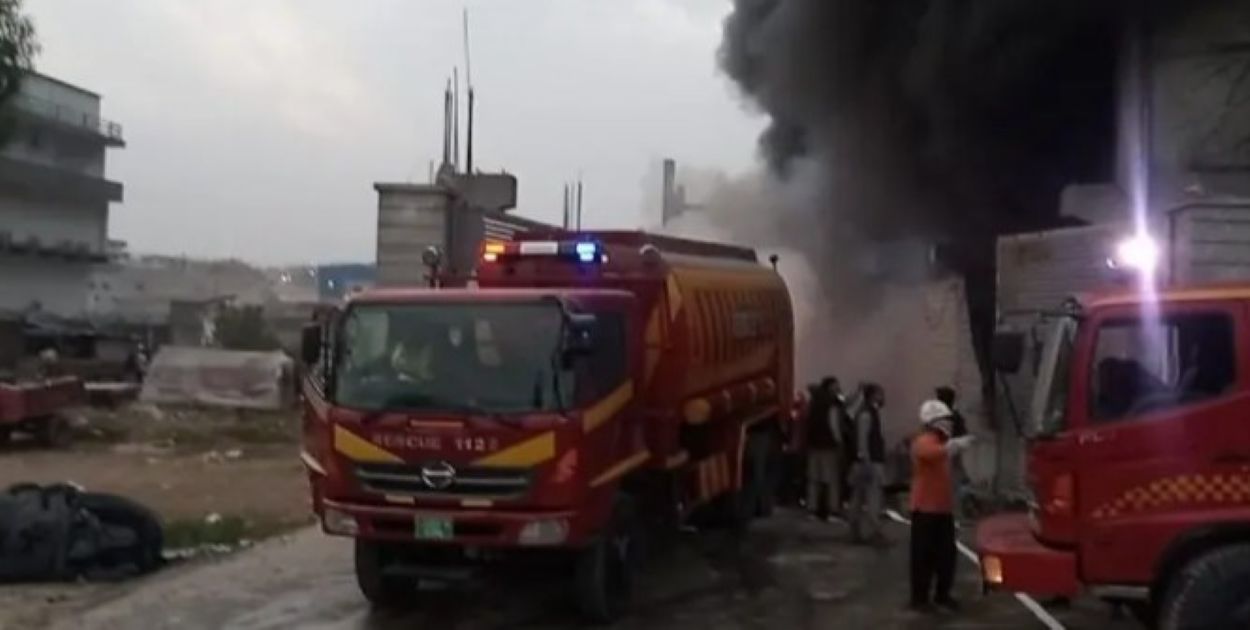

The Rawat Industrial Area factory fire raged for several hours near Rawalpindi, forcing rescue teams to work through the night to contain the blaze. Officials confirmed on Tuesday that emergency crews remained on site due to the incident’s intensity and scale.
The fire broke out at an industrial unit in the Rawat area, triggering an immediate emergency response. Firefighters launched a large-scale operation soon after receiving the alert, deploying up to 19 fire tenders to control the flames.
As the fire intensified, authorities called in additional fire brigade vehicles to strengthen the response. Thick smoke and high temperatures complicated efforts to bring the situation under control.
Rawat Industrial Area factory fire
Rescue officials said the firefighting operation continued for more than 14 hours. Teams used water mixed with foam to suppress the flames, a method required due to the presence of highly flammable materials.
Large quantities of chemicals stored inside the factory made the operation particularly difficult. Officials said these substances repeatedly reignited sections of the building, slowing progress.
Authorities warned that prolonged exposure to fire has weakened the factory’s structure. As a safety measure, rescue teams restricted access to the surrounding area, citing fears that parts of the building could collapse at any moment.
راولپنڈی کے علاقے روات کے انڈسٹریل ایریا میں لگنے والی آگ 6 گھنٹے گزرنے کے باوجود بےقابو pic.twitter.com/rZdqbfYZyE
— Arshad Sharif (@arshadsharif804) February 9, 2026Despite the scale of the Rawat Industrial Area factory fire, officials confirmed that no casualties have been reported. The Deputy Commissioner of Rawalpindi said emergency teams reached the site quickly, helping prevent loss of life.
Officials credited the swift response and timely evacuation for averting a tragedy. However, they cautioned that the situation remains dangerous until the fire is fully extinguished.
The cause of the blaze has not yet been determined. Authorities said an investigation would begin once firefighters completely secure the site.
Fire safety concerns grow nationwide
The Rawat incident has renewed concerns about fire safety standards in major cities across Pakistan. Industrial zones, in particular, remain vulnerable due to inadequate safety protocols and poor enforcement.
Karachi has witnessed a series of devastating fires in recent months, highlighting persistent gaps in emergency preparedness. The deadly Gul Plaza fire continues to haunt the city, serving as a grim reminder of the consequences of weak safety measures.
راولپنڈی ریسکیو 1122 کی ناقص حکمت عملی، فائر فائٹنگ کے خراب آلات کی وجہ سے روات انڈسٹریل ایریا میں لگی آگ خوفناک حد تک پھیل چکی ہے، فائر فائٹرز افسران کے روئیے سے پہلے ہی تنگ ہیں اب آگ بجھانے کے لیے اسلام آباد سے مدد طلب کرلی گئی، خدا خیر کرے یہ آگ دوسرا سانحہ نہ بن جائے!… pic.twitter.com/bKb4m6beU4
— Imran Asghar (@Imranbold) February 9, 2026In January alone, Karachi reported 225 fire incidents, according to figures cited by The News. These incidents resulted in widespread damage, injuries, and loss of life.
Alarming trend continues in Karachi
The situation has not improved in February. More than 20 fires were reported in the first five days of the month, underscoring Karachi’s ongoing vulnerability.
Read: Sindh Govt Orders Judicial Probe Into Gul Plaza Fire
On a single day last Thursday, fires erupted at six different locations across the city. While no human casualties were reported, two animals—a cow and a buffalo—suffered burn injuries.
The deadliest recent incident occurred on January 17, when a massive blaze at Gul Plaza claimed 79 lives, including women and children. At least 22 others sustained injuries, according to official figures.



