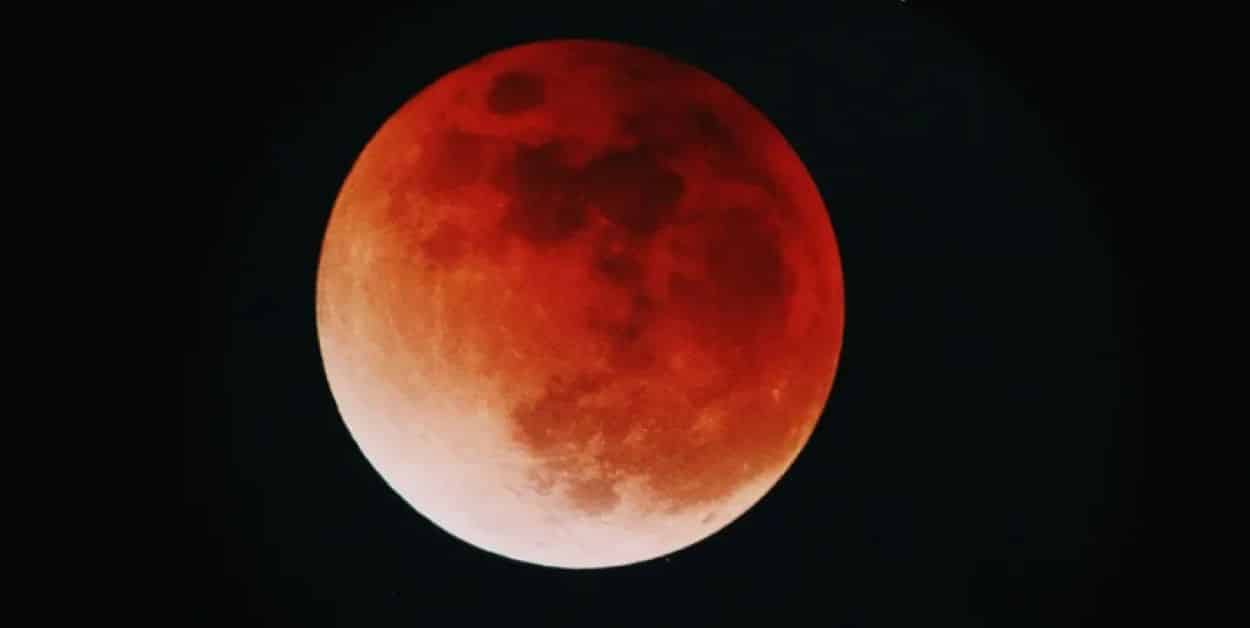

The March 3, 2026, total lunar eclipse will light up the night sky with a striking “Blood Moon,” marking the last total lunar eclipse until 2028.
During totality, the moon will appear dark red for 58 minutes. The total phase runs from 11:04 UTC to 12:02 UTC.
This rare celestial event will be visible across several regions, offering prime viewing opportunities for millions.
March 3, 2026 Total Lunar Eclipse: Local Timings
| Location (City/Region) | Start | End | Day & Date (Local) | Notes |
|---|---|---|---|---|
| New Zealand (Auckland/Wellington) | 12:04 a.m. | 1:02 a.m. | Wednesday, March 4 | — |
| Australia (Sydney/Melbourne – AEDT) | 10:04 p.m. | 11:02 p.m. | Tuesday, March 3 | — |
| Australia (Adelaide – ACDT) | 9:34 p.m. | 10:32 p.m. | Tuesday, March 3 | — |
| Australia (Perth – AWST) | 7:04 p.m. | 8:02 p.m. | Tuesday, March 3 | — |
| Japan (Tokyo) | 8:04 p.m. | 9:02 p.m. | Tuesday, March 3 | — |
| South Korea (Seoul) | 8:04 p.m. | 9:02 p.m. | Tuesday, March 3 | — |
| China (Beijing) | 7:04 p.m. | 8:02 p.m. | Tuesday, March 3 | — |
| Philippines (Manila) | 7:04 p.m. | 8:02 p.m. | Tuesday, March 3 | — |
| India (New Delhi – IST) | 4:34 p.m. | 5:33 p.m. | Tuesday, March 3 | Visible at moonrise |
| Pakistan (Islamabad/Lahore – PKT) | 5:45 p.m. | 6:17 p.m. | Tuesday, March 3 | Visible at moonrise |
| USA/Canada (Pacific Time – PST) | 3:04 a.m. | 4:02 a.m. | Tuesday, March 3 | — |
| USA/Canada (Mountain Time – MST) | 4:04 a.m. | 5:02 a.m. | Tuesday, March 3 | — |
| USA/Canada (Central Time – CST) | 5:04 a.m. | 6:02 a.m. | Tuesday, March 3 | — |
| USA/Canada (Eastern Time – EST) | 6:04 a.m. | 7:02 a.m. | Tuesday, March 3 | — |
| Mexico City (CST) | 5:04 a.m. | 6:02 a.m. | Tuesday, March 3 | — |
Residents across the Pacific Ocean region, including New Zealand, Australia, East Asia, and western parts of North America, will have the clearest views.
However, most of Europe and Africa will not be able to observe the eclipse because the moon will be below the horizon during totality.
Why Does the Moon Turn Red?
A total lunar eclipse occurs when Earth moves directly between the sun and the moon. Sunlight passing through Earth’s atmosphere scatters shorter wavelengths of light and allows red tones to reach the moon’s surface.
This effect gives the moon its dramatic “Blood Moon” appearance during totality.
Skywatchers are advised to check local weather conditions and find a clear view of the horizon for the best experience.