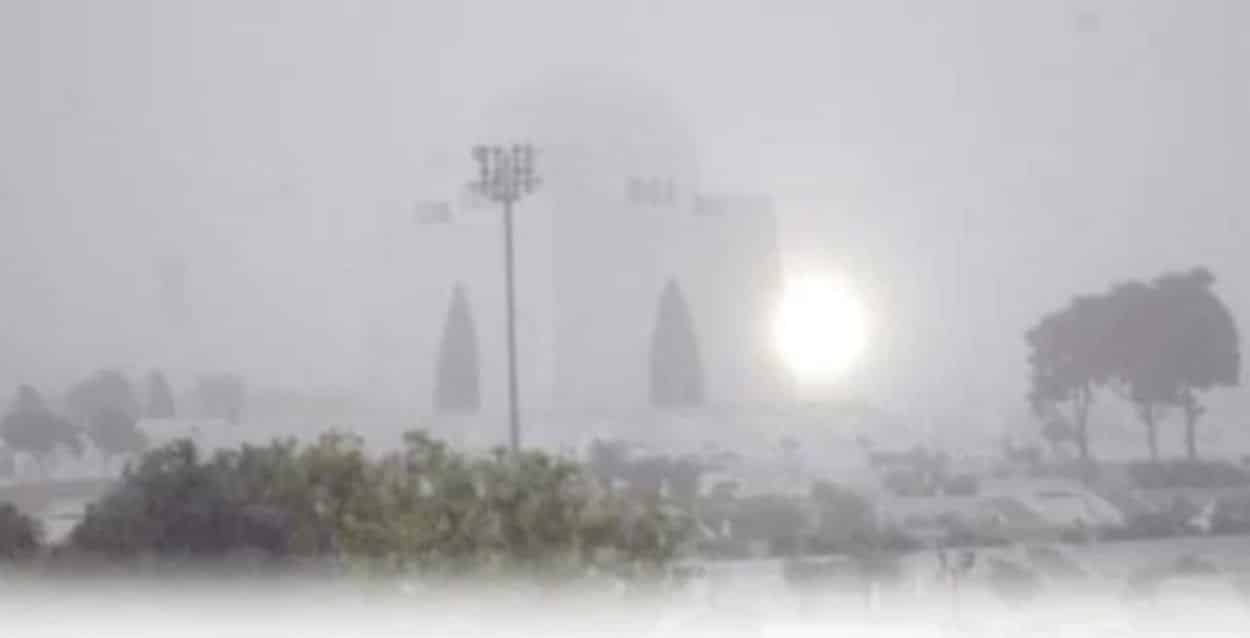

Karachi is experiencing exceptionally high humidity and dry conditions. The Pakistan Meteorological Department (PMD) recorded 93% humidity in the city’s air on Friday, and light haze is expected throughout the day, with cold weather setting in at night. Furthermore cold intensity will increase significantly from December 15.
The maximum temperature in Karachi is likely to reach 31 degrees Celsius today. Northeasterly winds will blow at around 9 kilometres per hour. Despite the high humidity, officials forecast dry weather all day. Colder nights are expected as winter progresses in the coming week.
Climate change expert Dr Zainab Naeem explained the unusual pattern on the local news channel Geo News. She linked the current dry winter to the La Niña phase of the ENSO cycle. La Niña influences cloud formation and rainfall over South Asia. During winter, it typically brings fewer clouds and results in dry spells to the region.
Pakistan Tourist Weather Update – 12 Dec 2025 ❄️
Fog in plains, cold wave in the north & freezing nights in tourist regions.
Plan smart, travel safe!#PakistanWeather #PMD #FogAlert #ColdWave #TouristWeather #TravelPakistan #SnowfallAlert #WeatherUpdate pic.twitter.com/7mlOorPpL9
— Pak Met Department محکمہ موسمیات (@pmdgov) December 12, 2025Dr. Naeem noted a significant reduction in rainfall in recent years. October, November, and December now see mostly dry conditions. This shift negatively affects seasonal crops and agriculture. She stated climate change is intensifying this pattern and shrinking the winter season.
“Rainfall in October, November and December has reduced significantly,” Dr. Naeem said. “This pattern is now being intensified by climate change, which has shifted rainfall trends and shrunk the winter season.” She expects only light rain after mid-December, well below historical averages.
The PMD forecasts less snowfall this winter and slightly above-normal temperatures. There is also an elevated risk of drought conditions. Paradoxically, next year’s monsoon rainfall is projected to be about 26% higher than average. Dr Naeem warned that this sets the stage for more severe flooding in 2026.
She highlighted the disconnect between climate science and policy in Pakistan. “One of the biggest challenges is that policy and science are still not properly connected,” she stated. This gap hinders effective enforcement and climate action planning. The expert urged immediate preparation for future climate-induced disasters.