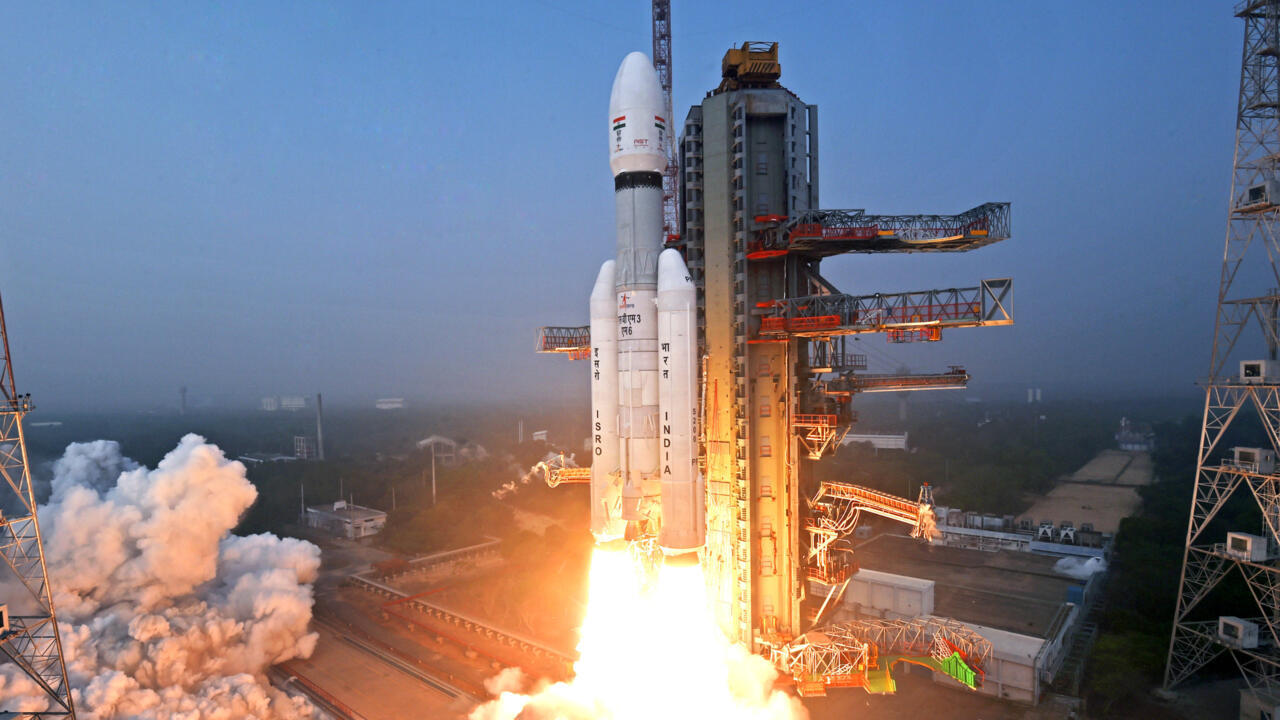

An Indian rocket carrying multiple scientific payloads veered off course shortly after liftoff on Monday, dealing a fresh blow to the reliability record of the country’s most trusted launch vehicle.
The Polar Satellite Launch Vehicle, operated by the Indian Space Research Organisation, was carrying 16 payloads, including an earth observation satellite, when the mission suffered an unexpected anomaly during flight. The incident marks the second setback for the PSLV in around eight months.
The mission, designated PSLV-C62, lifted off from the Satish Dhawan Space Centre at 10:18 am local time. Onboard were the EOS-N1 Earth-observation satellite and 15 additional experiments developed by startups and academic institutions in India and overseas.
🛰️ 🇮🇳 ISRO’s PSLV-C62 Mission Fails After Third-Stage Anomaly — Military Anvesha and 15 Satellites Lost – #India
India’s space program faced a Major setback as the PSLV-C62 rocket, launched by the Indian Space Research Organisation (ISRO), encountered a critical anomaly during… https://t.co/Pz34v1Drmn pic.twitter.com/zWBChAqhw5
— Eagle Eye (@zarrar_11PK) January 12, 2026ISRO’s mission control said the rocket performed as expected through most stages of the flight. However, an unexpected disturbance near the end of the PS3 stage caused the vehicle to deviate from its planned trajectory.
In a brief statement, ISRO said it had launched a detailed technical analysis to determine the cause of the anomaly. The agency did not confirm the final status or location of the payloads.
𝐏𝐒𝐋𝐕-𝐂62 𝐌𝐢𝐬𝐬𝐢𝐨𝐧 𝐃𝐞𝐯𝐢𝐚𝐭𝐞𝐬 𝐟𝐫𝐨𝐦 𝐏𝐥𝐚𝐧𝐧𝐞𝐝 𝐅𝐥𝐢𝐠𝐡𝐭 𝐏𝐚𝐭𝐡; 𝐈𝐒𝐑𝐎 𝐈𝐧𝐢𝐭𝐢𝐚𝐭𝐞𝐬 𝐃𝐞𝐭𝐚𝐢𝐥𝐞𝐝 𝐀𝐧𝐚𝐥𝐲𝐬𝐢𝐬
The Indian Space Research Organisation has confirmed that the PSLV‑C62 mission experienced an anomaly after deviating from… pic.twitter.com/rlBBIirMcP
— Global Defense Insight (@Defense_Talks) January 12, 2026The PSLV has long been considered the backbone of India’s space programme, with a success rate of over 90 per cent across roughly 60 missions. It has previously launched high-profile projects, including Chandrayaan-1 and the Aditya-L1 solar observatory.
The vehicle also plays a key role in India’s growing commercial space ambitions, supporting the country’s efforts to expand private-sector participation in satellite manufacturing and launches. Monday’s incident is expected to prompt a thorough review as ISRO works to restore confidence in its workhorse rocket.