

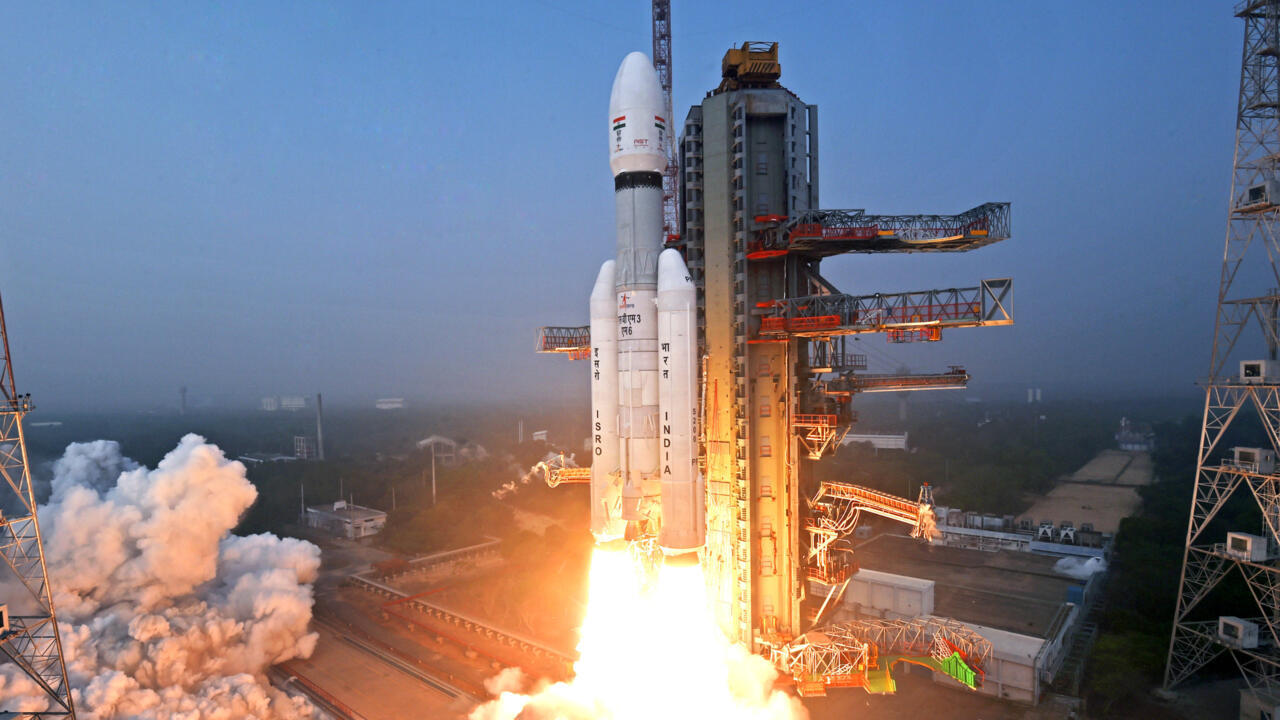

India’s space programme reached a major milestone on Wednesday. The Indian Space Research Organisation successfully launched its heaviest-ever payload into orbit. Prime Minister Narendra Modi hailed the mission as a “significant stride” for the country’s rapidly expanding space sector.
The LVM3-M6 rocket lifted off carrying a US-built communications satellite from Satish Dhawan Space Centre. The satellite, developed by AST SpaceMobile, was placed into low-Earth orbit.
ISRO confirmed that the 6,100-kilogram satellite is the heaviest payload ever launched from Indian soil. The mission used a modified version of the LVM3 rocket. India plans to deploy this rocket for upcoming uncrewed and crewed space missions.
A significant stride in India’s space sector…
The successful LVM3-M6 launch, placing the heaviest satellite ever launched from Indian soil, the spacecraft of USA, BlueBird Block-2, into its intended orbit, marks a proud milestone in India’s space journey.
It strengthens… pic.twitter.com/AH6aJAyOhi
— Narendra Modi (@narendramodi) December 24, 2025“This launch strengthens India’s heavy-lift launch capability. It also reinforces our growing role in the global commercial launch market,” Modi said in a statement. He described the mission as a proud milestone in India’s space journey.
Earlier this year, ISRO launched the CMS-03 communications satellite, which weighed about 4,410 kilograms. The latest mission marks a significant step up in payload capacity.
The successful launch supports India’s push to capture a larger share of the global satellite launch market. Demand is rising as telecom and internet companies seek advanced space-based communication services.
Powered by India’s youth, our space programme is getting more advanced and impactful.
With LVM3 demonstrating reliable heavy-lift performance, we are strengthening the foundations for future missions such as Gaganyaan, expanding commercial launch services and deepening global… pic.twitter.com/f53SiUXyZr
— Narendra Modi (@narendramodi) December 24, 2025Over the past decade, India has advanced its space ambitions through a cost-effective programme. This programme rivals those of established space powers. ISRO plans to conduct an uncrewed orbital mission before its first human spaceflight, scheduled for 2027.
Looking further ahead, Modi has also announced India’s goal of sending an astronaut to the Moon by 2040. This underscores the country’s long-term commitment to space exploration. With this record-breaking launch, India has taken another confident step toward becoming a major player in the global space economy.



