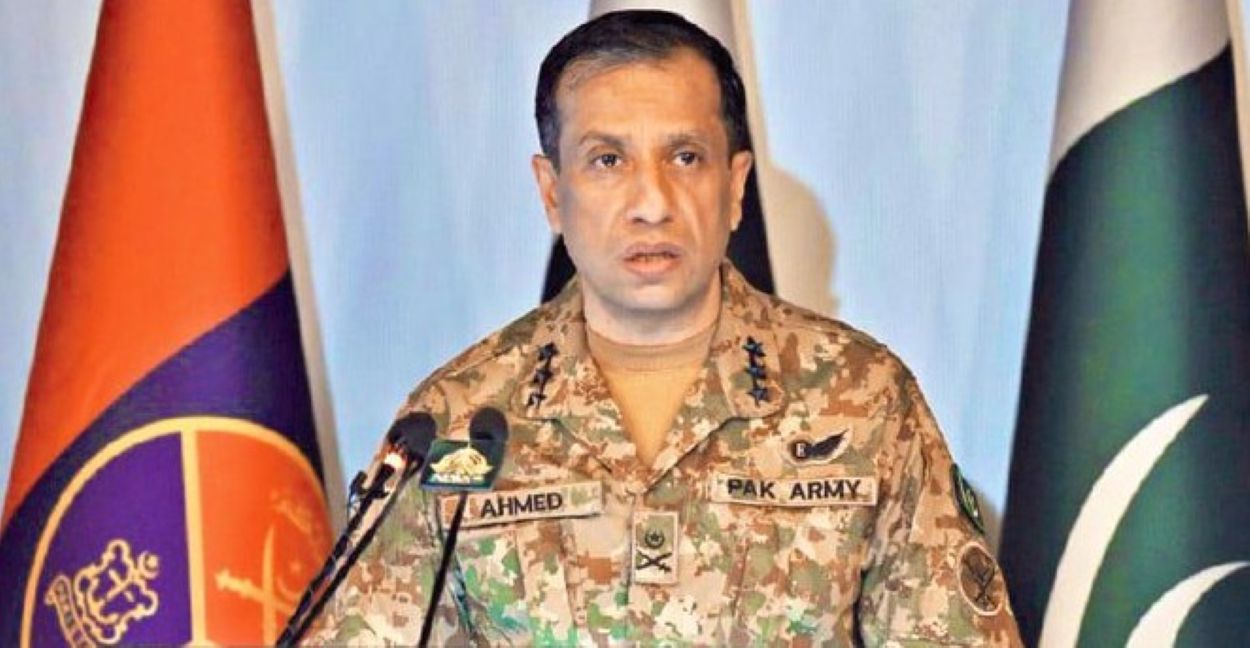

The Inter-Services Public Relations has strongly criticised the leadership of Pakistan Tehreek-e-Insaf in Khyber Pakhtunkhwa, holding it responsible for a sharp rise in terrorism and resistance to counterterrorism efforts.
Addressing a press briefing in Rawalpindi, ISPR Director-General Ahmed Sharif Chaudhry said the PTI-led provincial government had created a “politically conducive environment” that allowed a criminal-terror nexus to flourish. He added that the KP leadership had even sought assistance from Afghanistan while opposing counterterrorism operations at multiple forums.
The ISPR chief said nearly 71 percent of all terrorist incidents reported in 2025 occurred in Khyber Pakhtunkhwa. He linked the surge to weak governance, illegal mining, and the spread of unlicensed weapons in the province.
Data from the Centre for Research and Security Studies supports the assessment. Its annual report shows fatalities in KP rose from 1,620 in 2024 to 2,331 in 2025, an increase of more than 40 percent year on year.
DG ISPR criticized the KP Chief Minister’s narrative, calling it “ridiculous” and rejecting calls for Afghan security guarantees.
He said the PTI builds false narratives in assemblies, questioning if the army was sent to KP “with shovels to extract minerals.”#SamaaTV pic.twitter.com/hdVq4JCH8b
— SAMAA TV (@SAMAATV) January 6, 2026Lt Gen Chaudhry also criticised KP Chief Minister Sohail Afridi for opposing military operations and demanding security guarantees from Afghanistan. He rejected calls for talks with militant groups and questioned resistance to state-led counterterror actions.
Referring to remarks made by the provincial leadership, the ISPR chief called claims against security operations “ridiculous” and said the narrative had become clear. He stressed that counterterrorism required firm state action, not political ambiguity.
وہی متنفر جنگی مائنڈسیٹ اور رعونت بھرا انداز گفتگو، ڈی جی، آئی ایس پی آر ایک بار پھر اس صوبے کے وزیراعلیٰ پر حملہ ہوئے جس نے دہشتگردی کے خلاف سب سے زیادہ جانی و مالی قربانیاں دی ہیں۔ جس تحریک انصاف کے حوالے سے ابہام پیدا کرنے کی کوشش کی گئی، اسی تحریک انصاف کے دور میں پاکستان… pic.twitter.com/A5TTooJPTu
— PTI (@PTIofficial) January 6, 2026Afghanistan and India Nexus
Turning to regional security, Lt Gen Chaudhry said Afghanistan had become a hub for terrorist activity. He stated that Pakistani border posts had come under attack by Afghan Taliban elements, prompting a strong response from Islamabad.
He alleged that links between Fitna Al-Khawarij and India became fully visible in 2025, posing a serious threat to regional peace. He claimed that India provided material support to militant groups, including assistance with armed quadcopters.
Recalling the 2020 Doha Agreement, he said the Afghan Taliban had pledged to prevent terrorism from Afghan soil. However, he argued that Afghanistan continued to host and support multiple militant outfits.
ڈی جی صاحب نے فرمایا ہے کہ کے پی میں دہشت گردی کی بنیادی وجہ وہاں کا political conducive environment ہے اور وہاں پر سیاسی، جرائم پیشہ اور دہشت گردوں کا گٹھ جوڑ ہے، ہم یہاں حقائق کی روشنی میں یہ بیان دیکھتے ہیں:
80 کی دہائی میں ایک ایف اے پاس ڈفر جو خود کو امیرالمومنین کہلواتا… pic.twitter.com/RavHRlkbOn
— PTI (@PTIofficial) January 6, 2026The ISPR chief dismissed claims that the Pakistan Army uses drones to target civilians. He said the military relies on drones mainly for surveillance, while militant groups were the first to deploy armed quadcopters. He accused terrorists of using mosques, public spaces, homes, and even women and children as shields.
Counterterrorism Operations in 2025
Sharing operational data, Lt Gen Chaudhry said that law enforcement agencies conducted 75,175 intelligence-based operations across Pakistan in 2025. Of these, 14,658 took place in Khyber Pakhtunkhwa, 58,778 in Balochistan, and 1,739 in other regions.
He said authorities recorded 5,397 terror incidents nationwide last year. KP accounted for 3,811 incidents, Balochistan for 1,557, and the rest of the country for 29. Security forces killed 2,597 terrorists during these operations.
The ISPR DG said Afghan militants were involved in all 10 major terror attacks last year. He cited the Jaffar Express attack, which killed 21 civilians, and assaults on civilian buses and Frontier Corps facilities in Quetta and Peshawar. He also said Afghan militants attempted an attack on Cadet College Wana, drawing parallels with the 2014 APS Peshawar tragedy.
‘A National War’
Lt Gen Chaudhry stressed that Pakistan’s fight against terrorism is a collective national effort, not just the military’s responsibility. He rejected narratives portraying it as an army-only war and said every citizen had a role to play.
He reiterated that Pakistan makes no distinction among terrorist groups and will act against all forms of militancy. He added that illegal arms, drugs, and unregulated refugee camps fuel violence, noting that most Afghan refugee camps in KP remain.
Concluding the briefing, the ISPR chief said Pakistan’s counterterrorism campaign has no parallel. He reaffirmed that no political party or individual stands above the country and said the armed forces will continue to act within the constitutional framework to safeguard national security.