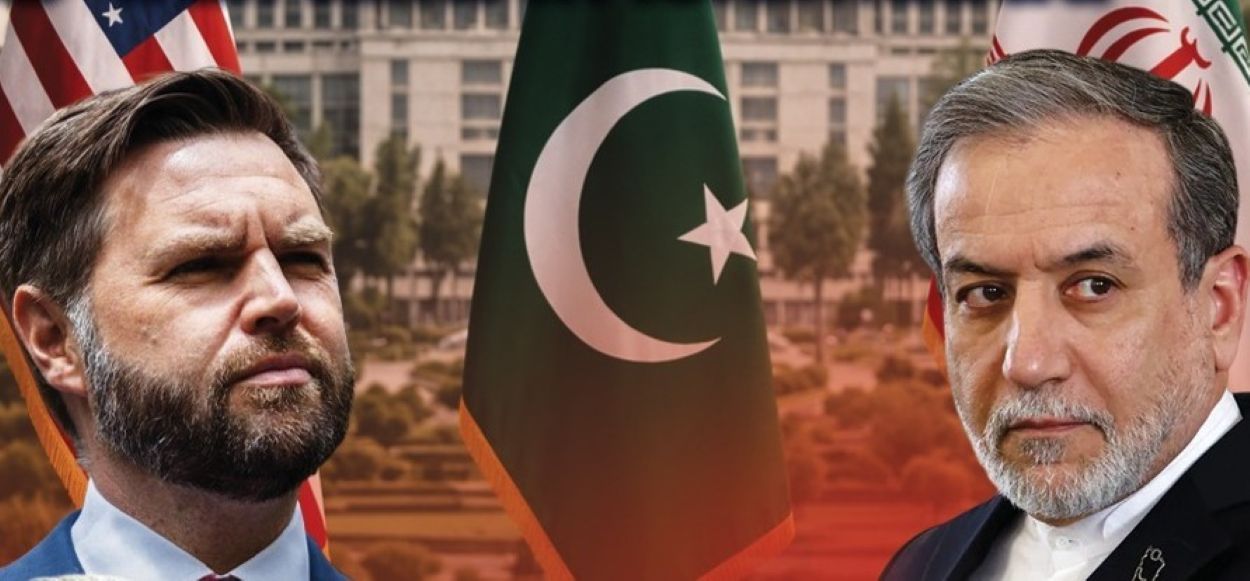

Islamabad will host US-Iran talks after a last-minute hurdle tied to Israeli strikes in Lebanon appeared to ease, clearing a narrow path for high-stakes diplomacy in Pakistan’s capital. Officials now view the dialogue as a critical test of whether a temporary pause can lead to a more durable settlement.
Prime Minister Shehbaz Sharif called the moment critical in a televised address, saying both sides had arrived in Islamabad to pursue peace. At the same time, he warned that the process had entered a difficult phase and described it as a “make-or-break situation”. The Iranian delegation, led by Parliament Speaker Bagher Ghalibaf and Foreign Minister Abbas Araghchi, arrived in Islamabad early Saturday. Senior Pakistani officials, including Deputy Prime Minister Ishaq Dar, received the delegation.
Vice President JD Vance, who is leading the US delegation, is scheduled to arrive later in the morning. Officials from the National Security Council, State Department and Department of Defence will accompany him, while advance teams have already arrived in the city.
The talks came close to collapse when Tehran insisted it would not take part unless Israeli strikes in Lebanon stopped. Ghalibaf said Iran’s participation depended on two conditions: a ceasefire in Lebanon and the release of about $7 billion in frozen Iranian assets.
Throughout the day, backchannel diplomacy among Islamabad, Tehran and Washington appeared to yield partial results. Reports indicated Israel held back strikes in Beirut and the Dahieh suburb, meeting a key Iranian demand. However, Israeli attacks reportedly continued in other parts of South Lebanon. That kept pressure on the talks and underlined how fragile the diplomatic opening remains.
Arrival of the delegation of the Islamic Republic of Iran for Islamabad Talks pic.twitter.com/aJYU9cx5t2
— Ministry of Foreign Affairs – Pakistan (@ForeignOfficePk) April 10, 2026The talks are based on Iran’s 10-point proposal, which Washington accepted as a general framework. Even so, major differences remain between the two sides. The United States will press for tighter limits on Iran’s nuclear programme, including stricter enrichment curbs and the possible removal of nuclear material. Iran, meanwhile, is demanding full sanctions relief, recognition of its nuclear rights, a framework for navigation through the Strait of Hormuz, and access to frozen funds.
Regional proxy networks, missile ranges and the sequencing of concessions are also expected to be major flashpoints. Pakistan has taken a central role in facilitating the talks and is trying to keep both sides engaged. Shehbaz Sharif said Islamabad would do its “level best” to ensure success and thanked both parties for accepting his proposal for a temporary ceasefire and dialogue.
Read: Trump says He is Optimistic About Iran Peace Deal
Still, expectations remain measured. Analysts and officials believe a major breakthrough is unlikely during the initial two-day engagement. More realistically, the first round may create a pathway for further negotiations or lead to limited steps toward immediate de-escalation.
Even with both delegations in Islamabad, the process remains under intense strain. Ongoing violence in Lebanon, disruption in Gulf shipping lanes and deep mistrust between Washington and Tehran continue to weigh on the talks. That is why the meeting matters. It is a rare diplomatic opening, but one unfolding under pressure from multiple fronts at once.