

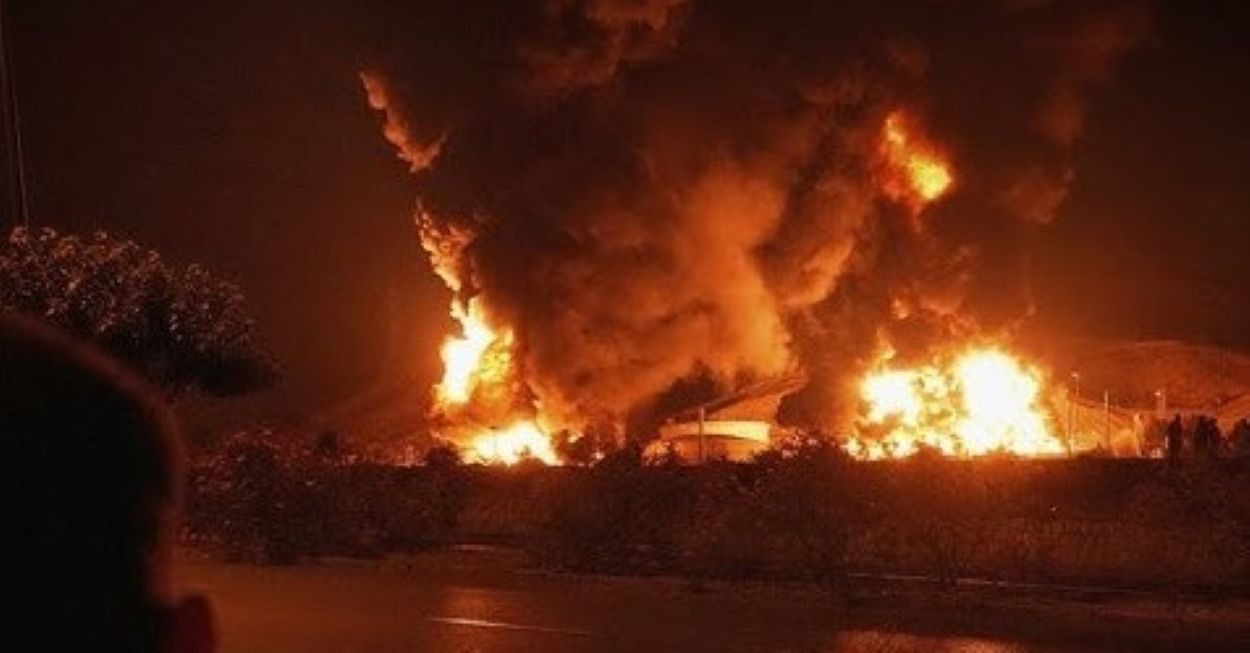

The Iran Pars gas field attack marked a sharp escalation in the U.S.-Israeli war on Wednesday, raising fears of a broader strike cycle across the Gulf. Iranian media said gas tanks and parts of a refinery at Pars were hit, while workers were evacuated and emergency crews battled a fire that state media later said was under control.
The strike rattled energy markets almost immediately. Brent crude rose about 5% to above $108, while stock markets moved lower as investors reacted to the risk of deeper disruption in one of the world’s most important energy-producing regions.
Pars is Iran’s section of the world’s largest natural gas deposit, which it shares with Qatar across the Gulf. The attack, therefore, carries weight far beyond Iran, especially as governments try to prevent lasting damage to regional oil and gas infrastructure.
Iran Pars Gas Field Attack Sends Oil Higher
Until now, the U.S. and Israel had avoided hitting Iran’s Gulf energy production facilities during nearly three weeks of war. That restraint had helped prevent direct retaliation against the oil and gas sectors of Saudi Arabia, the UAE and Qatar.
Iran has already shut the Strait of Hormuz, a key route that handles 20% of global oil and liquefied natural gas supply. As long as production facilities were spared, consuming nations had hoped the disruption would be brief. That calculation is now under pressure.
Iran responded by warning that major oil and gas facilities across the Gulf were now “direct and legitimate targets.” It includes Saudi Arabia’s Samref Refinery and Jubail Petrochemical Complex, the UAE’s Al Hosn Gas Field, Qatar’s Mesaieed Petrochemical Complex, Mesaieed Holding Company and Ras Laffan Refinery.
🇮🇷 NEW: Iran’s National Gas Company said fire at South Pars has been extinguished after US-Israeli attack on gas infrastructure in southern Iran, according to Mehr News.
It added:
🔸 Parts of refinery units were damaged in the strike around 2pm local time
🔸 No casualties were… pic.twitter.com/Tomk5BxsPD
— Drop Site (@DropSiteNews) March 18, 2026Qatar blamed Israel for the strike and called it a “dangerous and irresponsible” escalation that endangered global energy security. The UAE also condemned the attack.
Regional Conflict Expands Beyond Energy Sites
The attack came as Israeli airstrikes also hit central Beirut, flattening a building in the Bachoura district after residents were warned to leave. On another front, Israel said it had widened its campaign against senior Iranian officials.
Iran’s intelligence minister Esmail Khatib was killed on Wednesday, a day after powerful security chief Ali Larijani was killed. Defence Minister Israel Katz said no senior Iranian official had immunity, suggesting Israel had broadened the military’s authority to strike high-level targets.
In Tehran, thousands joined a funeral procession for Larijani and other slain figures. Iran then retaliated by firing missiles at Israel, and Israeli authorities said two people were killed near Tel Aviv.
Tehran also said it launched attacks at U.S. bases in Bahrain, Iraq, Jordan, Kuwait, Saudi Arabia and the UAE. In Riyadh, loud blasts were heard, and some residents received alerts warning of a hostile aerial threat.
Energy Prices Surge as Political Pressure Builds
The growing threat to Gulf energy infrastructure has added political pressure in Washington. Rising fuel costs are already affecting consumers, and U.S. diesel prices have climbed above $5 a gallon for the first time since the 2022 inflation surge.
Vice President JD Vance said the Trump administration would announce measures within 24 to 48 hours to address higher gas prices. Meanwhile, the wider war continues to inflict high civilian costs across the region.
According to the U.S.-based Iran human rights group HRANA, more than 3,000 people in Iran have been killed since the attacks began on February 28. Lebanese authorities say 900 people have been killed there and 800,000 displaced, while Iranian attacks have also killed people in Iraq, the Gulf states and Israel.



