

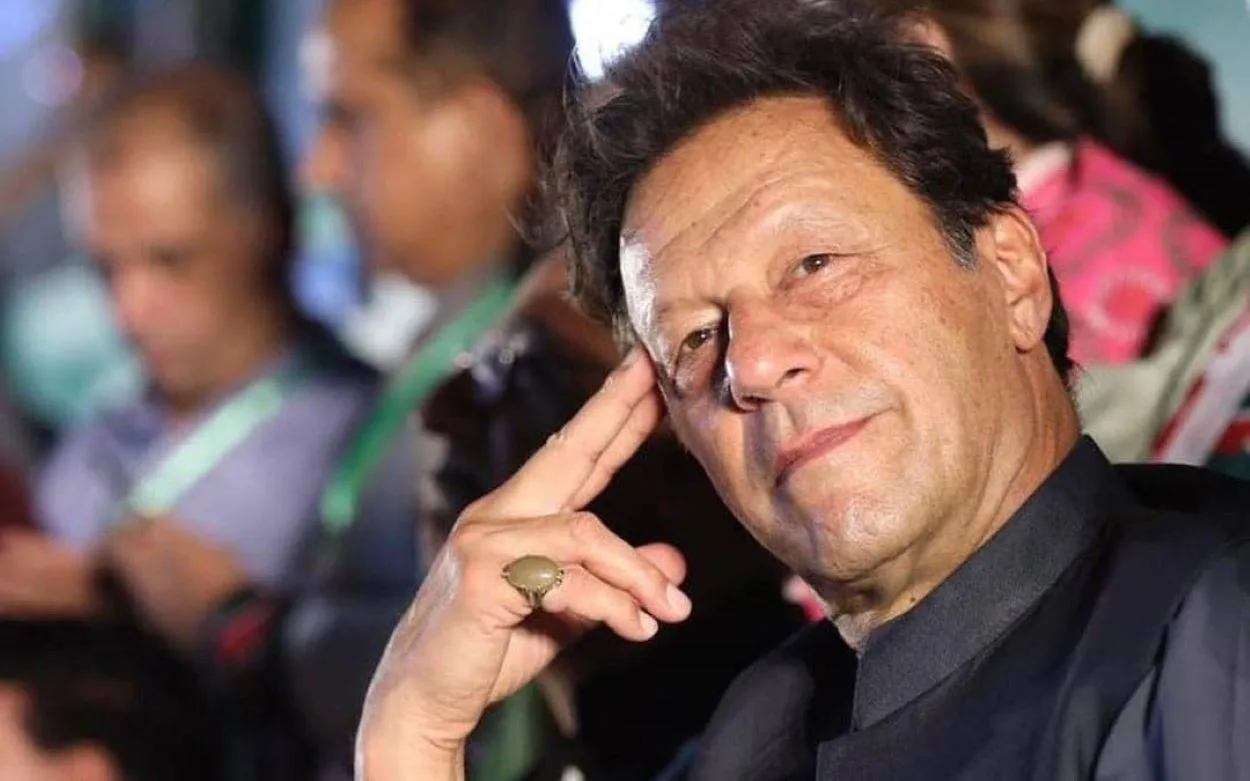

Newly declassified emails from the latest U.S. Department of Justice release of Epstein-related documents have highlighted a 2013 diplomatic discussion. This discussion referenced leveraging Imran Khan’s influence, years before he became Pakistan’s prime minister.
The reference appears in a June 2013 email sent by Nasra Hassan, a former United Nations official. She sent it to Terje Rød-Larsen, who at the time served as president of the International Peace Institute.
In the email, Hassan described Khan as a “London society lion” while discussing ways Western-backed health initiatives could gain traction in Pakistan. Furthermore, she argued that Khan’s social standing and international connections gave him greater access in Western circles than Pakistan’s newly elected leadership.
At the time, Khan led the Pakistan Tehreek-e-Insaf as an opposition figure. He was better known abroad as a former international cricket star than as a public official.
Imran Khan’s name appeared in Epsteing files released by US Justice Department on Jan 30, 2026
It appears in emails sent by former Norwegian diplomat and then president of the International Peace Institute (IPI) Terje Rod-Larsen (he was one of the key negotiators in talks that… pic.twitter.com/92yT31eoCO
— omar r quraishi (@omar_quraishi) January 31, 2026Hassan suggested that Khan could serve as a more effective interlocutor than then-prime minister Nawaz Sharif on sensitive diplomatic issues. In particular, this applied to polio eradication.
“I think that maybe something similar was planned vis-a-vis Pakistan, but not via the new prime minister … but Khan,” Hassan wrote, according to the email.
At that point, PTI had just formed the provincial government in Khyber Pakhtunkhwa, a region where polio remained endemic. At the same time, vaccination campaigns faced persistent resistance.
Read: India Rejects Epstein Reference to Modi as Opposition Cries Foul
The correspondence followed discussions that included Bill Gates, referred to as “BG” in the emails, and Hamid Karzai, Afghanistan’s president at the time.
The documents form part of a broader release tied to investigations into Jeffrey Epstein’s financial and professional network. Officials stress that the presence of names in the correspondence does not imply wrongdoing.
The email offers a snapshot of how Western officials and advisers viewed Pakistan’s political landscape in 2013. In particular, it shows the perceived utility of informal influence and global networks in advancing public health goals.



