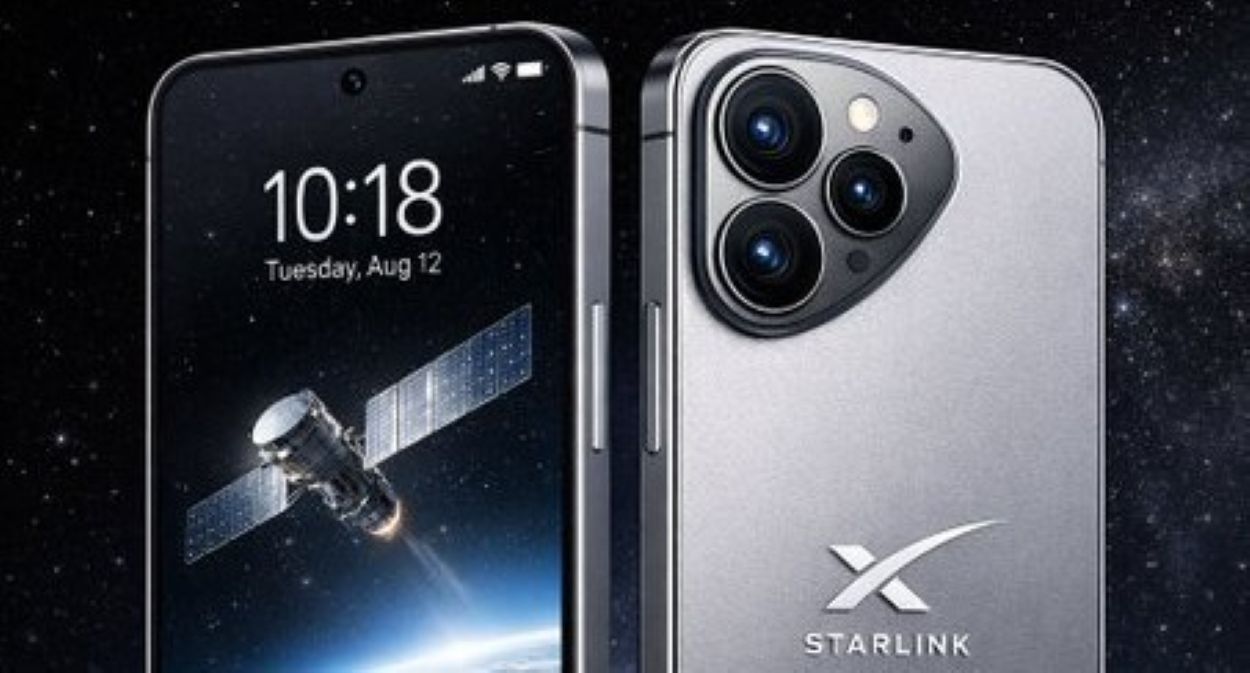

Elon Musk’s Starlink mobile device has sparked widespread curiosity, especially among users expecting a traditional smartphone. However, recent statements suggest the upcoming Starlink-enabled device may be something entirely different.
Modern smartphones have often been criticised as identical slabs of glass and metal. Against this backdrop, Elon Musk appears keen to challenge the status quo. Reports indicate that SpaceX is developing a Starlink-connected mobile device, but expectations of a phone-like product may be misplaced.
Musk has directly addressed the speculation. In a post on X (formerly Twitter), he stated clearly that SpaceX is not developing a phone. At the same time, he did not deny that a Starlink-related device is in development. This distinction has fueled further debate about the product’s form and function.
While details remain limited, Musk previously hinted that any potential Starlink device would differ sharply from current smartphones. In response to an online suggestion, he explained that such a device would be optimised solely for maximum performance per watt when running neural networks. This points to a strong focus on efficiency and local AI processing.
As a result, the Elon Musk Starlink mobile device may prioritise artificial intelligence over traditional phone features. This idea aligns closely with SpaceX’s acquisition of xAI, Musk’s artificial intelligence company behind the chatbot Grok. A device that acts as a gateway to both Starlink connectivity and AI services appears increasingly plausible.
This would not be SpaceX’s first move into mobile connectivity. Previously, the company partnered with T-Mobile in the United States to bring Starlink satellite internet directly to supported phones. However, that initiative relied on existing smartphones rather than a new hardware product.
SpaceX is pushing Starlink beyond internet, with plans for a mobile device and new space tracking services
The expansion raises questions as Starlink drives billions in revenue and deepens US government reliance pic.twitter.com/nQmV42Bgx5
— Ticker (@tickercotweets) February 6, 2026The broader technology industry is also moving toward AI-first hardware. OpenAI has partnered with former Apple designer Jony Ive on a new device, while Apple itself is rumoured to be exploring an AI-focused wearable or pin. In this context, a Starlink device built around AI and satellite connectivity would fit a growing trend.
Rather than replacing smartphones, Musk’s device may aim to complement or bypass them entirely. If so, it could serve niche use cases such as remote connectivity, AI processing, or satellite-based communication where smartphones fall short.
Read: Elon Musk Hints at AI-Powered Starlink Smartphone
For now, Musk has kept expectations in check. The Elon Musk Starlink mobile device is real, but it is not a phone. Instead, it appears to be an experiment in rethinking personal technology from the ground up.