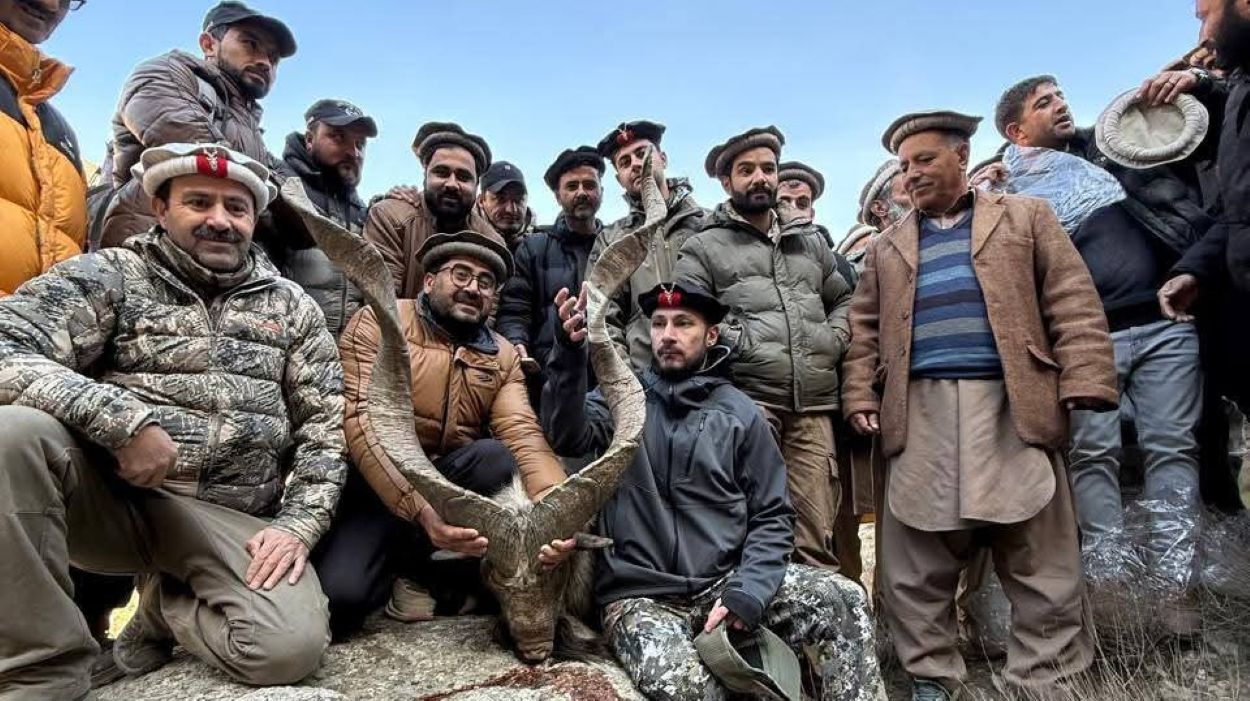

An American national has successfully hunted a Kashmir markhor in Pakistan. The trophy hunt occurred in the Tushi-Shasha Conservancy in Lower Chitral on Thursday. The 75-year-old hunter, Thomas Garrick Steele, obtained the required permit from the wildlife department. He paid a record fee of $243,000 (approximately Rs 68.3 million) for the license.
Divisional Forest Officer Farooq Nabi of Wildlife Division Chitral confirmed the hunt. He stated the department facilitated the hunter with help from the local community. The selected markhor had an impressive 55-inch horn. Steele hunted the animal from a close range of about 250 meters using an American rifle.
The world’s largest sculpture of the Markhor, Pakistan’s national animal, was just unveiled at Bata Kundi in the Kaghan Valley, Khyber Pakhtunkhwa this December.
Designed by engineer Muhammad Shehzad, the structure rises 105 feet high and is 38 feet wide, serving as a grand… pic.twitter.com/pDVuhL9r9Y
— Pakistan Embassy US (@PakinUSA) December 11, 2025The trophy hunting was conducted under Pakistan’s regulated “exportable quota” system. Last year, the Khyber Pakhtunkhwa government also introduced a “non-exportable” trophy hunting category. Under that system, the wildlife department retains the horns for conservation purposes.
A significant portion of the permit revenue directly benefits the local population. Eighty per cent of the income from the sale of hunting permits goes to the community. Village conservation committees utilise these funds for collective development projects in the area.
The wildlife department auctions hunting permits for three Kashmir markhors annually. These auctions are held for different conservancies within the Chitral district. The program is designed to generate substantial conservation funding. It also incentivises local communities to protect the endangered markhor and its habitat.
The Kashmir markhor is Pakistan’s national animal and a protected species. Regulated, high-value trophy hunting is a key part of its conservation strategy. It transforms the markhor from a poaching target into a valuable community asset. This model has been credited with helping the markhor population recover in recent years.