

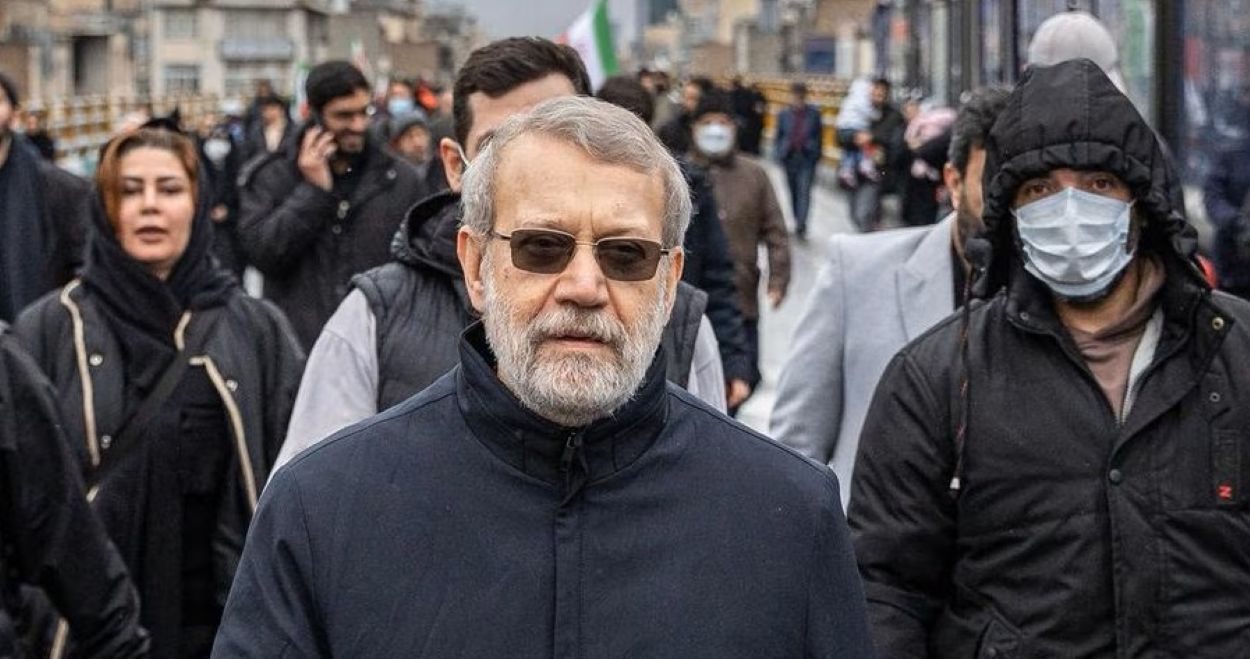

Iran confirmed on Tuesday that its top security official, Ali Larijani, was killed after Israel said it had targeted him. Larijani had played a major role in Iran’s security and nuclear policy.
Ali Larijani’s death dominated regional coverage on Tuesday after Iranian authorities confirmed that the country’s top security official had died in an Israeli strike. Earlier, Israeli Prime Minister Benjamin Netanyahu publicly announced Larijani’s death and said his removal could create pressure on Iran’s ruling system.
Larijani was one of Iran’s most influential political figures. He served as secretary of the Supreme National Security Council and had a central role in defence strategy and nuclear policy. AP reported that he was seen as a key power broker during the current crisis and had become increasingly important inside Iran’s leadership structure.
Iran has confirmed that Ali Larijani has been killed, making him the highest-ranking official assassinated since Supreme Leader Ali Khamenei. A central figure, he shaped Iran’s politics for decades. pic.twitter.com/B4CUTSdZRx
— Al Jazeera Breaking News (@AJENews) March 17, 2026Who Was Ali Larijani?
Born in Najaf, Iraq, in 1957, Larijani came from one of Iran’s best-known political families. He earned a doctorate in Western philosophy from the University of Tehran and later built a long career across Iran’s military, media and parliament. He was a veteran of the Iran-Iraq war, headed the state broadcaster IRIB, and served as parliamentary speaker from 2008 to 2020.
Larijani was often described as a conservative insider with a pragmatic style. He had deep ties across Iran’s political establishment and remained closely involved in strategic diplomacy, including regional outreach and nuclear-related discussions. In recent weeks, he had also been publicly identified as a leading figure in Iran’s wartime decision-making.
The killing of Larijani marks another major blow to Iran’s senior leadership during the conflict. His death could deepen uncertainty around Iran’s security decision-making and regional diplomacy at a highly sensitive moment. At the same time, the immediate political fallout inside Iran remains unclear as the wider war continues.



